Outstanding wine service award

Always held the first weekend in May, The James Beard Foundation Awards started in 1990 and are considered by many to be the “Oscars of food”. 

I wanted to give a shout-out to Bernie, who just won The Outstanding Wine Service Award for Jean Georges restaurant. 

The criteria states: A restaurant that displays and encourages excellence in wine service through a well-presented wine list, a knowledgeable staff, and efforts to educate customers about wine. Candidates must have been in operation for at least 5 years.

I first met Bernie in 2002, while I was working at Tribeca Grill and he was at Montrachet.  The excitement he had (and still has) for wine has been an inspiration for me.

1 Comment

Filed under Events, Wine

Rot the root

I’m studying for a wine exam and came across this chart on viral, bacterial and fungal diseases of the vine on The Society of Wine Educators Wine Academy site.  Chances are this might be more than you want to know about what can go wrong out in the field, but I’m finding it quite handy.

Viral Diseases Description
Leaf Roll A viral infection that is responsible for the lovely gold and red leaves in the vineyard come autumn. This colorful display is coupled with the downward rolling of the leaf blade, hence the name, leaf roll. Pigments that were to develop in the grape end up staying in the leaf, thereby delaying ripening. Crop yield is also affected. The only known remedy is vine removal. The disease is spread by insect vector (often mealy bugs) or by propagating new vines from clippings that are infected with the virus.
Fan Leaf A viral infection that is responsible for unusual growth patterns in the vine: short internodes, abnormal branching, malformed leaves that look like fans, small clusters, poor fruit set and shot berries. A vine infected with Fan Leaf has a truncated life span. Fan leaf is spread by insect vector (generally nematodes) or by propagating new vines from clippings that are infected with the virus.
Bacterial Diseases Description
Pierce’s Disease A bacterial affliction that results in premature leaf fall and eventual vine death. First, large dead areas appear on the leaves and expand until the entire leaf falls from the vine. Robbed of a way to manufacture nutrients, the vine eventually dies. The disease is spread by insect vectors like leafhoppers. Disease pressure is highest in the southern United States with outbreaks occurring wherever vineyards border streams or wetlands with marsh grasses. Recently, however, Pierce’s Disease has begun to spread north from Mexico on a new vector, the Glassy Winged Sharpshooter, and is now threatening vineyards previously thought to be safe from the disease.
Crown Gall A bacterial affliction that causes large tumors or growths to appear on the trunk of the vine. These tumors girdle the vine, strangling the portions above it so that the vine withers and dies.
Fungal Diseases Description
Esca/
Black Measles
A fungus that thrives in warm climates and can kill a vine suddenly when hot weather arrives. Typically, leaves fall off and berries develop spots.
Eutypa Dieback/
Dead Arm
A fungus that stunts vine shoots and cups leaves by releasing a toxin into the plant. The affected cane or canes eventually die, hence the name, “dead arm”. This fungus is common to Mediterranean climates and is believed to enter the vine through pruning wounds.
Powdery Mildew/
Oidium
A mildew native to North America that attacks the entire vine with white cobweb-like filaments. If an infection takes place before flowering, yields are reduced. If the clusters are infected by oidium, they will not reach full size or achieve maximum pigment development and the fruit will have undesirable flavors. Although native American vines are immune, Vitis vinifera is highly vulnerable to it.
Downy Mildew/
Peronospera
A mildew native to North America that attacks the green portions of the plant. In its beginning stage, a vine leaf looks as if it has oil spots. Then, spores germinate and spread outward in white, cottony filaments. A severe infection will cause the vine to lose its leaves, effectively delaying ripening. Threat of Downy Mildew is highest in warm, humid weather, but a copper-sulfate spray known as “Bordeaux Mixture” is effective in preventing an outbreak or curtailing an existing one.
Botrytis Cinerea A mold of many synonyms…Edelfaule, Pourritre Noble, Noble Rot, Botrytis attacks healthy white grapes, concentrates their sugars and adds a honeyed note to their flavor profile. Botrytis is responsible for creating some of the finest sweet wines in the world. The fungus germinates and spreads when humidity is at least 90 percent and the weather is warm (59-68° F). These moist, warm conditions must be followed by dry, warm conditions or Botrytis will quickly degenerate into Gray Rot, a rot which will ruin the fruit.

Leave a comment

Filed under Wine

What does John know?

John Hansell, editor and publisher of the Malt Advocate, pens a blog with the same title as this post.

Yesterday he announced the impending release of McKenzie Bourbon.

Leave a comment

Filed under Events, Spirits

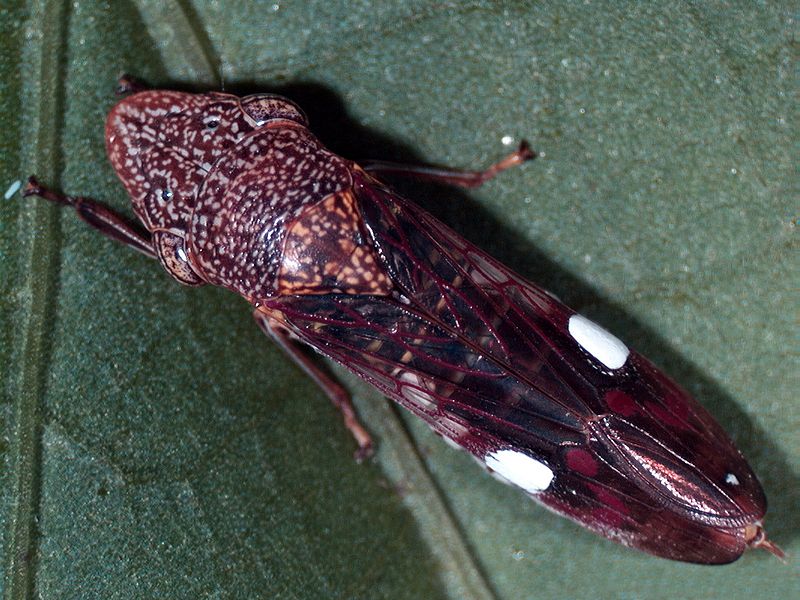
G is for glassy winged sharpshooter

Yellow eyes, red veins, piercing, sucking mouthparts: what's not to love?

The glassy winged sharpshooter is a leafhopper from the insect family Cicadellidae.  Originally from northeastern Mexico, these little buggers have migrated to the U.S. where they spread Pierce’s Disease, a bacterial infection that kills grapevines.

Voracious eaters, they spread bacteria from plant to plant by inserting their needle-like mouth parts into the xylem of the plant.  As they’re eating away, they deposit waste, often dubbed “leafhopper rain”, which can give the leaves and fruit a whitewashed appearance. 

Fantastic name for a fantastic pest.

1 Comment

Filed under Alphabet Soup, Wine

Give them the Finger Lakes

At the beginning of the month, I had a post about wine on tap.  Intrigued about the supplier for the Riesling at Terroir, I did some research and came across this:

I found this on Dr. Vino’s blog.  It’s worth scrolling to the bottom of his post to see how fired up some people got about this t-shirt design.  Lenn from the New York Cork Report states the Riesling is being made by Lamoreaux Landing.

I also learned that the wine is represented locally by Skurnik.  The kegs are 20,000 ml, just over 26 bottles.  Argon is used to protect the wine from oxidation inside the keg.  I’m waiting to hear back on what else is required for installation.  If it’s just a matter of making room in the low-boy, we’ll make a go of it.

4 Comments

Filed under Wine

Wildberry fizz

A San Francisco bartender by the name of Ernest P. Rawling wrote the following about a fizz in his 1914 Rawling’s Book of Mixed Drinks:

“…the next in favor is surely the Fizz – the long drink par excellence.  At any time or in any place where the tongue and throat are dry; when the spirits are jaded and body is weary; after a long automobile trip on hot and dusty roads; it is then that the Gin Fizz comes like a cooling breeze from the sea, bringing new life and the zest and joy of living.”

We’re using vodka, we’re serving it up and we’ve added an egg white, but after sampling it, you’ll find the zest and joy of living, too.

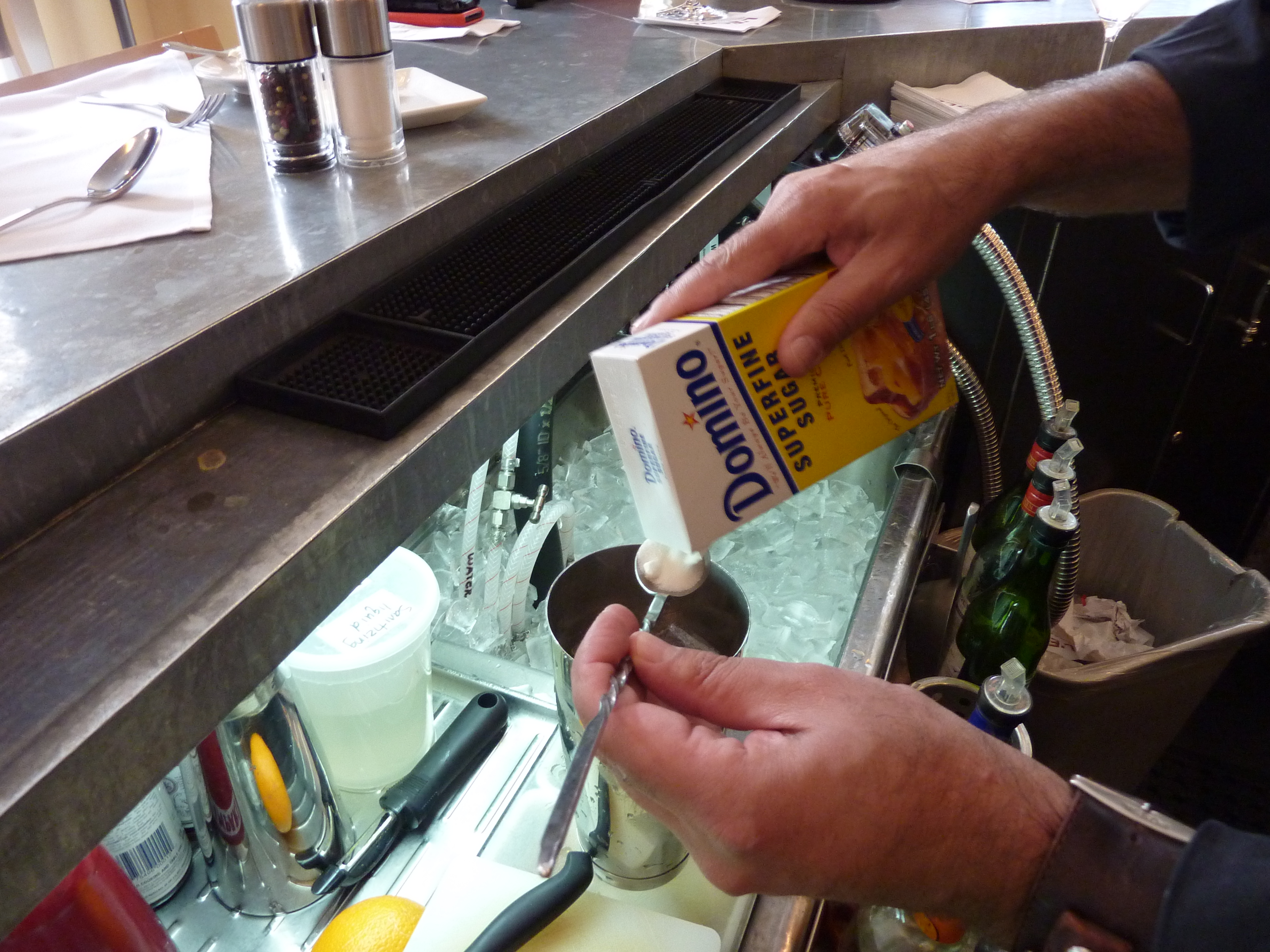
Some old fizz recipes call for powdered sugar. We call that superfine today. One barspoon is all you'll need for this recipe.

Wildberry Fizz
2 oz. Vintner’s Wildberry Vodka
1.5 oz. St. Germain
1 oz. fresh lemon juice
1 egg white (this is the equivalent of 1 oz.)
pinch of salt
barspoon of superfine sugar
1 oz. seltzer water

Combine all ingredients except seltzer over ice and shake vigorously.  Add the seltzer, shake some more and strain into a chilled martini glass.

The egg white, seltzer and shaking-it-like-you-mean-it contribute to the beautiful froth on top.

This cocktail is fruity, tart, floral and light as air.  Some folks are sensitive about raw eggs in drinks, but I’ll let the NYT tell you what happened at the Pegu Club a few months ago. 

Guess we’ll be listing a raw egg warning on our cocktail menu at L’Ecole.  I’ve tasted the pasteurized egg whites in cocktails side by side with non-pasteurized egg whites and there’s a noticeable difference.


1 Comment

Filed under Cocktails

Thirsty hits the 1 year mark

It was a year ago today that I posted my first blog entry.  A big thank you to all of you following me along.

Cheers to warm weather, cold drinks and more blog posts!

1 Comment

Filed under Events

Pass the spit bucket

This is not always a glamorous job. Those red spots everywhere are not spilled wine, but spit from folks who either missed the bucket or made its contents splash out.

Today was the Louis/Dressner portfolio tasting and even though they were strict with the RSVP list, there was still plenty of pushing, prodding and spit bucket mishaps. 

Fortunately, their wines were good enough to distract me from the occasional elbow or splash back.  Some highlights: Jean-Paul Brun, Terres Dorées (if you think Beaujolais wines are silly, you haven’t had any made by this man), Matthieu Baudry (stellar wines from Chinon in the Loire Valley), Eric Texier (Rhône Valley wines, including a Côte-du-Rhône made with 80% grenache and 20% white grapes – look for this by the glass soon at L’Ecole). 

The wines that blew my mind, however, were from Radikon.  Located in Friuli, close to Slovenia, they vinify their white grapes as if they were making red wine; over 90 days of skin maceration and a minimum of 3 years aging in large Slavonian oak.  Their current releases for their white wines are from 2004.  My tasting companion summed it up by saying that the whites tasted like a salami sandwich.  Meaty, rich, round and salty; I had to agree.

Leave a comment

Filed under Events, Wine

Brandy milk punch

I can’t say it’s the most appealing name and I’ve tended to avoid cocktails with milk ever since my parents casually mentioned they’ve gotten “into trouble” after consuming White Russians.  On the other hand, the nutmeg reminded me of a Painkiller from the Soggy Dollar Bar and I’ve had New Orleans on my mind recently after seeing the first few episodes of Treme.  I like how the bartender gets a little breathless after shaking his drink.

The Brandy Milk Punch

1 ½ ounces brandy
1 ounce simple syrup
½ bar spoon high quality vanilla extract
A couple ounces of Half-and-half
Cubed ice
Grated nutmeg

Pour brandy, simple syrup, vanilla extract and half-and-half into a pint glass. Add ice to a shaker and shake the concoction until well mixed and frothy. Add cubed ice to a rocks glass and, using a strainer, pour the mixture into it. Top with a bit of grated nutmeg.

Leave a comment

Filed under Cocktails

Get schooled on summer sippers

think pink

I’m not ashamed to admit that I love pink wine.  Crisp, refreshing and easy to drink; it’s the wine I crave the most once the temperature begins to rise. 

Whether you’re a rosé drinker or a skeptic, you should join us at The FCI on Monday, May 17th from 6:30-8:30 pm for Rosé Wines: Summer Sippers

You’ll learn how rosé is made and how to pair it with food for the ultimate picnic. 

No white zinfandel will be served.

5 Comments

Filed under Lessons, Wine