Category Archives: Wine

B is for Baco 22A

Most of the wine we drink is made from grapes from the Vitis Vinifera species.  Vitis is the genus for many vine plants and vinifera comes from the Latin “to bear or carry wine”.  This species started out in what is now Iran and made its way out of the Middle East and into the Mediterranean.  From there, the Greeks spread the vines to North Africa and southern Italy.  The Romans then brought them along as they began occupying the western part of Europe, as early as the 1st century B.C.

Simultaneously, North America had land under vine, but the vines were all non-vinifera species, with fun names like Vitis labrusca, Vitis riparia and Vitis aestivalis (there are 15+ total).  When phylloxera (insect/epidemic that kills grapevines) struck Europe, they didn’t want to plant our vines, but they were interested in our phylloxera-resistant rootstock.  The solution was grafting the more desirable vinifera vines onto the  hardier American species. 

Grafted Riesling vine. Grafting is done by cutting a cane (stem of a mature grapevine) of the desired variety in a way that it will fit into a matching cut made in the selected rootstock (think of a puzzle piece).

Grafting took many years to perfect, but it was just the beginning of experiments done by botanists.  By the late 1800s scientists were cross-pollinating different vine varieties and families.  French-American hybrids were born of these experiments.  The idea was to combine the winter-hardiness and phylloxera resistance of the American vines with the fruit and flavor of the French vines.  We’re still developing these varietals, particularly at the Cornell Viticultural Research Station in Geneva, New York. 

At one time hybrids accounted for several million acres of vineyards in France.  This is no longer the case, though hybrids can still be found in the eastern U.S. and Canada, and South America.  Interestingly, one hybrid has survived in France; Baco 22A.  Sometimes called Baco Blanc, it is a crossing of Folle Blance (acidic, French white, ravaged by phylloxera) and Noah (hardy American hybrid developed in the 1860s in Illinois), and was created by François Baco in 1898.  Until the late 1970s, Baco 22A was the primary ingredient in Armagnac.

Ugni Blanc now plays a bigger role than Baco22A, as French authorities try to rid their vineyards of hybrids.

1 Comment

Filed under Alphabet Soup, Wine

Join in the fun

Another round of Fundamentals of Wine is starting up tomorrow.  Join us on an 8 week journey through the world of wine.

Riesling grapes in Germany

1 Comment

Filed under How to, Wine

A is for Aligoté

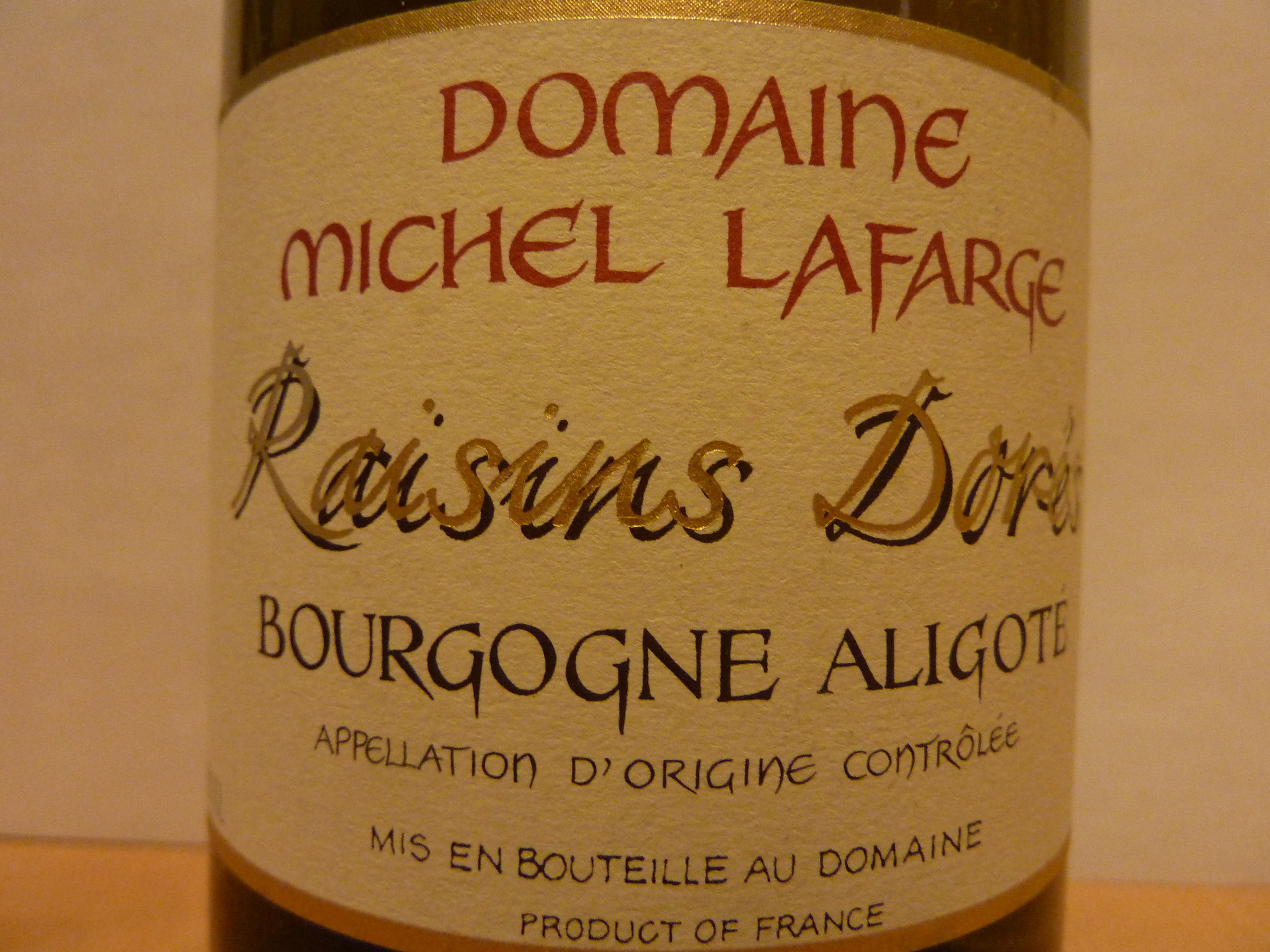
White Burgundy is almost always associated with Chardonnay, and with good reason – those wines are some of the most sought-after and expensive in the world.  Aligoté happens to be another white grape used to make dry white wines in Burgundy.   One of its synonyms, Alligotay, should clue you in on how to pronounce it.

The first record of Aligoté was in the 18th century and it’s played second fiddle to Chardonnay ever since.  DNA profiling has shown it to be part of the Pinot family.  The wines tend to have notes of apple and lemon, like many Chardonnays, but will be higher in acid and often show some herbal qualities.  Aligoté is meant to be consumed young.  

Historically, the vines of Aligoté and Chardonnay were inter-planted and producers would often create field blends of the two, relying on the higher acid of the Aligoté to give the wine a little lift.  Sadly, Aligoté is not as profitable and now the vines tend to be relegated to the highest and lowest vineyard sites (as opposed to the sweet spot in the middle of the slope), where the locals serve it with simple meals or mix it with blackcurrant liqueur to make a kir. 

While found throughout Burgundy(even in Chablis), only the village of Bouzeron in the Côte Chalonnaise has its own appellation for Aligoté, called Bourgogne Aligoté-Bouzeron (you’ll see this on the label).  Bouzeron has lower yield requirements for its Aligoté (45 hl/ha, which translates to 2.5 tons per acre vs. 60 hl/ha elsewhere) and many think the best examples come from here.  Another label option is Bourgogne Aligoté (up to 15% Chardonnay can be blended in), indicating it came from outside Bouzeron, but somewhere within Burgundy.  Outside of Alsace, this is one of the few instances where you’ll see the varietal indicated on the label.   

Pierre Morey and Michel Lafarge are two outstanding producers to look for.

Burgundy’s sparkling wine, Crémant de Bourgogne, may also be comprised of Aligoté.

Eastern Europe shows more love to Aligoté.  It can be found in Bulgaria, Romania and many of the ex-Soviet republics: Ukraine, Moldva, Georgia, Azerbaijan and Kazakhstan. I will resist the urge to make any Borat jokes.

1 Comment

Filed under Alphabet Soup, Wine

Pouring tableside

Over the summer I wrote a short piece about how a restaurant can show it cares about wine. 

I didn’t include pouring wines by the glass tableside on my list, but I should have.  The Detroit Free Press ran a great article on the subject a few days ago, citing how it’s a disappearing courtesy. 

I certainly understand the need to control costs – the main reason given for the decline of tableside pouring – but I also believe in the power of staff training.  If, as an owner or manager, you don’t trust that your staff will be able to pour the 5 or 6 ounces that comprises your glass of wine, what does that say about you?  The more you empower your staff, the better they will perform for you.   In the long run, you will also save money by allowing the guest to sample the wine prior to commiting to a full glass. 

The article didn’t mention it, but seeing the bottle is an important part of the drinking experience.  It’s nice to know that what you’ve ordered is what you’re getting and seeing the label can be a helpful tool when it comes time to remember the wine that you liked (or would like to avoid).

Leave a comment

Filed under Noteworthy articles, Wine

Pinot blanc, Trapp style

A few weeks ago I went cross-country skiing in Vermont at a place called the Trapp Family Lodge.  The Trapp family is the inspiration behind the classic musical and movie “The Sound of Music”.   We were attempting to sing this song in the car.  This video shows the lyrics, not that it helps much.

After a few hours out on their 60+ miles of trails, I have come to understand why NordicTrack claims “no other machine offers the calorie-burning, total-body workout of the original Classic Pro Skier”.

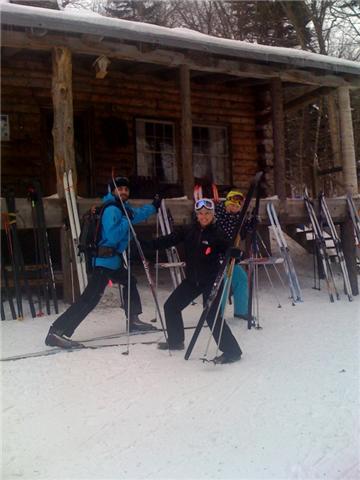
Horsing around in front of the lunch lodge.

At the end of the day, we hobbled to the gift shop, where I discovered that the Trapp Family Lodge features estate bottled Austrian wine. 

I picked up the 2008 Pinot Blanc from Höpler.  Pinot Blanc is a white mutation of Pinot Gris, which is a lighter-berried version of Pinot Noir.  It goes by Pinot Bianco in Italy, Klevner in Alsace,  Beli Pinot in eastern Europe and Weissburgunder in Germany and Austria.  This grape accounts for 6 percent of Austria’s total plantings and some argue it has its best expression here.  When dry, it tends to be fuller-bodied, round, with medium to high alcohol, notes of almonds and the ability to age. 

The wine had notes of honey, musk melon, white flowers and fresh herbs. The back label suggested ossobuco of rabbit, but it did just fine with Serrano ham, Manchego and Bleu d'Auvergne.

1 Comment

Filed under Wine

Red Riesling

I was tickled to see Eric Asimov’s piece on spätburgunder in the Times today.  German pinot noir is a beautiful thing and deserves more of our attention. 

My favorite spätburgunder of my trip to Germany happened to have been made by a gentleman mentioned in Asimov’s article, Klaus-Peter Keller of Weingut Keller.  When we sat down with him back in September 2009, he mentioned being very excited about an upcoming tasting he had scheduled with Asimov. 

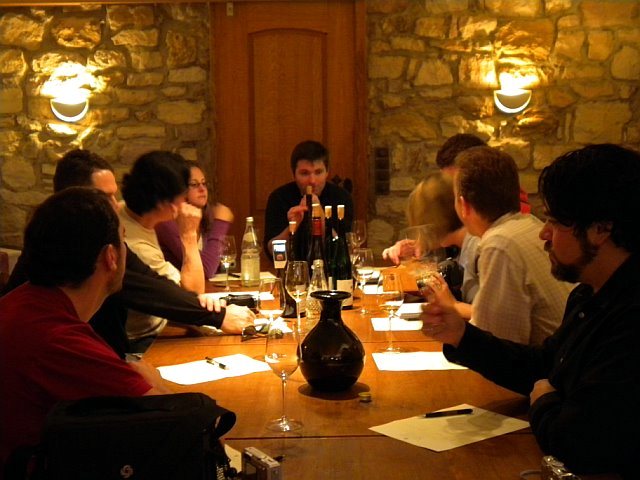
Klaus-Peter at the head of the table. He and his wife took over the winery with the 2001 vintage.

We tried over a dozen wines at this tasting, but luckily I took decent notes.  A few things Klaus-Peter said really struck me.  Good wine “must show its terroir” and it must be “easy to finish the bottle”.  He noted that good pinot is the equivalent of red riesling; “it needs oak only when the wine is missing something”, but that unfortunately when red wine is expensive, “many expect to smell wood.” 

My favorite is on the right. Felix is Klaus-Peter's oldest son. His children will be the 10th generation. On the left is a tasting sample without a proper label; it will be sold at auction. The FR stands for Frauenberg, meaning "women's vineyard" - it was 4 km away from the house, or as far away as the women could work and still be home in time to prepare lunch.

The Felix had rich, concentrated fruit – cherries and figs – with notes of light cedar, anise, tea and rose petals, and a mineral finish. 

The Felix came from 40-45 year old vines, which yield about 2 1/2 tons per hectare.

Only 10-15% new oak was used.  Keller gets his barrels from Domaine de la Romanée-Conti (a Burgundian estate, often shortened to DRC; they make some of the most expensive and sought after wine in the world).  When our mouths collectively gaped open at this comment, Keller shyly smiled, “They like my riesling.”

Some "soil" samples in the tasting room. Keller explain when there was a little clay on top of the rock, it made for fleshier wines.

Klaus-Peter told us they hand de-stem in the vineyard and then let the stems ripen another 10 days or so. About 30% of the grapes will go through the fermentation process with stems.

Next time you order pinot noir, ask for it with an umlaut.

Leave a comment

Filed under Wine

Everywhere an oink-oink

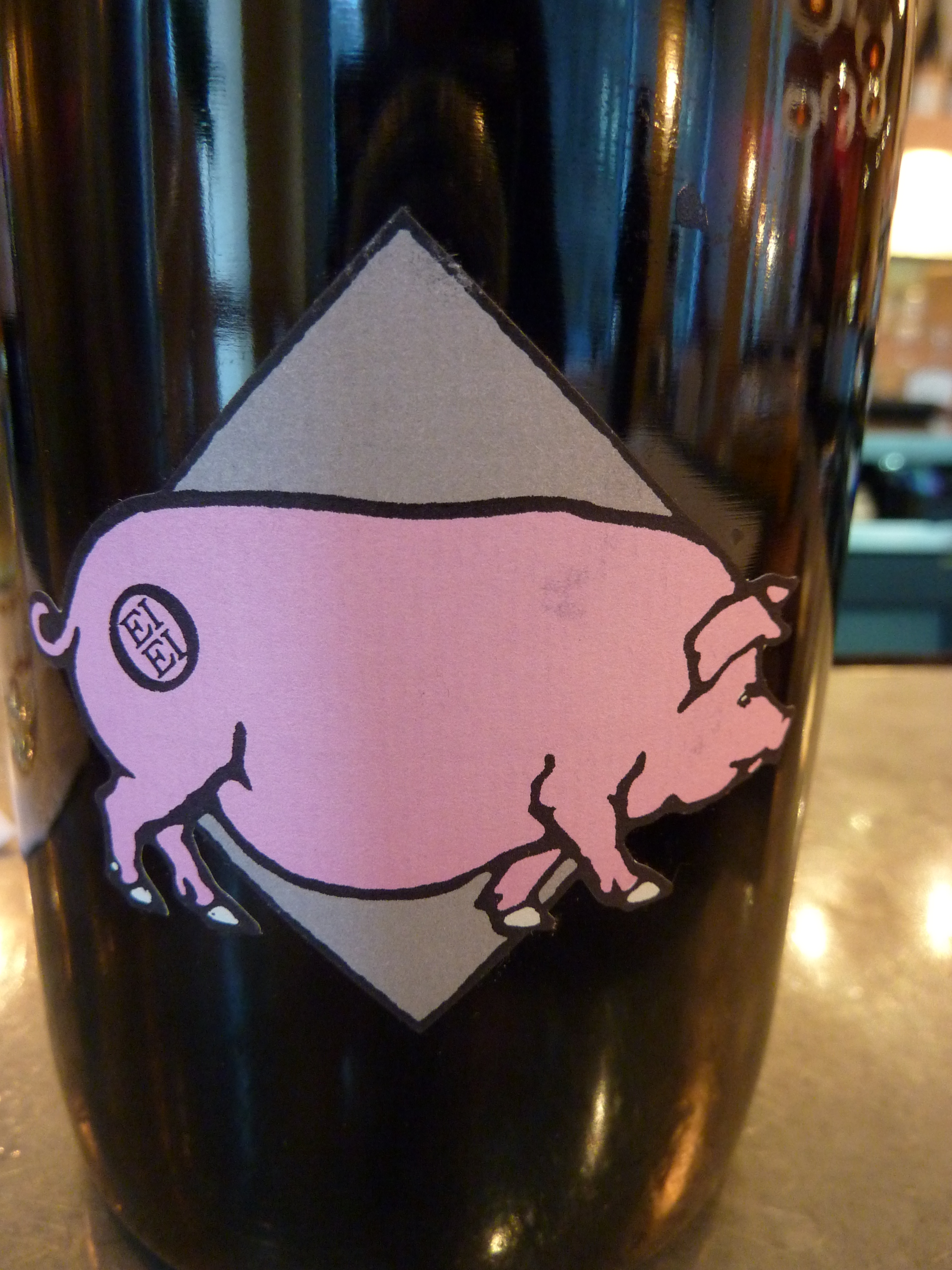
I tried a tasty Pinot Noir last week named Swine Wine.  It’s the most popular bottling of the EIEIO & Company.  The founder’s name is Jay McDonald.  The website is www.onhisfarm.com.  I’m not kidding.

one of the more tasteful "critter" labels I've seen

Finding a delicious, domestic Pinot for $25 or under is not easy to do, but this wine fits the bill.  Elegant and complex, with notes of dark cherries, plums, purple flowers and smoked meats (really!), the wine has great acidity and a lingering finish.  The grapes are sourced from some of the best vineyards in the Willamette Valley, with some of the vines dating back to 1974.  Interestingly, McDonald chose to put it out as a non-vintage wine, though a little birdie told me that most of the grapes are from the 2007 vintage.  You can purchase through their website and the wines are distributed in NYC by Verity (website is under construction).

1 Comment

Filed under Wine

One hull of a wine

I attended a 7 course tasting menu for a friend’s birthday this past weekend.  This was not your average tasting menu, however.  It was a tour of the seven continents and it was at somebody’s house.  I have talented friends.

Yes, we had kangaroo and no, I won’t divulge (yet) what was served for the Antarctica course until a later post.  What I want to do here is highlight one of my favorite courses of the evening, mostly because of its killer wine pairing. 

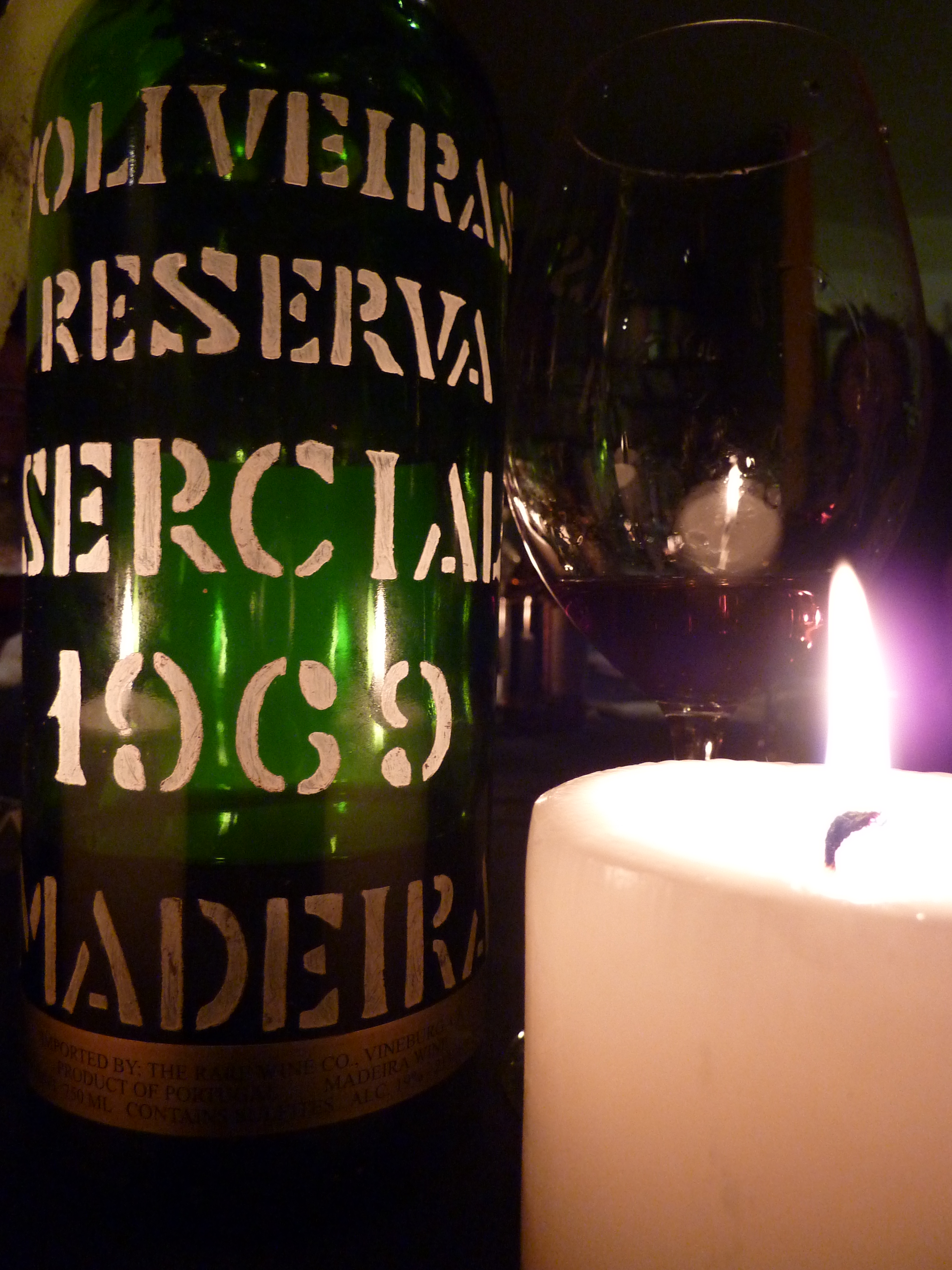
For the 6th or what would traditionally be the cheese course, we traveled to Europe and were served a twice-baked three cheese soufflé with cream alongside a house made quince ravioli in beurre noisette.  It was paired with a 1969 d’Oliveiras Sercial Madeira.  A guest at the party asked if we needed to be concerned about oxidation, given the age of the wine, so while our host (who knew the answer) puttered in the kitchen for the next course, I broke it down for everybody.

The beauty of Madeira is that it has been purposely oxidized, so there’s little you can do to harm it once it’s in your possession.  Like many other beverages, it came about as a happy accident.  Madeira is the name of a Portugese island, 400 miles off the coast of Africa.  The island was important stop for folks traveling to the New World and to the Far East – one last chance to pick up provisions. 

Good sailors wouldn’t travel without wine, but to protect it for the long journey, they would fortify it by adding neutral spirit or brandy.  The extra alcohol made the wine more stable, helping to prevent re-fermentation or microbiological spoilage.  The big casks of wine would sit in the belly of the ship and the constant rocking motion of the boat accelerated the aging process.  The heat of the tropics slowly cooked the wine into an amber, nutty, caramelized beverage.  When the sailors consumed the wine at their destination, it tasted a heck of a lot better than when they had started.

The term “maderized” has come to explain the change in Madeira’s flavor profile as it undergoes a controlled, hot oxidation.  Sending ships back and forth across the Atlantic is not terribly efficient, so now there are 3 ways to achieve a similar end result.

1. The quickest and cheapest way is to put the wine in concrete vats and circulate hot water through it using a submerged coil.  This heats the wine directly and it maderizes in about 3 months.  The wine is sweetened and fortified after it has been heated.

2. Another method is to place the wine casks in a heated warehouse.  The intense heat of the room maderizes the wine in 6-12 months.  The flavors achieved this way are more integrated, as the wine is fortified prior to the start of the aging process.

3.  The most expensive and time consuming method is to put the casks in a non-temperature controlled warehouse and just let them sit.  This process can take a number of years, but yields wines of extraordinary quality. 

Madeira is an incredibly versatile wine to pair with cheeses

For those of you who are interested, there are 4 traditional “noble” grapes of Madeira.

1. Sercial.  This is used to produce the driest Madeiras (0.5 to 1.5% residual sugar).  The sweetness is offset by its searing acidity.  Often tastes of almonds.
2. Verdelho.  Produces moderately sweet Madeiras (1.5 to 2.5% rs).  These often have a pronounced smokiness.  You may recognize the grape name, as it’s also used to make white wine in Portugal and Spain (under the name Verdejo).
3. Bual.  This has a raisiny sweetness and a residual sugar level of 2.5 to 3.5%.
4. Malmsey.  This word is the English corruption of the word Malvasia, a grape used to make tasty white wine in Italy.  This is the sweetest style of Madeira (3.5 to 6.5% rs), with a nutty grapiness, but still with well-balanced acidity.

Look for more posts on this around-the-world-feast soon.

1 Comment

Filed under Wine

Great with bacon and eggs?

We already covered sparkling rosé for the holidays, but don’t forget about sparkling red.

To be honest, I usually can’t stand the stuff.  Sure, I’ve had a quaffable Lambrusco before, but most of the sparkling Malbec and Shiraz I’ve sampled have been too cloying or too heavy or simply out of balance.  That all changed tonight.

Majella's 2005 Sparkling Shiraz

We had a great lineup for our sparkling wine class – Cava, Prosecco, Deutscher Sekt, Rosé Champagne and more, but this sparkling Shiraz was the surprise hit.  100% Shiraz from the Coonawarra region of South Australia and while clocking in at 14% alcohol, this wine was surprisingly elegant.  The aromas were classic Syrah – black fruits, violets, spice and sausage.  It’s aged on the lees for 48 months and they use vintage port as the dosage.  If you have no idea what this sentence means, click here.

The tasting notes from the producer’s website suggested that it would “great with bacon and eggs”.  While it would be a versatile wine and a fun addition to a holiday party, it might be a little much to start your day with.  Someone from that part of the world responded to my concern in class by saying that bacon and eggs are a common thing to have for Sunday supper.  I’ll drink to that.

Leave a comment

Filed under Wine

Rosé face off

Pink and bubbly – very rarely can you go wrong, holiday season or not.

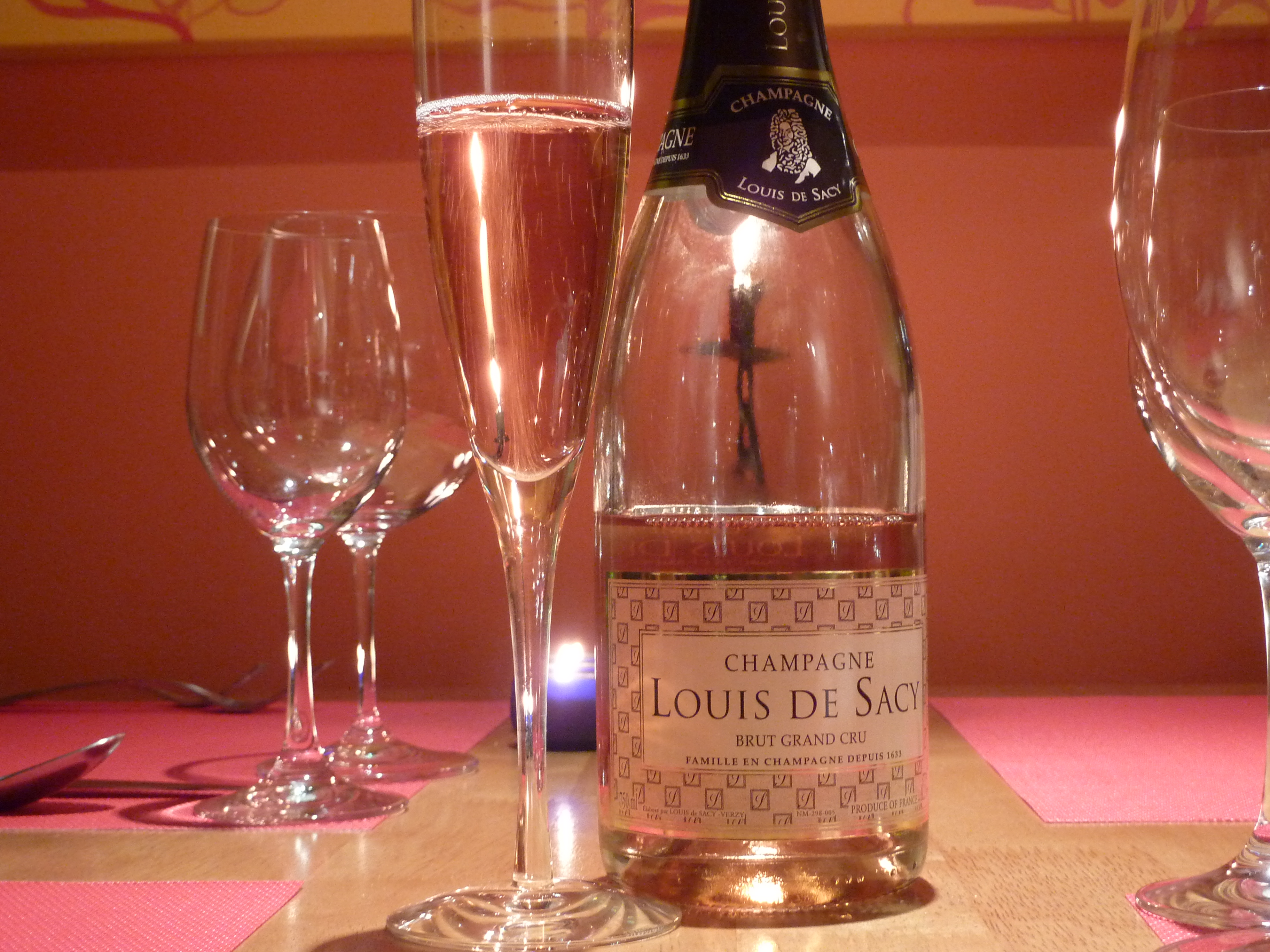
Tonight, we pitted 2 rosé Champagnes against one another.  Richard made dinner and these are his tasting notes.  Alberto was the creative director behind the photos.

1st up - Louis de Sacy. Those bubbles are relentless.

R: Light bodied with wild strawberries and interesting Provençal herbs – not lavender flowers, but lavender leaves and thyme.  In a blind tasting I may have said this was a Cremant from Provence, but then again, it did have the elegance of a Champagne.

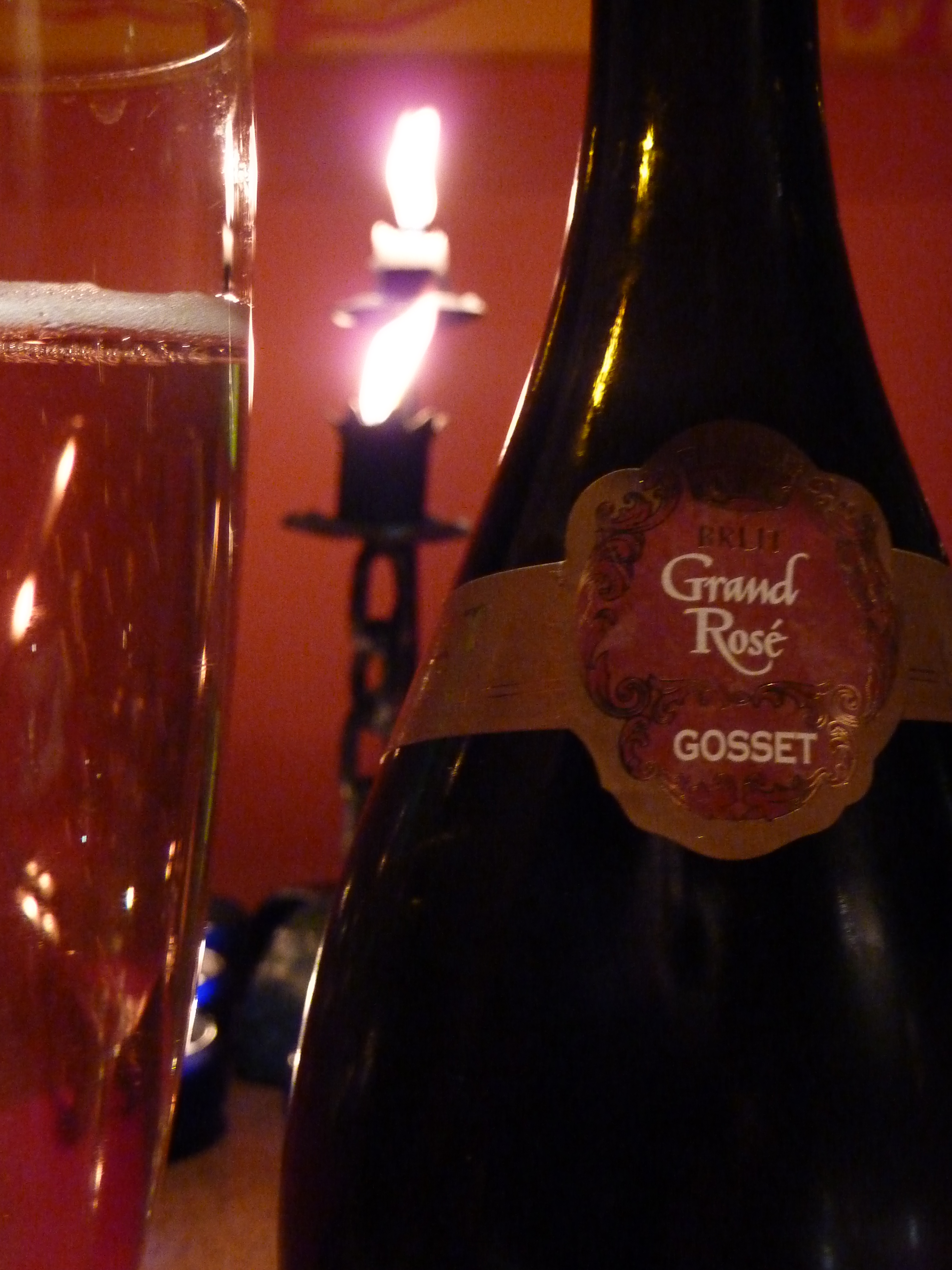
The oldest house in Champagne, dating back to 1584

The second rosé was from Gosset.  R: Slightly more full-bodied than the Louis de Sacy, this wine showed an unexpected salinity and a more crisp acidity.  The salinity and the acidity were positives for me, making it more food friendly.  There were some wild strawberries here, too, but not as intensely so.

Neither Champagne made it much past appetizers, so debating the food friendly nature of these two could be called into question.  To be fair, the appetizers were homemade gougères and a natural partner to rosé Champagne.

2 Comments

Filed under Wine