Category Archives: Wine

Wine grape vines haven’t been getting busy

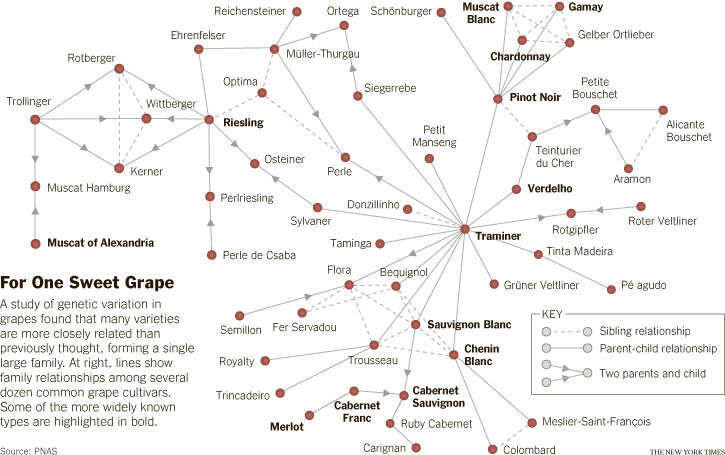
The New York Times reported last week that grape vines weren’t having enough sex.  At first glance, this may not seem like a major problem (insert sex joke here).  Alas, it is a big deal.  Look at the mess of a family tree that has been created as a result:

A geneticist from Cornell determined that 75% of wine grape varieties are as closely related as a parent and child or brother and sister.  This is as simple as the NYT could break it down, and I won’t try to compete:

“Thus merlot is intimately related to cabernet franc, which is a parent of cabernet sauvignon, whose other parent is sauvignon blanc, the daughter of traminer, which is also a progenitor of pinot noir, a parent of chardonnay.”

What happened to cause this?  The ease of propagating vines through grafting, phylloxera, wine laws, and our palates.  As a result of so much genetic similarity, the grapes are more susecptible to a wide range of pests, and vineyard managers have resorted to herbicides, fungicides and other nasty chemicals. 

The Times points out three options: add genes for pest resistance, go organic, breed sturdier varieties. 

Big problems with these three options: folks don’t like genetically modified plants, grape vines can have a hard time surviving in an organic environment, and breeding new varieties takes time, money and we’re not guaranteed a tasty result. 

The article went on to discuss a new plant breeding method, called genomic selection or marker-assisted breeding, which would enable scientisits to explore the grape genome.

Leave a comment

Filed under Alcohol in the News, Wine

Cru Beaujolais

I went to my second tasting group meeting last night.  Thanks to a lack of planning on my part, my camera battery died early in the evening, but here we go:

To keep us hydrated during set-up, we had Beaujolais Blanc from Chateau du Chatelard. Round, with apple, pear and toasty notes, some of the Chardonnay vines are over 95 years old. It was killer with the Montasio (aged cow's milk from Northern Italy) I brought.

Chris and Tif prepping the bottles. You'll note we have quite a bit more wine this time around. It makes a difference when the average retail price is around $20!

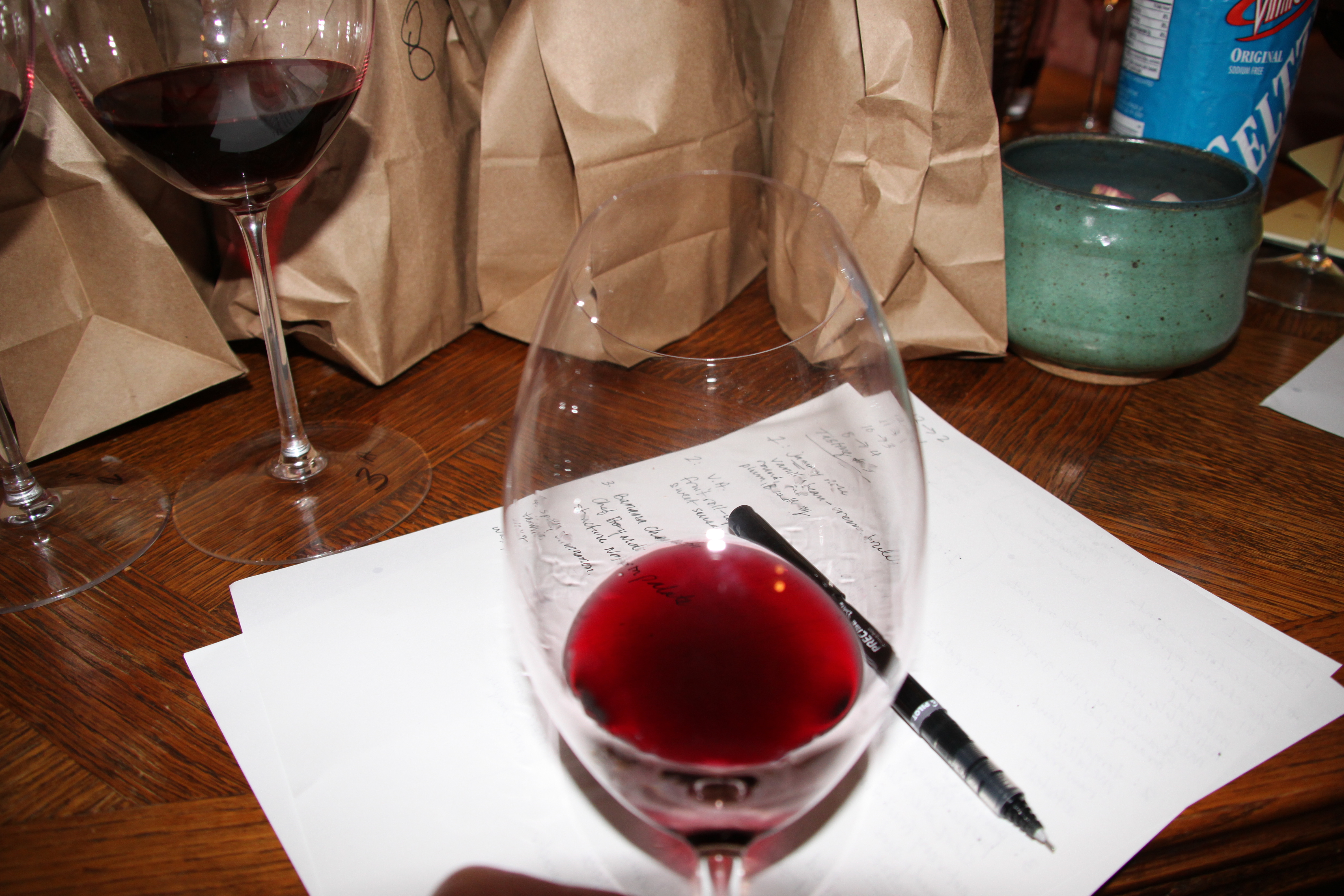
We put all the wine into brown bags and we each opened bottles we had not brought, removing the cork and foil and taping the top of the bag. I picked up the bags on the way over and the bodega owner gave me 12 for $1, wondering why I didn't buy any Chateau Diana to put in them.

We broke our 12 wines into 3 flights of 4. One of our members was stuck in the country because of the snow, so we had 6 out of the 10 Crus represented.

Most of the wines had this electric magenta color. Some other commonalities we found: high acid, minerality, plenty of evidence of carbon maceration. Most of our bottles were current releases - 2009 - though we had a 2006, a 2008 and a 2002.

My favorites of the evening, in no particular order:

1. Domaine de la Chapelle des Bois Fleurie 2009.  Cherry poprocks, ruby grapefruit, orange peel, noticeable oak (in a good way).

2. Jean-Paul Brun Terres Dorées Moulin-a-Vent 2009.  This won’t be a surprise to any Gamay fans out there.  Perfumed, purple flowers, dark cherries, lipstick (strange, but true, and not unpleasant).

3. Clos de la Roilette Fleurie 2009.  We also had the “late harvest” version of this wine, which my companions preferred.  Structured, reminded me of eating prosciutto and figs.

4. Château du Bois de la Salle “Le Vieux Bourg” Moulin-a-Vent 2009.  Spicy cherries with cinnamon.

Interestingly enough, I brought numbers 1 and 4.  We have them on our wine list at L’Ecole.  Guess I know what I like.

I don’t have any food porn shots, but Chris came through, as usual.  Charcuterie course, seared pork tenderloin with roasted potatoes (crisped up in some fat from the pâté), pineapple crêpes with rum.

Overall, we weren’t blown away by any of the wines during the blind tasting section of the evening.  Most of the wines showed better when we brought out the charcuterie.  That said, these are value-priced wines, made with craftsmanship that show off their unique terroir.

1 Comment

Filed under Wine

And you thought they just produced Shiraz

Today I attended the Landmark Australia Master Class, featuring an impressive line-up of Australian Riesling and Pinot Noir.  It was an invite-only tasting and I heard about it through the Sommelier Immersion Program I’m currently enrolled in, through Wine Australia (more about this later).

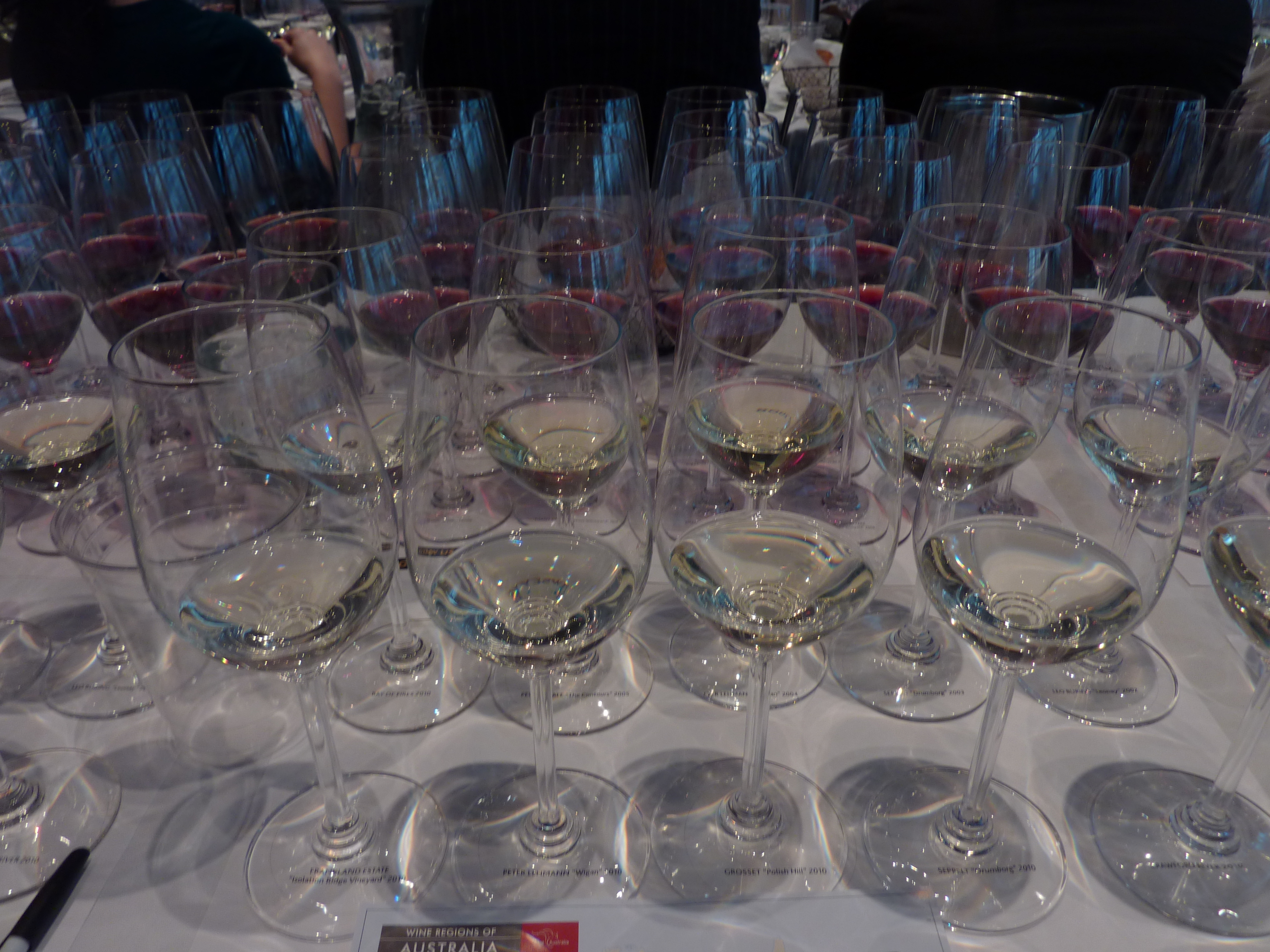
After skiing, the best thing to do on a snowy, wintry day - cuddle up with 25 wines.

Four presenters led the tasting: Tom Carson, chief winemaker at Yabby Lake; Jon Troutman, senior editor of Cork’d; Michael Hill Smith, owner of Shaw and Smith winery and Suzanne Barros, East Coast Market Development Manager for Wine Australia (and our instructor for the Immersion program).

These folks are really smart.  They are putting exciting wines in front of sommeliers, retailers, educators, writers, restauranteurs, importers, and distributors, and it’s working. 

My ideas about Australian wine have completely changed over the last few months, and I’m not alone.  Sure, the country has inexpensive, mass-produced wines on one end of the spectrum and expensive, overly-extracted wines on the other, but they also have cool-climate varietals that deserve a place at the dinner table (and on thoughtful wine lists). 

Some highlights/fun facts:

*The 6 2010 Rieslings we sampled were dry, elegant, sometimes fruity, sometimes floral and had, as Paul Grieco called it, “a bone-crushing acidity”.  Michael said to drink these wines now would be “vinocide” and he’s right.  You can see their potential, but some of them won’t even be released to the marketplace for another 5 years.  My favorite was the 2010 Grosset Polish Hill Riesling from Clare Valley – concentrated, yet delicate with lots of kaffir lime.

*The “spiritual home” of Riesling in Australia is South Australia, particularly in Clare and Eden Valleys.  Eden is slightly cooler than Clare, so the Eden Rieslings tend to be a little tigher, with higher acidity and more rose and floral notes, while the Clare Rieslings have more lime and citrus.

*Several panel members poo-pooed the petrol character that some aged Rieslings develop, attributing these aromas to overexposed fruit or water-stressed vines. 

*An attendee asked whether some residual sugar in the Rieslings would make them more approachable in their youth.  Tom commented that if you have r.s. at the get-go, the wines will get more sweet with age and won’t gain as much complexity as a dry wine.  I bet there are plenty of Germans out there who would disagree.  Michael noted that the grapes can get ripe enough in Australia to be fermented dry, and create a balanced wine.

*The aged Rieslings we sampled – one each from 2002, 2003, 2004 and 2005 – took on toasted honey and fig characteristics.  My favorite was the 2004 Peter Lehman Wigan Riesling from Eden Valley – toasty and honeyed notes, but still had incredible freshness.

*Pinot Noir accounts for about 2% of Australia’s production (Riesling is not much more). 

*MV6 is the most widely-planted clone.  MV stands for “mother vine” and it came from one of James Busby’s cuttings in 1831 from Clos Vougeot.

*The panel indicated that quality Pinot Noir in Burgundy needs the following things: continental climate, limestone-based soils, cold climate, northerly latitude, old vines (>50 years) and selection massale.  Where they may be missing some of these factors in Australia, they do have these: high altitude vineyards, southerly latitude, continental climate (in terms of diurnal temperature shifts), and a maritime influence. 

*Michael remarked that “Pinot Noir needs tension on the palate” and most of the reds we tried were nervy, indeed.  My favorite current vintage was the 2008 Wines by Farr Sangreal Vineyard from Geelong, Victoria – black fruits, red fruits, earthy spice and some carbonic maceration qualities.  The older wine winner for most of the group was the 2000 Yering Station Reserve from Yarra Valley (mine was oxidized).

*Michael likened Pinot Noir in Australia to rock n’roll – it’s exciting, and being embraced and supported by their local market.  It’s probably a welcome relief for folks who are used to drinking jammy, 15%++ alcohol wines.

*Tom closed by reminding us that Australia hasn’t yet hit its Pinot Noir potential, indicating that Burgundy has already made their best wines and that their challenge is to keep it up.  He imagined it was quite a bit of pressure to make a La Tâche every year. 

I look forward to following these producers, as they get closer to finding their stride.

1 Comment

Filed under Wine

Sommelier Journal

Over the summer, I agreed to help the Sommelier Journal with their ad campaign.  For those of you in the industry who don’t subscribe to it yet, it’s worth checking out.  This just ran in the December 2010 issue:

Leave a comment

Filed under Alcohol in the News, Wine

Happy New Year!

We’ve just gotten back from a trip to Thailand.  Two weeks without checking work email or turning my cell phone on has made me feel pretty amazing.  I’m recharged and thirsty for all of the adventures 2011 will bring.  Some photos for your amusement.

We landed in Bangkok at 8 am on Christmas Day and after checking in to our hotel, we headed straight to the Chatuchak Weekend Market, where they sold everything from electronics, to furniture, to baby squirrels (as pets!). This is our first cockail, a Singapore Sling.

An unfortunate name for this white spirit, made from grain.

For New Year's, we headed to Koh Phi Phi Don Island and this was a sign we found on one of the main streets. We got close to plenty of fish on the trip, but we didn't kiss any.

Red Bull style beverage with a beach-worthy name. Tastes pretty much identical.
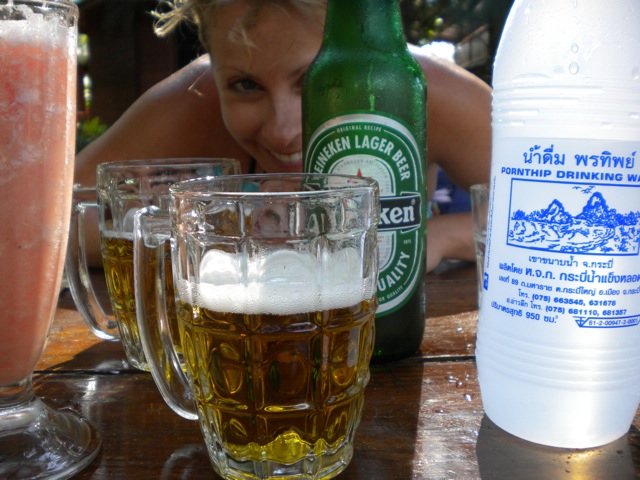
Heineken was everywhere. I especially like the name of the drinking water.

Two "James Bond Martinis" at the Vertigo Bar at the Banyan Tree Hotel. You can see the entire city from 59 floors up.

Our last night included a meal at Bo.lan. This was one of their signature cocktails - Thai whiskey, ginger, lemongrass. Tasty stuff. Tried looking for the recipe on their website, but no luck. Inventive tasting menu worth checking out.

Other beverage notes: Carnation makes street coffee delicious; lots of canned coffee beverages, particularly from Nescaféand Birdy; the Coke Light tastes better than our Diet Coke. 

I returned very thirsty for wine, as it was hard to find and (relatively) expensive.  Apparently, there’s a 100% tax on it and a hotel manager told us most folks probably wouldn’t bother to carry it, except that most tourists are expecting it to be available.  Some wine is being made in Thailand, though I only saw it on one wine list and it was out of stock when I tried to order it.  We purchased a bottle at the airport, but because of increased security at the Dubai airport on one of our legs back, we had to give it up.

3 Comments

Filed under Spirits, Wine

“I’m a 91 on that”

I cannot define a perfect wine. 

This is a teaser video for James Suckling’s new website.  Note the intense synthesizer background.

Does it make you want to check out his website?

1 Comment

Filed under Videos, Wine

Undersea wine cellar

Last week, the Brisbane Times reported that Ivan Simonic, a Slovenian winemaker, retrieved 600 bottles of sparkling wine from the bottom of the Adriatic.  He had put them there on purpose, citing the temperature of the ocean at this depth (12 to 13 °C, 53 to 55°F) was perfect for storing and aging wine.  Even more interesting, he seemed to imply that the movement of the ocean would eliminate the need for riddling.

photo courtesty of AFP. The article mentioned the wine had aged undersea in clay amphoras, but that looks like a sea-crusted glass bottle to me.

His “Poseidan” will hit the market at 100 euros per bottle, and if it sells well, he’s considering a more permanent undersea cellar.

Leave a comment

Filed under Alcohol in the News, Wine

Bordeaux from the 1980s

I recently joined a tasting group and that was the only instruction I received prior to showing up.

There were 4 of us and we each brown bagged our selections. Scott brought 2. For next time, we agreed to make this step double-blind (i.e. I knew which bag was mine).

It was my job to decant all of the bottles. I'm smiling because I didn't have to wash the glassware and I was told I looked too "serious" by the photographer.

I was using the candlelight to spot for sediment. Yes, at one point, I did light one of the paper bags on fire.

We tasted through the wines and made notes, guessing commune and vintage. Across the board, we were surprised by the great acidity as well as the lightness of the tannins.

Montrose. Sounds French, right? Wrong, New South Wales in Australia. Wine #1 was a ringer courtesy of Chris. The nose was exciting; cinnamon ribbon candy, coffee, licorice, venison. The palate was diappointing, however; one-noted and hot on the finish. The least favorite of the group.

Chateau Meyney 1985. Dried cherries, anise, and brett in a good way. On the front palate, a slight bit of corkiness came through, but it wasn't necessarily unpleasant. I had guessed St. Julien 1987. Doh.

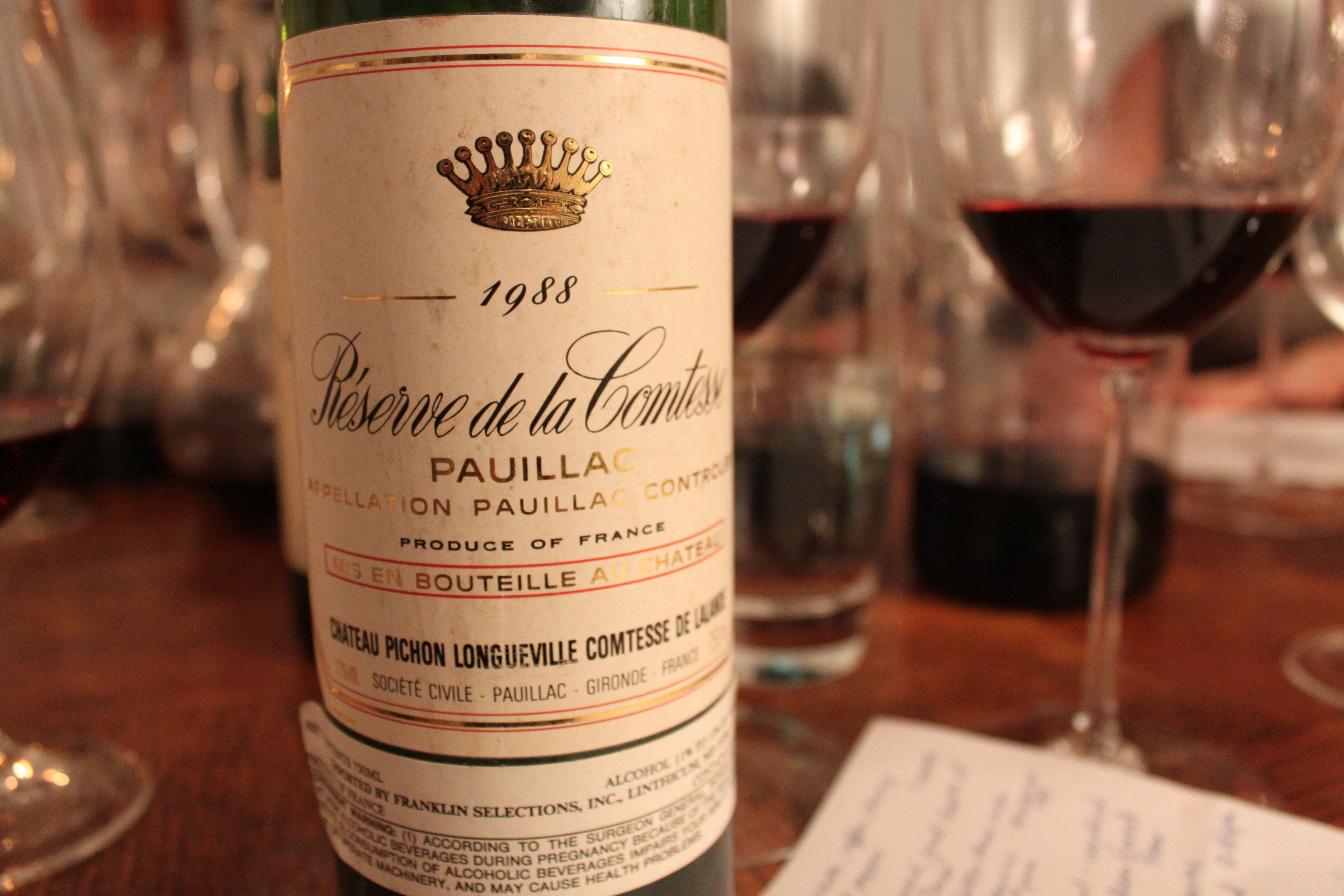
Wine #3, the Reserve de la Comtesse 1988, was the group favorite. Chocolate, coffee, cherry, bell pepper, tobacco; great balance and depth of flavor. The most structured of the bunch.

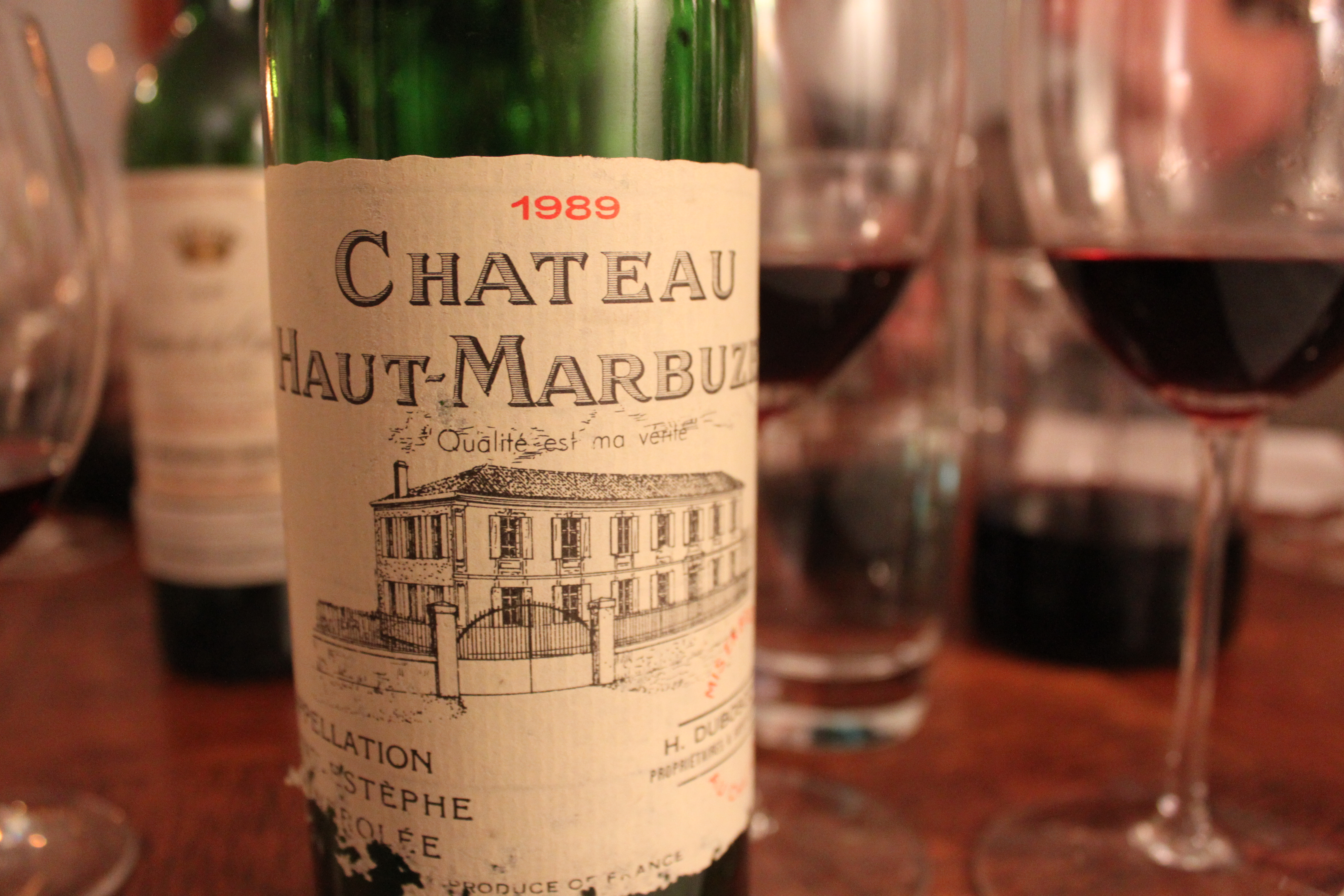
Wine #4, the Chateau Haut Marbuzet 1989, was mine and I was happy that I didn't embarass myself. Candied fruit, forest floor, sundried tomatoes and dusty tannins. Shout out to Chambers St. Wines for making a same-day delivery and only charging me $10 (nothing like waiting until the last minute).

Wine #5, Chateau Bouscaut 1989, was the most tannic of the line-up. It had lots of sweet spice and vanilla, along with an interesting metallic/bloody character.

Chris threw a Sauternes into the mix because it just seemed wrong not to. The wine was very deeply colored, with a spicy horseradish quality on the nose. The botrytis was very clean and the wine had so much acidity, it barely seemed sweet.

It would have been a lot of wine to have without any food to wash it down, but Chris, the ever-gracious host, had prepared a 4 course meal. Here's the first: foie mousse on toasted baguette. Didn't suck with the Sauternes.

Course 2, coq au vin, happily bubbling away on the stove. You'd think that poultry cooked with wine and mushrooms would be incredibly wine-friendly, but most of the reds in our tasting couldn't stand up to the dish.

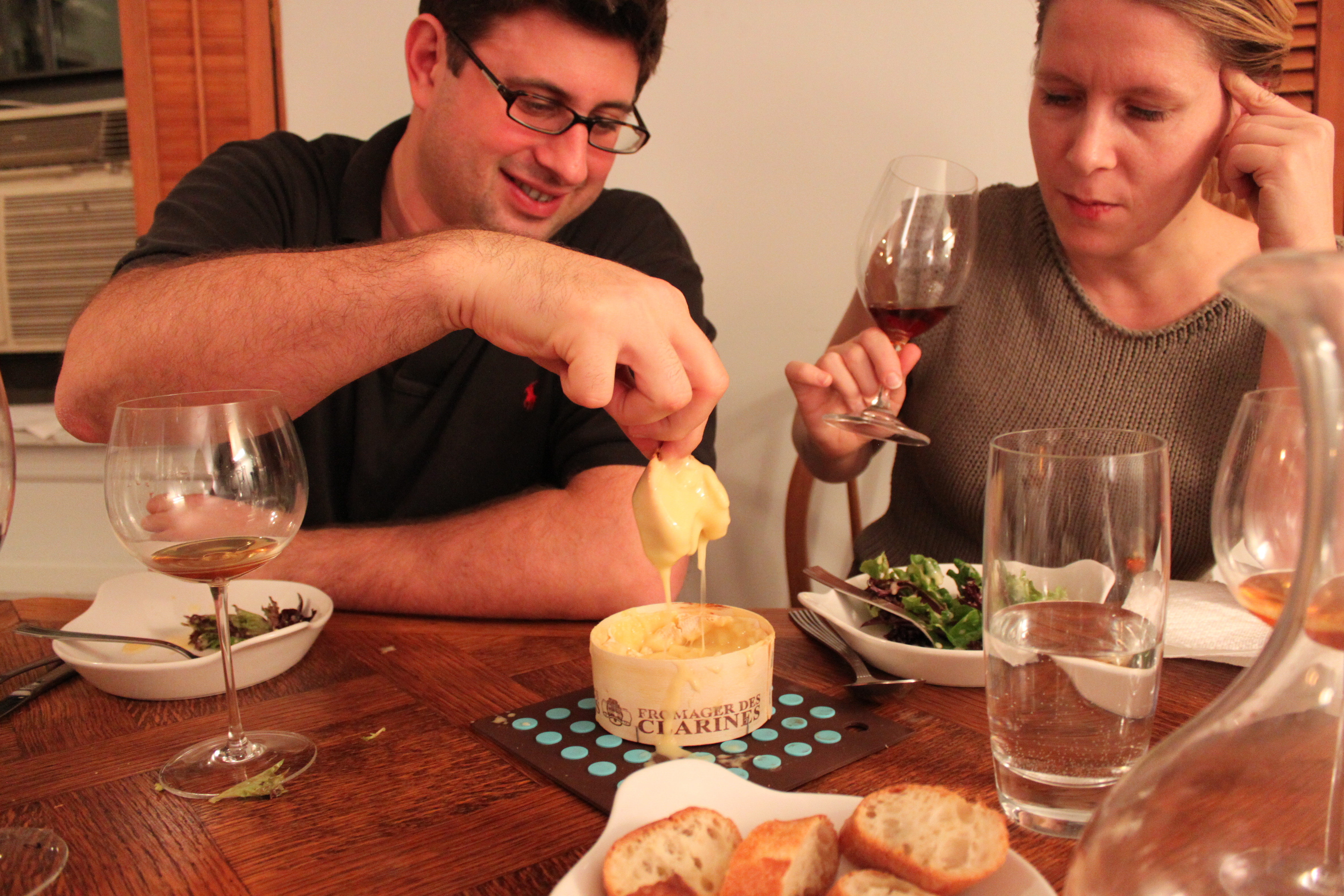
Course 3 was a washed rind cheese that Chris added 2 cloves of garlic and some Sauternes to and stuck in the oven. It came out a fragrant and gooey mess. The side salad was not enough to offset the amount of cheese and foie that we put away.

Last, but not least, an apple tart with honey. The Sauternes ended up being the most versatile wine across all of the food courses. The best surprise was still to come.

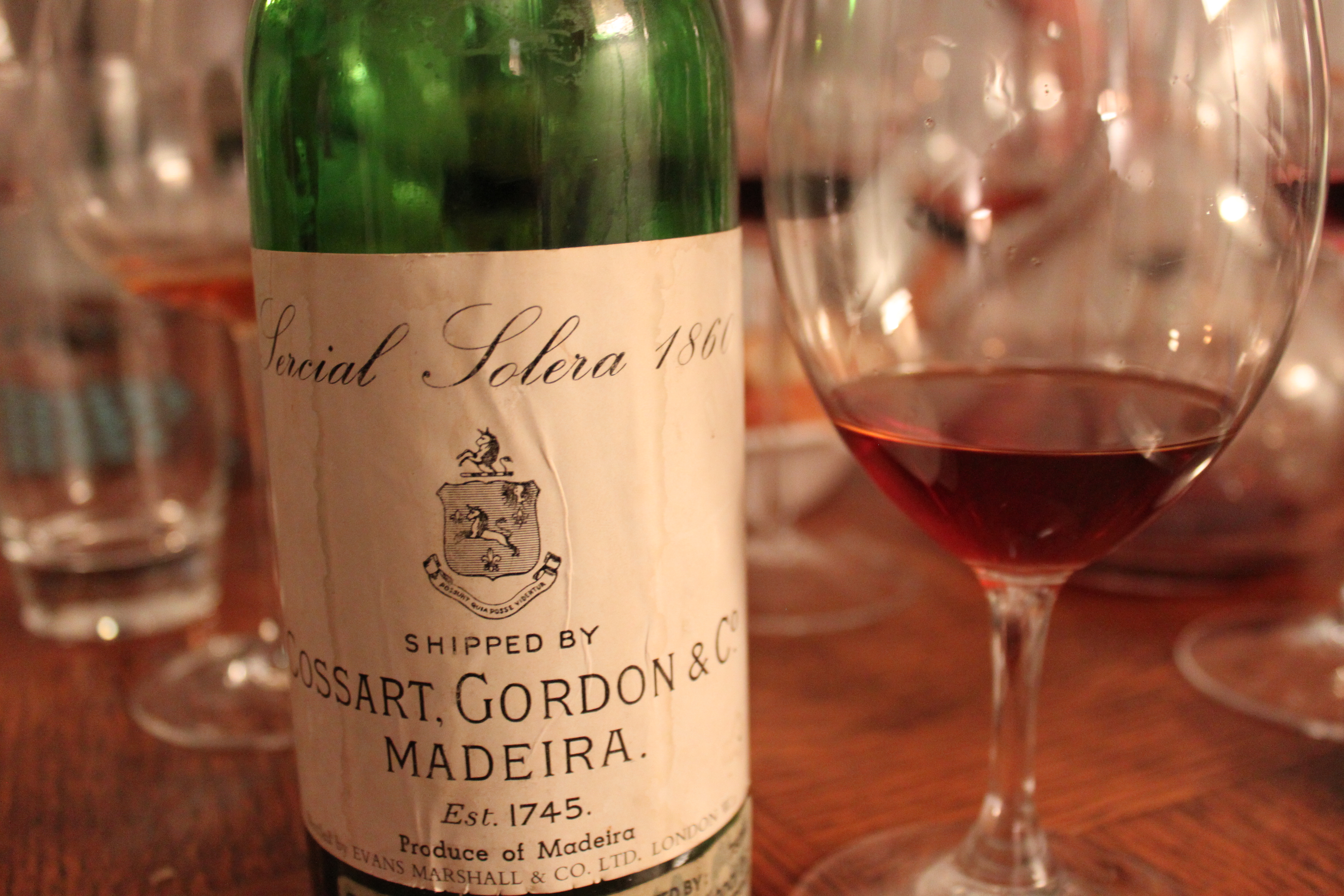
Yup, you read it right, a Sercial Solera from 1860. Amazingly alive and vibrant. You could almost smell the acidity. Guess they call it the dog strangler for a reason.

Lining up the damage at the end of the night. The Grunhauser was because we got thirsty while setting up and the Dead Arm Chris just happened to have sitting open in his kitchen. Thanks everyone. Looking forward to the next one!

1 Comment

Filed under Wine

Working at Red Tail Ridge

This past Sunday, I got put to work at Red Tail Ridge winery, which is located on the west side of Seneca Lake, in the Finger Lakes.  It’s a husband and wife operation that opened in 2005.  They’ve got 34 planted acres of Riesling, Chardonnay, Pinot Noir and some other fun varietals like Teroledgo (primarily grown in NE Italy) and they’re the first LEED-certified (Leadership in Energy and Environmental Design) winery in the region. 

The main goal of the day was racking (aka moving from one container to another) Lemberger.  Lemberger is the German name for Austrian Blaufränkish or Hungarian Kékfrankos.  Wines made from this grape tend to have great acidity, dark cherry and smoky notes, and medium tannins.

The first step was to prepare the tank by filling it with nitrogen. The nitrogen would form a blanket over the wine once it was in the tank, protecting it from exposure to oxygen.

I spent a lot of quality time with this pump. Gina, a current student in Viticulture and Wine Technology at Finger Lakes Community College, is in the background. She's been interning at RTR since April and was incredibly helpful. I've picked grapes before and I've read about winemaking, but using the equipment was all new to me.

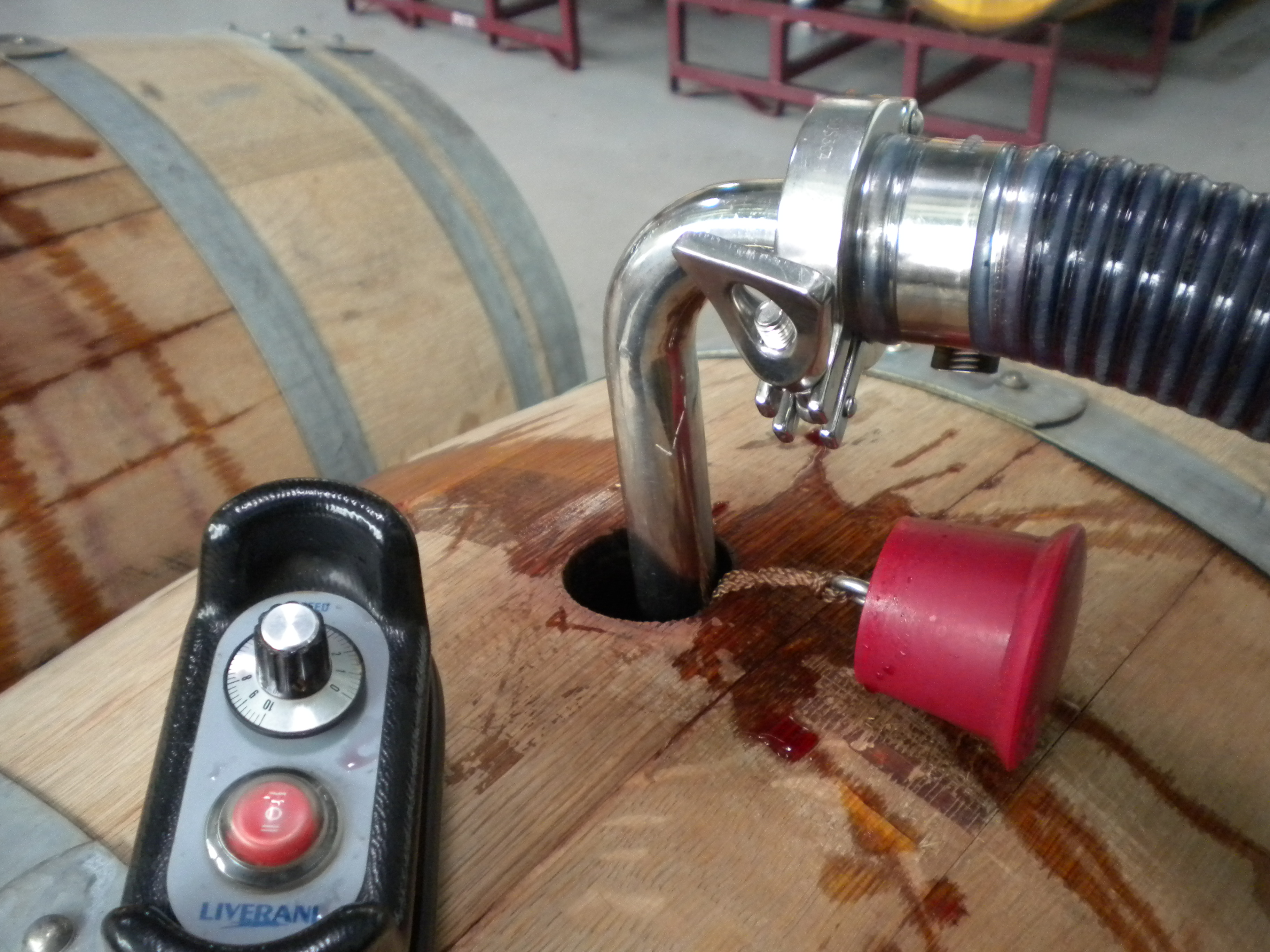
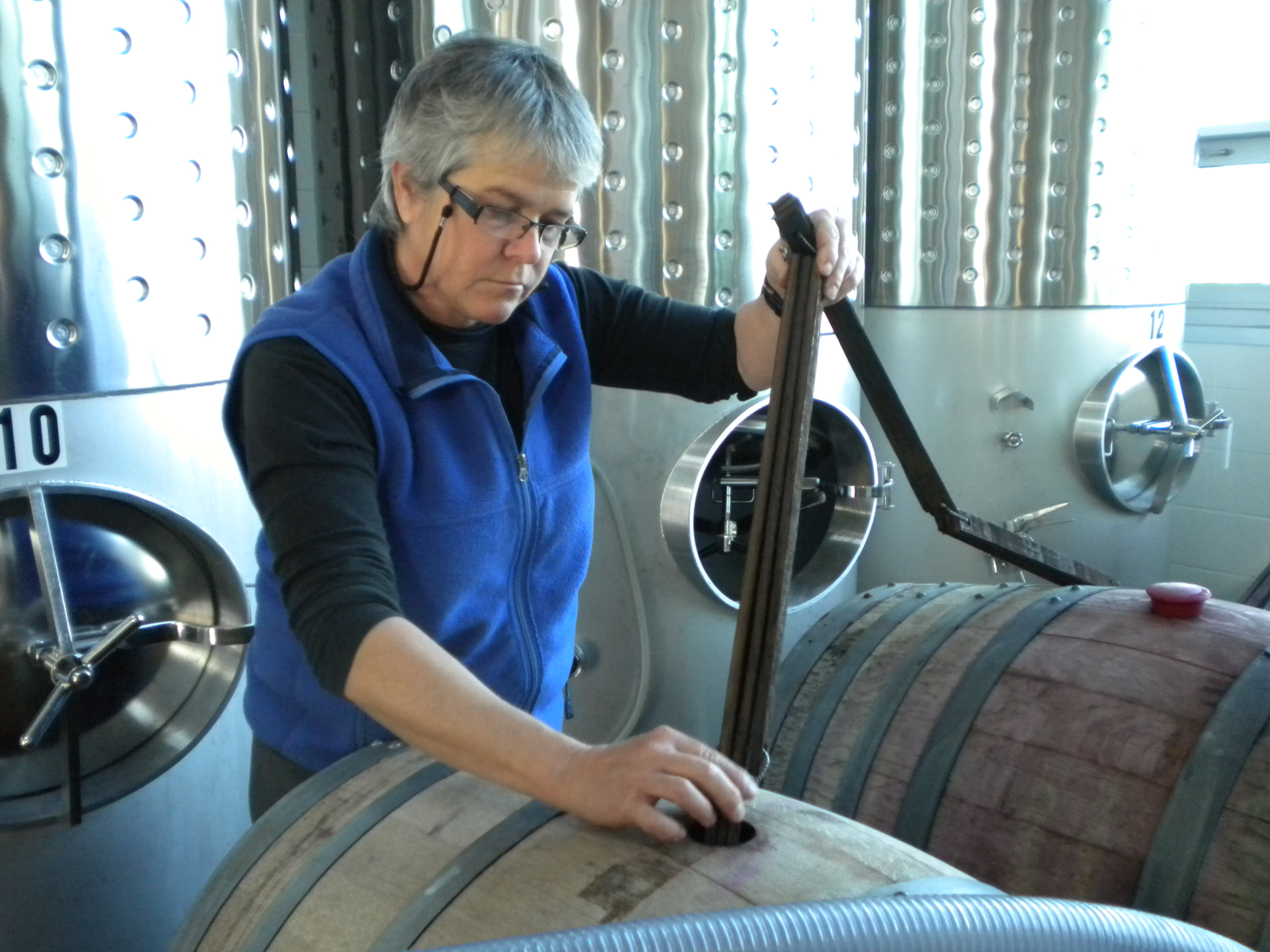
It was my job to empty 16 barrels of 2009 Lemberger into tank. On the left is the remote control for the pump, where I controlled the speed and direction of the wine flow. I had to pay attention and stop the pump at the right moment, so as to not suck up any excess oxygen. I spent most of this time with a flashlight in one hand peering into the bung hole and the remote control in the other.

After the barrels were emptied, they had to be cleaned and this we did with a powerwasher. We had to clean them right away because the next step was to then fill them with 2010 Lemberger that was waiting in another tank.

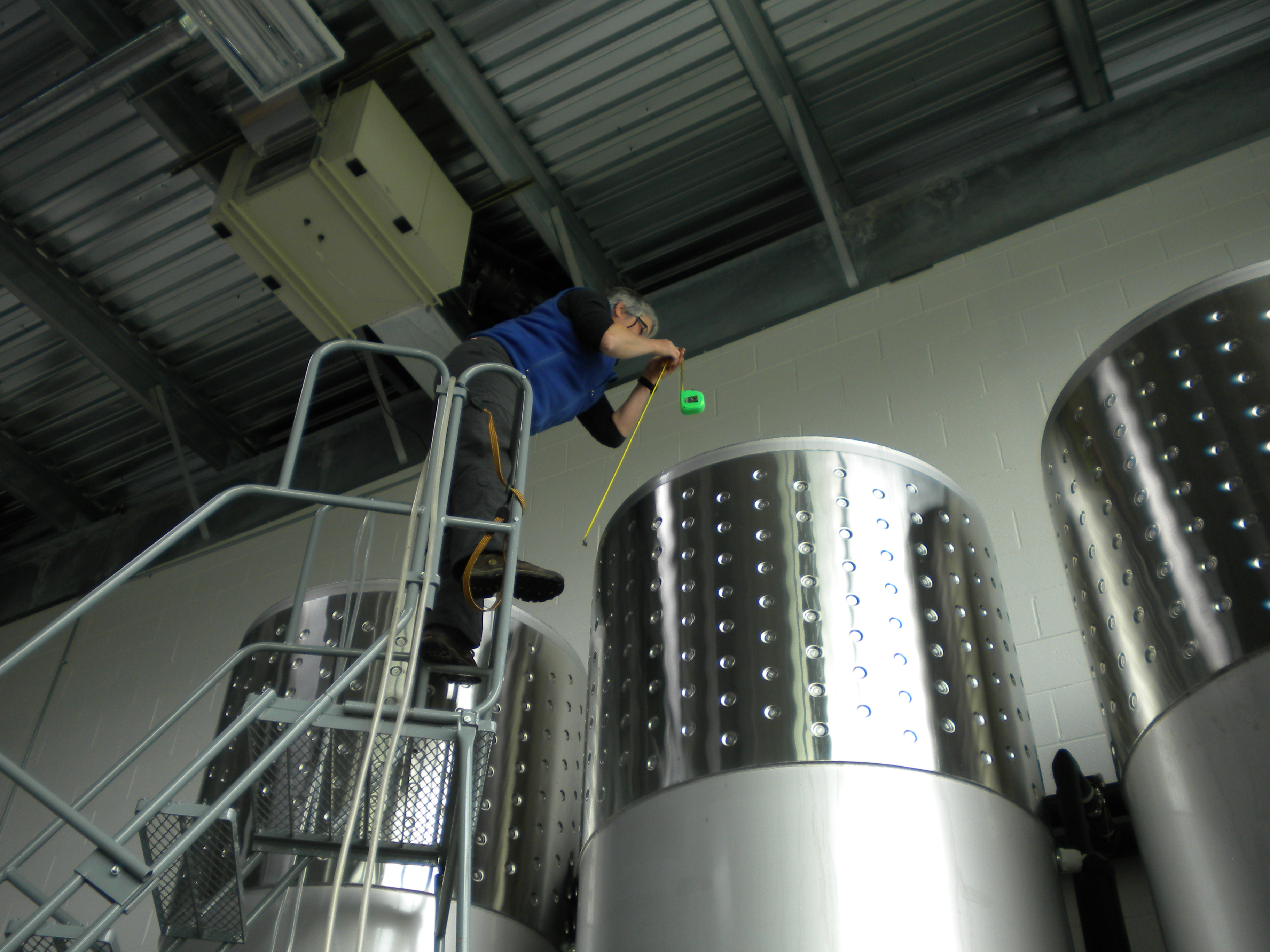
Nancy, the owner, checking the fill level on the tank. Filling the barrels looked a lot like emptying the barrels, just using the pump in the opposite direction. Before I got started, Nancy made sure I had a change of clothes. She doesn't like a lot of head space in her barrels and she anticpated that I might end up with a wine geyser as a first-time barrel filler. Luckily, I didn't embarass myself.

In one out of the 16 barrels, Nancy inserted a stave, which would impart more oak qualities (tannin, structure, sweet spice, etc.) to the final blend. The stave itself smelled like bacon and eggs.

Here's the sludge that was left at the bottom of the tank, once we had filled our barrels. I got to scrape it out with a dustpan. I was told not to inhale very deeply while my head was inside the tank, as there was quite a bit of CO2 left. Very glamorous stuff.

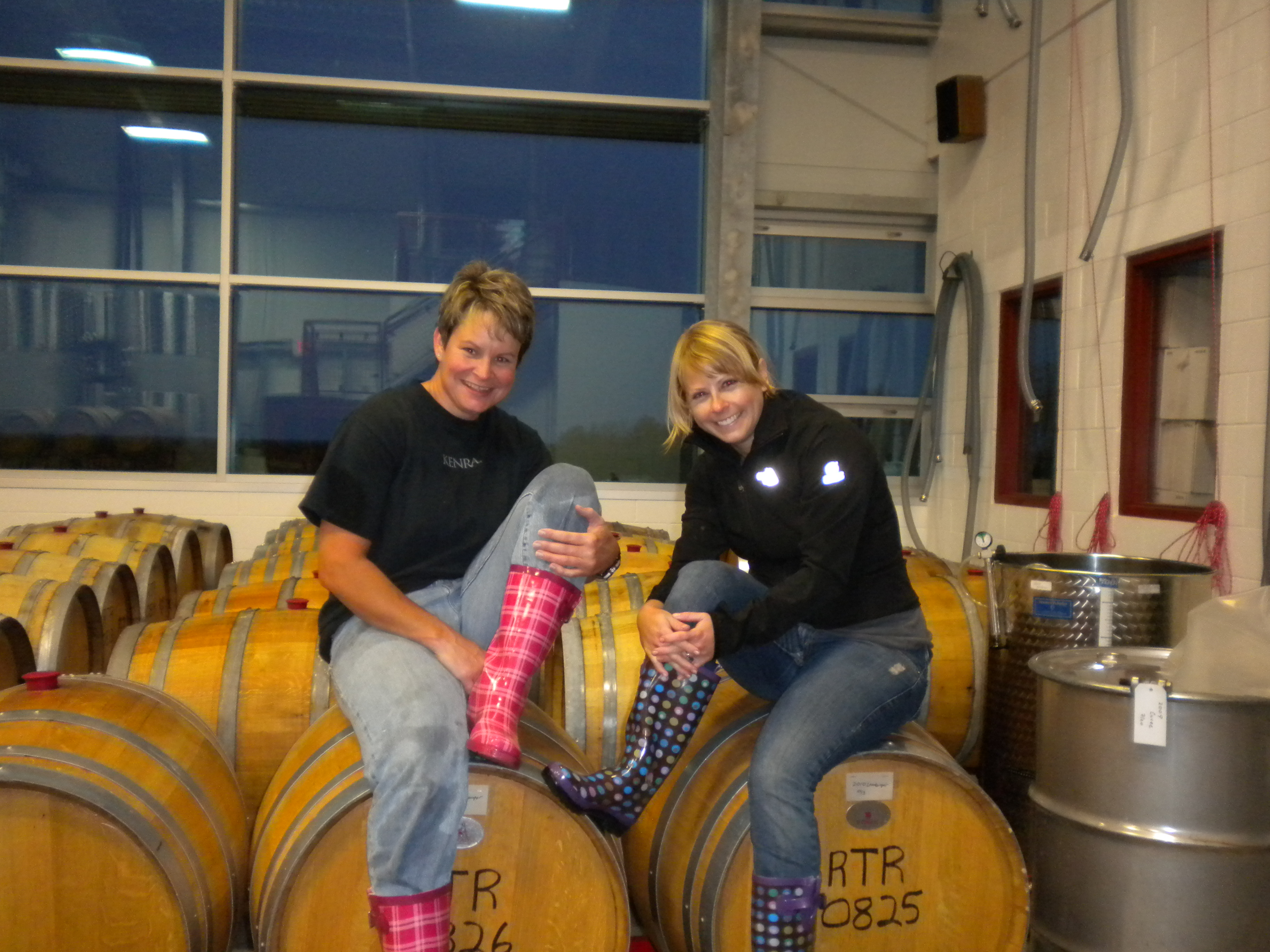
Here we are, still smiling, almost 12 hours later. My rain boots came in handy.

Some take-aways:
*I will never complain about the price of an artisanal wine now that I have a better idea of the amount of work/love/sweat that goes into each bottle.
*I couldn’t help but think of the video I posted a few months ago, where winemaking was described as “49% cleaning shit, 49% moving heavy shit around and 2% drinking beer”.

I was invited back, so stay tuned for more winery adventures!

1 Comment

Filed under Wine

A better wine machine

A few months back, I posted on wine vending machines coming to Pennsylvania.  I recently spotted this on Dr. Vino’s blog:

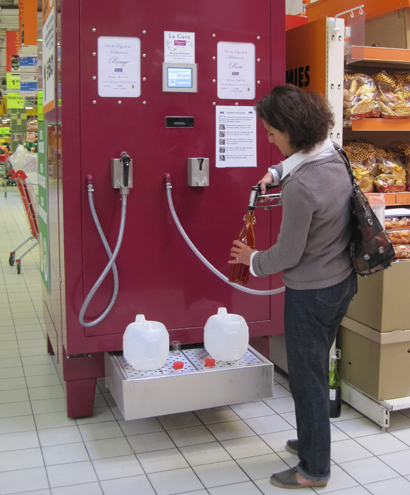
Bring your own bottle and pick your poison - white, red or pink.

Astrid Terzian came up with the idea, installing her first machine in Dunkirk in June 2009, and has since followed up with 9 machines across France.  The wines tend to cost around $2 per liter!

I’ve had great luck filling up bottles out of casks at mom and pop joints in Spain and in Italy and I hope Dr. Vino is correct when he anticipates we’ll see something like this in the U.S. within a year.

1 Comment

Filed under Alcohol in the News, Wine