
Here’s a 4 minute clip on food and wine pairing. Very attractive freeze frame don’t you think?
Category Archives: Wine
Pull back on the reins
 Phenols are a class of chemical compounds commonly found in wine (and chili peppers, cannabis, raspberries and wintergreen to name just a few). In wine they can bestow pleasant aromas like vanilla, wood, cloves, carnations or animal smells such as horse.
Now you may enjoy a little horse leather in your glass, but probably not horse manure. 4-ethyl-phenol is the compound responsible for this horseplay and there’s 4 times more it found in red wines than in white. It shows up more often if the grapes have been macerated without any oxygen before the fermentation process. Continue reading
Little fox
 Le ginglet or little fox is the name Philippe Bornard has given his 100% Trousseau from Arbois Pupillin. That’s quite a moutfull – I’ll break it down for you.
Arbois (ahr-bwah) is the most important appellation in the Jura region in eastern France. It also happens to be the name of the region’s main town. Arbois Pupillin is a commune within the Arbois, with rights to its own appellation. The Jura is located between Burgundy and Switzerland and its isolation has helped its producers maintain many of their winemaking traditions; some unique varietals and some uncommon wine styles (we’ll touch on those later).
Five varietals are important in this region: Chardonnay, Pinot Noir, Poulsard (often called Ploussard), Trousseau and Savagnin. Trousseau and Poulsard are the region’s indigenous black grapes (Savagnin is white). Trousseau is more robust and deeply-colored than Poulsard and gives wines that are earthy and mineral-driven, with lots of berry notes. You can see from the picture that the wine is a beautiful magenta color and not very opaque – Poulsard is even lighter, often appearing more like a rosé than a red. Trousseau’s not a very tannic (think mouth-drying) wine and it’s also tasty with a light chill on it, making it an outstanding summer red. Trousseau can also refer to a wedding dress, a dowry or the Bastardo grape fround in Portugal.
Philippe Bornard is a biodynamic winemaker who started making his own wines in 2005 (instead of selling his grapes to cooperatives). In addition to an eye-catching label, this wine also has a bright orange wax top – Philippe hand-dips each bottle. Wines from the Jura aren’t plentiful in the U.S. marketplace, but you can always enjoy come enjoy one with us.
Hands-free device
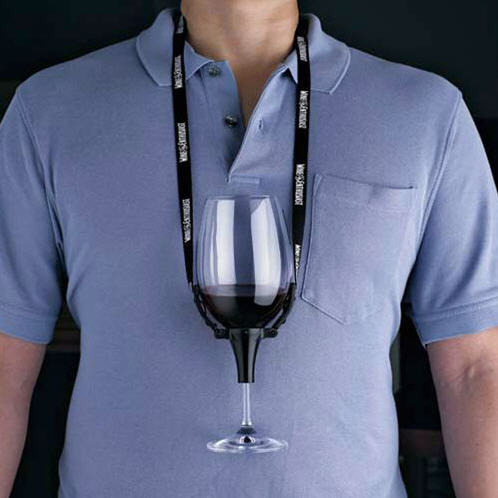
Wine is near to my heart, but not so much so that I would wear this wine glass holder necklace
Some have pointed out that it would prevent you from losing your wine at a crowded party. Folks I know seem to have no trouble keeping an eye on their glass of wine without having it attached to them.
It’s definitely a conversation starter, but maybe one where you have to explain why you’re a dork.
What has this wine been reduced to?

Better for breakfast than happy hour
Today I’m going to share 4 faults in wine that fall under the “reductive” category. In essence, this is the opposite effect of oxidation and can produce stale smelling wine. If extreme, reduction can cause some pretty foul odors – just-boiled eggs, anybody?
1. Sulphur (SO2). The smell of gassy hot springs is not exactly what you want in your glass of wine. Excess sulphur’s not always easy to detect (and it often blows off with a little time), but in some cases it can lead to heachaches or migraines. Maximum doses are set by law in each wine-producing country. Sulphur gets a bad rap, but keep in mind that it does some important winemaking related things: it inhibits the development of wild yeasts and undesirable micro-organisms, it helps the winemaker control fermentation, it cleanses the wine (and the vessels that hold the wine) and it assists aging wine by helping to prevent refermentation in the bottle and by helping to prevent discoloration through oxidation, especially in white wines. Continue reading
Chill out
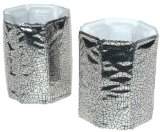 ‘Tis the season for a glass of a crisp white or a refreshing rosé and if you’re impatient like me, you want it now and you want it cold. I picked up the Vacu Vin Rapid Ice Chiller
You got boxed
Black Box Wines is sponsoring a video contest. For you SNL fans, the first step is not to cut a hole in the box. They want you to serve their product to your family or friends and then capture their reaction when they learn it’s from a box (assuming they found the wine to be delicious).
I’d like to enter this contest, but my friends and family would not be surprised to get a decent wine from a box; in fact, many of them have had boxed wines at my dinner parties before. I’m all for packaging wine in a box; it tends to be inexpensive, it’s harder for me to break, it’s more transport-friendly, the wine keeps for much longer, it’s more environmentally friendly (less energy required to produce and transport compared to glass bottles) and thankfully, more producers are starting to get on the bandwagon. I lovingly referred to boxed wines in college as “wine bladders” – have you ever removed the box to see what’s underneath? Continue reading
Bringing home the stinkin’
Oh, if only any of these vials smelled as good as bacon.

What could make this show up in your glass?
You may have seen my post about Le Nez du Vin

The faults in the kit are broken into different categories and today I’m going to share with you the ones that are related to harvest and those that come about through exposure to oxygen. Continue reading
Are you viticulture-curious?
Josh Perilo who writes for New York Press and Our Town attended my last Wine Uncorked class and put this article out today on it. He had a great time at the class and so will you. The next one’s running Tuesday, July 14 from 6:30 pm to 9:30 pm. Get thirsty and sign up here.
Designer labels
Hiring an artist to design a wine label is nothing new. Mouton Rothschild has been featuring the work of artists on their labels since 1945 and some impressive ones at that: Chagall, Miró, Kandinsky, Picasso and the list goes on. Grateful Palate Imports has a notable line-up of Australian and Californian wines, most with eye-catching labels and some with distinctive names like “Evil” or “Bitch”. They purposely hire artists who have never designed labels before to keep their bottles looking fresh.
I’ve never been one to select a bottle of wine based on its label, no matter how sweetly the penguin, kangaroo or frog stared out at me from the shelves. That being said, you may be surprised by my purchase over the weekend:

It's not a wine, it's a lifestyle
Yes, that’s a bottle of Ed Hardy by Christian Audigier rosé – the same man we can thank for Von Dutch trucker hats. He’s built quite an empire, endorsing everything from a Vegas nightclub to dental floss.
To be fair, the fridge at the wine store where we found ourselves was quite small and the other options were Sutter Home White Zinfandel, Relax Riesling and Barefoot Chardonnay.
Audigier hails from Avignon in the south of France and he’s currently putting out wines under both the Ed Hardy label as well as well as the Christian Audigier label (more expensive with even more audacious labels). Both lines are bottled in France, yet have different distributors in the U.S. They’re available at places like Whole Foods, Costco and at some random wineshop in the Catskills area of NY.
This wine was not bad – inexpensive ($10.99) and a thirst-quencher, with notes of red berries and plenty of watermelon. We had the 2008 vintage from the Vin de Pays d’Oc – vin de pays is French for country wine, a step up from table wine. There are 6 of these regional vin de pays and the Vin de Pays d’Oc is located in the Languedoc-Roussillon area in Mediterranean France and produces the most wine at this quality level. I couldn’t find the exact blend, but my best guess is some combination of Grenache and Syrah. Despite the label, it neither pierced my heart nor showed me true love.
Filed under Wine


 A Thirsty Spirit