
If you’re planning on any summer fun at the wineries this year, mind the elevated grape stomping bins. This was actually broadcast live on Fox.
Don’t let this happen to you
To decant or not to decant?
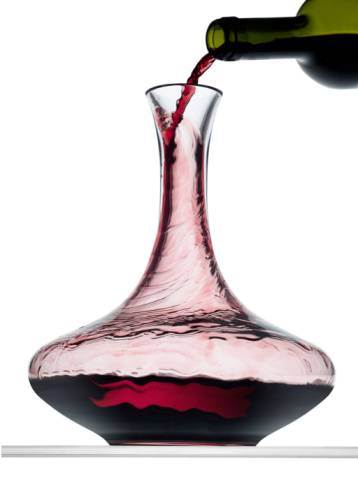
And the answer is: Decant! No, it’s not that easy, but it’s close. Here are some thoughts on how to decide.
The most obvious reason to decant is to separate the wine from any sediment that has formed in the bottle. Sediment won’t hurt you, but it doesn’t look pretty in your glass and can sometimes taste bitter or astringent. Before winemakers knew how to clarify their wines properly, decanting was the norm. Now, it is rare for inexpensive, everyday table wines to throw any sediment. A common culprit is vintage port – it’s bottled early in its evolution, so it will often throw a heavy deposit. Other aged red wines will too, because some of the solids have precipitated out as part of the maturation process. We can save “which wines are ageworthy” for another posting, but if it’s in a box, a jug or if it’s colored pink, drink it up and don’t worry about decanting it.
The other main reason to decant is to aerate the wine and encourage the development of the wine’s bouquet. Don’t laugh because I used the term bouquet – it’s been used since the first half of the 19th century to describe the perfume of the wine. My dad likes to bust my chops about the difference between aroma and bouquet and while many authorities may have a differing opinion about when a wine’s smell stops being an aroma and becomes a bouquet, it boils down to this: aroma is the simple smell of the grape and bouquet refers to the more complex compounds which evolve from fermentation and bottle aging. So there, pops.
Karen MacNeil, author of The Wine Bible advocates decanting very tannic wines (think Barolo, Bordeaux, some Rhônes) and notes that it can be detrimental for more delicate wines (think Chianti or Pinot Noir). Noted oenologist Émile Peynaud on the other hand argues that the action of oxygen dissolved in a sound wine when it’s ready to be served is detrimental – the aroma instead of being pronounced will be diffused and less marked. He suggests only decanting when there’s sediment and just before serving. Keep in mind that if you are following the steps from “swirl it, sniff it and slurp it down”, you’re aerating the wine as you agitate it in your glass.
Some folks claim that decanting softens the tannins in wine and experts have contested that decanting merely alters the perception of sulfites and other chemical compounds through oxidation, therefore making the wine seem easier to drink. One thing we don’t have to argue about is the fact that a decanter looks darn pretty on your table (especially when it’s full of wine) and will get everyone excited for the meal.
Fit me on the jitney
I have to admit that I’ve taken this title from the name of a nail polish, one that was my toe color a few summers ago. I’m using it because I rode a Hampton Jitney yesterday. But don’t be confused, I wasn’t on a bus full of aspiring socialites; I was with a bunch of chef instructors from the French Culinary Institute.
Mercer Tools sponsored a professional development trip for some of the instructors at my school and took us to Paumanok Vineyards, Peconic Bay Winery and The North Fork Table.
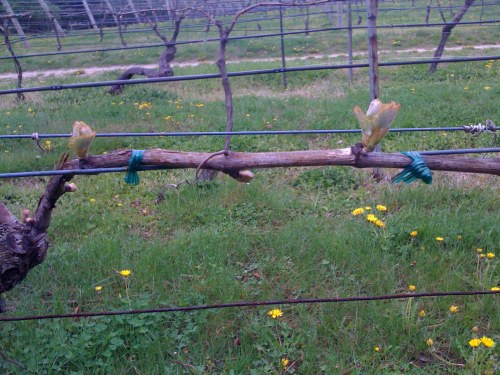
It was a special day at Paumanok because budbreak was starting on some of the vines, like this Sauvignon Blanc:
The grounds at Paumanok are beautiful and I would’ve taken more shots had it not been for the constant rain. They have a deck overlooking the vineyards and it’s just begging you to sit out with a glass of wine. I think the trip might have changed a few minds that would have previously poo-pooed spending a weekend day on Long Island.
Kareem Massoud, the winemaker, tasted us through 3 whites, 3 reds and their late harvest Riesling.
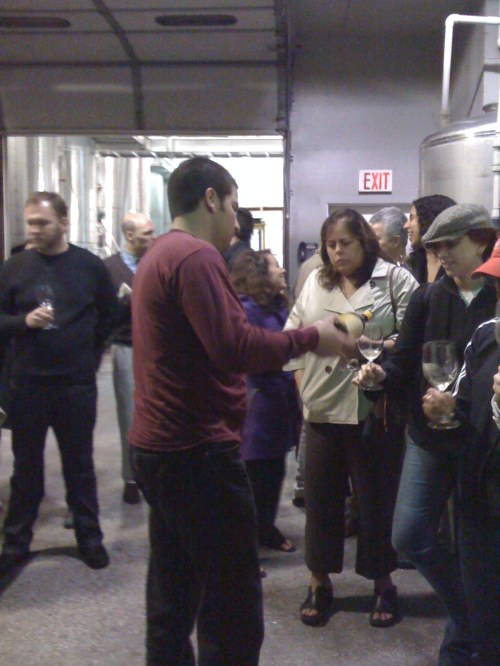
We tried the 2008 Chenin Blanc, the 2007 Sauvignon Blanc and the 2007 Barrel Fermented Chardonnay:

I’ve used the Barrel Fermented Chardonnay in some of my wine classes before to show a good, local example of Chardonnay that exhibits well-integrated oak. You can still taste the apples, pears and melon instead of having the sensation of chewing on oak chips.
The unofficial crowd favorite of the day was the 2008 Chenin Blanc. Just bottled, it was bright, crisp and refreshing with lots of pink grapefruit. Luckily, the Massouds were willing to wheel out a few cases at the end of the tasting so several of us could make purchases.
We also tried the 2006 Cabernet Franc, the 2004 Grand Vintage Merlot and the 2005 Assemblage (this vintage was 44% Merlot, 34% Cabernet Sauvignon and 22% Petit Verdot). We’ll be pouring the Cabernet Franc by the glass soon at L’Ecole – cherries, earth and spice dominate this light to medium red. The reds of Paumanok recently got a nice write up in the NYT, so if you’d like to learn more, go here. The late harvest Riesling was also a hit – not too viscous, with great acidity and lots of peaches and dried apricots on the nose and palate.
The next stop was Peconic Bay, the third oldest vineyards in Long Island, with Chardonnay vines dating back to the late 1970s. Pascal, their Retail Operations Manager, led us through a tasting of their 2006 Steel Fermented Chardonnay, 2006 La Barrique Chardonnay, 2006 Riesling, 2004 Cabernet Sauvignon, 2005 Lowerre Reserve Merlot and Polaris, their signature dessert wine.
The highlight of this visit was when we left the tasting room and went into the winery for some barrel samples:
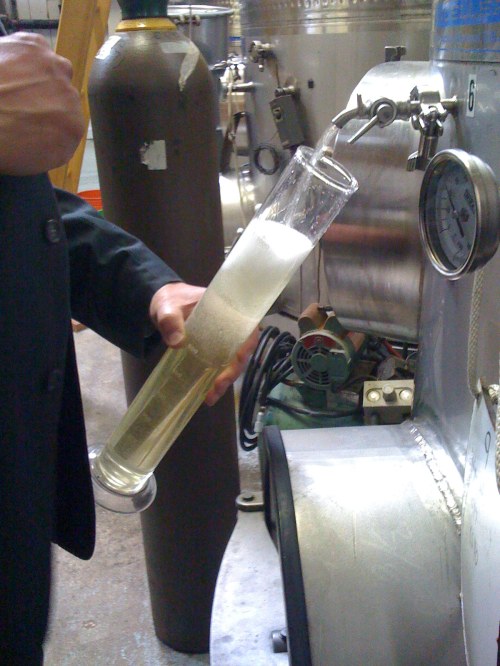
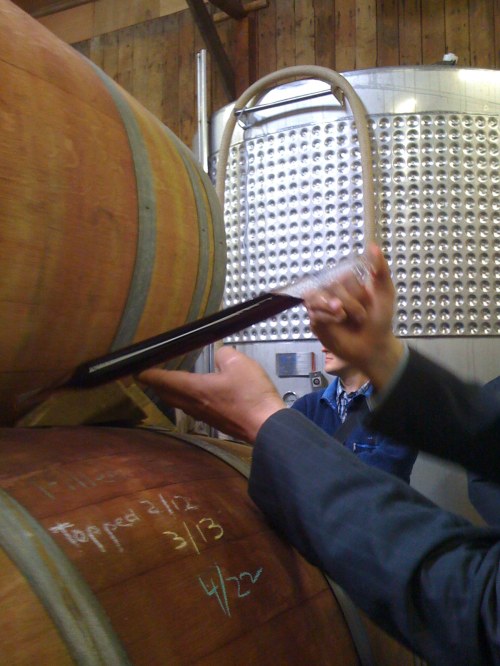
We tried their Steel Fermented Chardonnay again, this time the wine was still waiting for an additional filtration before bottling and the star of the show, their 2007 Merlot. It was juicy, with plums and cherries and plenty of chewy tannins. Conditions in 2007 were warm and dry and this will be a vintage to watch in Long Island. If you’re a fan of Wine Spectator, they’ve given the 2007 vintage in Long Island an A.
This blog is making it seem like I spend every weekend in Long Island – I’m two for two since A Thirsty Spirit’s inception. I can assure you I’m not being paid by their tourism board, but I’ll admit that it’s easy to get to (even without a van or jitney), green and has lots of tasty things to eat and drink.
Filed under Wine
Woo-hoo for Weschlers

Weschlers Currywurst opened in a sliver of a space in the East Village (1st Ave between 7/8) just a few weeks ago and is a German beer lover’s dream. It came about because its owner, Andre Weschler, missed the currywurst from his German hometown of Hamm. He must be doing right by the currywurst because in the few hours we were there, several German parties came by to eat, drink or just say, “Guten Abend!”
This is what’s currently on tap:
Reissdorf Kölsch: lean, clean and mean. clear golden yellow with refreshing bitterness and cereal malt on the palate.
Kölsch is a traditional German ale and the local brew of the city of Cologne (“Köln” in German). It’s one of Germany’s palest beers and tends to be less bitter than their standard lager, Pils. You can’t always find it in the U.S., but if you do, it’s likely to be either Reissdorf or Gaffel. It’s always served in a 0.2 liter (6 3/4 oz.) straigt-sided glass called a Stange (stick, pole or rod) like this:

Hofbräu Original: citrus, grassy, delicate – very drinkable – good for your friends who like Budweiser.
Hofbräu ia one of Munich’s oldest breweries. They make a lager, a dark beer and a wheat beer – the original is their lager and follows the German Purity Law which states that beer can only be made from 4 ingredients – malt, yeast, hops and water. This is no longer enforced, but Hofbräu still abides by these standards.
Uerige: deep amber in color, full-bodied, aromatic with with notes of caramel and toffee.
This is a German style brown ale or Düsseldorf altbier that’s been brewed since 1862. Interestingly enough, the German bartender pronounced this yule-e-ger. He said the u followed by the e is the equivalent of a u with an umlaut (ü).
Radeberger was the 4th beer on tap. The brewery started in 1872 in Radeberg, a suburb of Dresden and was the first German brewery to brew beer exclusively in the Pilsner style. I’ve had it several times before (straw, apple, citrus, very refreshing), so I didn’t opt for it tonight, but I did observe the bartender making a cocktail by combining it with Sprite. This was unlike any shandy I’d seen before and he explained it was called “The Radler”, which means cyclist in German (light enough for them to finish the race?).
We tried this one offered by the bottle:
Schneider Weisse Brooklyner Hopfen Weisse: this was the star of the evening – orange, clove, banana, yeast. liquid gold in color – full and smooth.
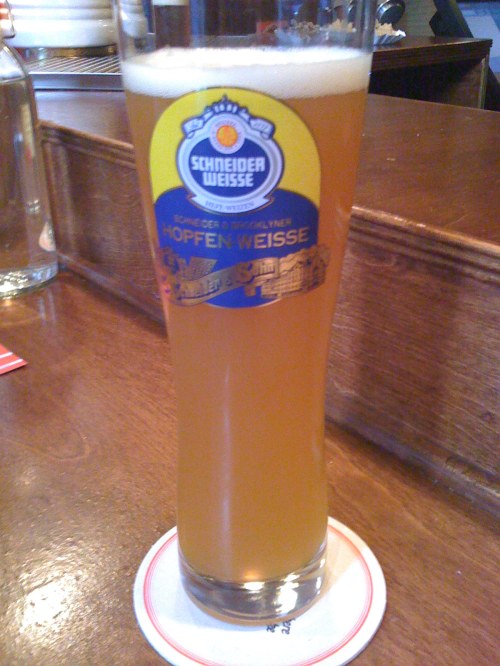
This is the German version of the collaboration between Brooklyn brewmaster Garrett Oliver and Hans-Peter Drexler, the brewmaster from Schneider. We ordered this one because our friend asked the bartender for the beer with the highest level of alcohol. I’ve got to get my hands on the Brooklyn version (different bottle, different hops used).
I know we’re supposed to be focused on beverages here, but it’s worth the trip for the sausage, too – currywurst, boar, chicken and apricot, and merguez were all juicy and delicious. The hand-cut fries made a nice showing, too. All of this greasy deliciousness was a perfect complement to the impressive roster of German brews.
Filed under Bar Reviews, Beer
Get spritzed
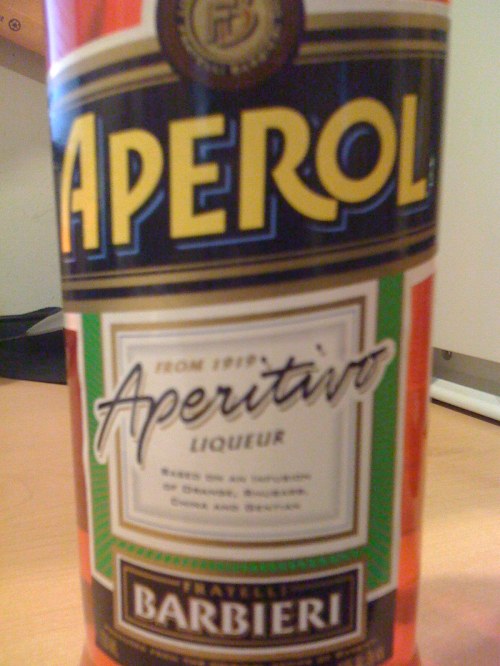
Even though it’s not looking like a great spring weather weekend, there’s no reason not to enjoy a tasty spring cocktail.
With less than half the alcohol, Aperol might seem like Campari’s teetotaling cousin, but it has a charm all its own. Aperol is in the bitters family, just like Fernet Branca, Cinzano or Dubonnet. It’s sweet with a bite, with notes of bitter orange and rhubarb. Aperol’s secret recipe of fruits, vegetables, herbs and roots dates back to 1919. The original recipe was developed by the Barbieri family in the Veneto region of Italy and it is now produced by the Campari company. You can enjoy it on the rocks, with sparkling water, as part of a wine spritzer or in one of the cocktails below.
Aperol Spritz
2 oz. Aperol
2 oz. Moscato d’Asti (sweet, low alcohol wine from northern Italy)
1 oz. orange juice
combine these ingredients with ice/shake/strain
pour into a rocks glass with ice and top with a splash of soda and garnish with an orange wheel
Spring Spritz
1.5 oz. bourbon
1 oz. Aperol
1 lime wedge
1 orange wedge
combine these ingredients with ice/shake/strain
pour into a rocks glass with ice and top with splash of 7-Up and garnish with an orange wheel
The first cocktail is close to a traditional spritz, but uses a dessert wine instead of a dry white or Prosecco. Moscato d’Asti is easy to find, inexpensive, effervescent and its sweetness plays nicely against the bitter orange character of the Aperol. The second cocktail isn’t technically a spritz since it contains no wine, but it’s still bright, refreshing and well-balanced because of the sweetness of the bourbon. Cheers, or as the Italians might say, cin cin!
Earth dog
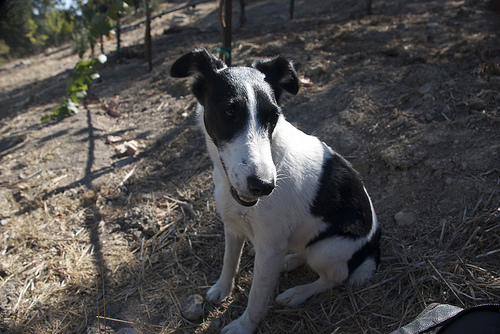
Actually, this post is about terroir, not terriers (French for “earth dog” because they chase rodents into burrows). As you can tell, they share the same root – terra, which means earth or land.
That is essentially what terroir is – a sense of place expressed in wine. It also applies to coffee and tea. Say it with me. “Ter-whah”. Good, now you speak French.
This is a much-discussed word and no precise English equivalent exists. Major components of terroir include: Climate – sunshine, temperature and rainfall – all these will determine how the grapes will ripen and therefore how the wine will taste. Wines from warmer climates tend to be juicier because the grapes get more ripe. You can break this down further, too, to include the enviornment right around the canopy (the part of the vine above the ground) and it’s called microclimate. Take it another step and you have mesoclimate, which refers to the environment of the particular vineyard – its aspect, elevation, slope, distance to water, soil types, etc. The local grape varieties play an important role, too. Some grapes simply perfom better than others in certain areas. Other human decisions, such as selecting yeast cultures and certain winemaking practices will also affect the terroir. Some winemakers may choose to use ambient or wild yeasts in their winemaking to enhance the terroir. The use of oak has the potential to downplay the impact of terroir.
The idea of terroir has formed the backbone of the appellation system in France – the idea that wines from particular areas are unique. Winemakers in Burgundy do not believe they are making Pinot Noir that happens to be grown in Burgundy, but rather, that they are producing Burgundian wines that happen to be made from Pinot Noir. They consider themselves wine growers as opposed to wine makers. This idea spread to the rest of the Europe, so that winemakers outside of Tuscany can’t make a wine from Sangiovese and call it Chianti.
Terroir also plays into the debate over Old World vs. New World wines. Do mass-produced wines adjusted to American palates reflect any particular terroir? If you have a super-ripe Cabernet Sauvignon in your glass, would you be able to tell if it’s from California, South Africa, Chile or Australia?
Let’s practice using it in a sentence or two, so you’ll never be intimidated by the word again. “I prefer Old World wines because they reflect a greater sense of terroir” or “The blue slate soils of the Mosel valley in Germany are partially responsible for the unique terroir of the region, imparting a strong mineral character to the wines.”
Filed under Lessons, Pronunciation Guide, Wine
Swirl it, sniff it and slurp it down

Here are 8 easy steps that you can use to impress your friends and make them think you know how to taste like a pro.
1. Look at the wine against a white background. I’m already making the assumption that you have clean glasses as well as good lighting (and some wine). You can remember the 3 C’s – clarity, color and carbon dioxide. Do you see any particles? Is it white or red or pink? Pale or dark? Does it have bubbles? Feel free to use fancy words like straw yellow, old gold, garnet and brick red. The white background will help you more accurately gauge the color as well as the opacity of the wine.
What does the color tell you? Different grape varieties will make deeper or lighter colored wines because the color in the wines comes from the skin of the grapes. Cabernet Sauvignon, Syrah and Nebbiolo tend to produce deep red wines. Gewürztraminer and Pinot Gris are two examples that produce deep white wines (their skins are pinkish). A deep color can also mean youth in a red wine or oxidation or barrel fermentation in a white wine. Red wines lose color as they age, while white wines gain.
2. Swirl the wine in your glass. Yes, there really is a good reason for this. You’re increasing the surface area of the wine by coating more of your glass as well as releasing some additional aromas that have been trapped in liquid form in the wine.
Tears are not a sign of quality in wine, but rather give clues about the wine’s viscosity and alcohol content. Fuller bodied, higher alcohol wines often have more pronounced tears. If you see pink stains on the side of your glass after swirling your red wine, it could be because the wine maker let his or her wine sit with the grape skins a little bit longer to extract more color.
3. Take a few deep sniffs of the wine. This is the most important part, so don’t be shy and get your nose right in the glass. Is it restrained or pungent? Does it remind you of anything you’ve had before? Fruits? Spices? Vegetables? Flowers? Wood?
As you practice, you’ll become familiar with common aromas found in certain varietals – i.e. Grüner Veltliner often has arugula and white pepper on the nose. You can also gather clues about how the wine was treated – i.e. vanilla, baking spices and toast are common aromas found as a result of oak aging.
4. Taste the wine. It’s helpful to think of mouthwash here, because you want the wine to hit all parts of your palate. While the myth of the tongue map is not true, you do want to look for certain things in certain parts of your mouth. You want to look for sweetness on the tip of your tongue. You can gauge the acidity in the wine by how the sides of your tongue feel. Are they tingling? Do you feel like you might start drooling? That means high acidity. You can rate the tannins based on how the inside of your cheeks feel. Are they dried out like someone stuck cotton balls in there or like when you oversteep your tea and don’t put any milk or sugar in it? That means a high level of tannins in the wine.
5. Concentrate on your perceptions. Once you swallow or spit the wine out, the experience is not over. The finish of the wine, especially if it’s a good one, will last long after you have it in your mouth. What you’ll notice, too, are aromas coming up the back of your throat, so you might get some notes now that you missed in the beginning.
6. Evaluate the wine. Is the wine’s flavor bold and concentrated or is it subtle and understated? Is is fruity? Do you think any oak was used? Think about the sweetness, the acidity, the tannins and the body. A good way to think about the body of the wine is to think about milk. Did the wine drink like skim milk or was it more like half and half when you had it in your mouth? The body is esentially the weight of the wine.
7. Think about the wine. Will it taste better with food? Is it appropriate for the season? Is it worth the price? And the most important question of all – do you like it? In the end, even if you’re following all of these fancy steps, that’s all that really matters.
8. Record your impressions. Hopefully you’ll be trying lots of different wines and by keeping notes you can keep track of what you liked and didn’t like. This will make you sound smarter the next time you go to your local wine shop or have a conversation with a sommelier at a restaurant because you’ll be able to say things like, “I prefer crisp, refreshing whites with high acidity”.
Even if you think you have a lousy palate, you just need practice. The biggest obstacle for most people to overcome is the lack of vocabulary to describe what they’re smelling and tasting. So, practice, practice, practice. It’s a tough job, but somebody’s gotta do it.
Say it, don’t spray it!
That, in essence, is the mantra of organic wine makers – let the soil and grapes speak, don’t soak them with fertilizers and pesticides, and when you’re back in the winery, manipulate the grapes and wine as little as possible. Sounds pretty good right? If you can find great wines that have been produced in an earth-friendly way, why would you drink anything else?
The question, however, is how can you tell if something is organic? And what does biodynamic, sustainable or natural winemaking mean?
To answer these questions, I went to “Defining Organic: Green Wine Demystified” with Adam Morganstern, editor of the Organic Wine Journal, at the Astor Center. It was also a good opportunity to do some research on the competition – as you may know I teach wine classes at FCI. While I came in with a good knowledge of these concepts, the lecture and the tasting conducted by Greg Wacks was enlightening and I left knowing more than I started with. I also tasted some great wines.
Here are the Cliff Notes:
The terms organic, natural and biodynamic are confusing because they have multiple definitions and some of the practices overlap. Let’s start with organic. At its most basic level, it means wine from grapes grown without the use of herbicides, pesticides, fungicides and chemical fertilizers. 100 years ago, organic farming was the norm. Industrial farming was an outgrowth of the World Wars – primarily stemming from technologies related to chemical weapons and bomb-making. Scary right? Chemical manufacturers needed new markets in the post-war years and found that many of their products could be applied to agriculture. At first it seemed like a dream come true – in the first year or two of using pesticides the farmers saw tremendous growth. Soon after, however, their soil was dead (i.e. not even earthworms). So, the chemical companies then suggested fertilizers. New diseases began popping up and the companies could then sell their fungicides. So, a nasty and expensive cycle was born. Organic practices intend to break that cycle.

Natural wines have no official certification. The general rule for natural wine is minimal intervention, but the catch is: what is practiced in the vineyard doesn’t necessarily reflect what is being practiced in the winery. To formalize things, some winemakers have banded together and created loose standards: small quantities of wine made by independent producers, handpicked grapes, no added sugars or foreign yeasts. As a result, their wines are more sensitive to changing temperatures and must be stored with care.
Biodynamic wines are controlled by a certifying agency called Demeter. Biodynamics is the brainchild of Rudolf Steiner, an Austrian philosopher, literary scholar, educator, architect, playwright, social thinker and esotericist (busy man!). The four basic principals are: a closed system of nutrients (composting, recycling), biodiversity on the property (plants, predators, prey – no monocultures), specific field sprays and composting, and the idea of creating a holisitic system where they manage the environment and let the plants take care of themselves. So, yes, they follow the moon cycle, bury cow dung in horns, which is weird, but the ideas are based on hundreds of years of traditional farming techniques.
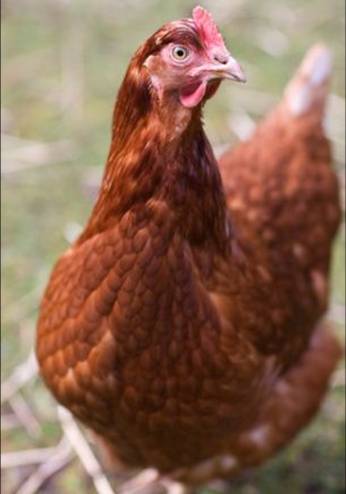
You might see one of these strutting around on a biodynamic vineyard:
All this, and we haven’t mentioned sustainable winemaking. Again, there’s no set definition for it and it could reflect sincerity or part of a marketing plan. It could also be viewed as “organic until something goes wrong”. One person’s sustainable could include solar power and being carbon neutral while another person’s sustainable is simply changing to a more efficient lightbulb.
It’s important to keep in mind that many producers are following some/most/all of the ideas we’ve touched on here, but don’t always want to be labeled for it. They want to be known for the quality of their wines, not for the method in which they were made. Like in cooking, a chef wants you to enjoy your meal, not worry about whether it was prepared using an aluminum or cast iron pan. Some producers might also disagree with some of the government’s standards (too low, dumbed down). Plus, it can also be expensive to get certified, particularly if you’re certifying in multiple different countries.
To be fair, not all organic, natural or biodynamic wines are good. Many are the product of bad winemakers. Others suffer from quality issues that result from natural winemaking – there’s a reason most winemakers use sulfites. Consistency can also be an issue – there is often bottle variability within one case of wine. Some may enjoy not knowing what to expect when opening a bottle, but those of us in the hospitality industry serving these wines to our guests may not feel the same.
All this being said, those selected by Adam and Greg were great (all prices from Astor Wines & Spirits):
1. Domaine Carneros Brut 2005 (Carneros, California): 3 years practicing organic, now certified. toasty, biscuity nose with great acidity and a fruity palate. $19.99
2. Seresin Sauvignon Blanc 2007 (Marlborough, New Zealand): mostly biodynamic, though some grapes are sourced from non-biodynamic vineyards. classic NZ Sauvignon blanc here – cut grass, passionfruit and peaches with a zippy tartness. $21.99
3. Nikolaihof Grüner Veltliner “Hefeabzug” 2007 (Wachau, Austria): had Demeter certification on back label as well as a paper neck tag (which is interesting because this is a well-known producer who doesn’t necessarily need the additional marketing). arugula and white pepper on the nose with citrus and minerals on the palate. $26.99
4. Jelu Malbec 2007 (Mendoza, Argentina): practicing organic estate. fruit-forward with cherry coke aromas and flavors, high acidity and soft tannins. a steal at $9.99
5. Le Loup Blanc “Le Régal du Loup” 2006 (Minervois, Languedoc-Roussillon, France): natural winemaker. 50% Carignan, 30% Grenache, 20% Mourvèdre. standout of the evening for me. dark fruits, baking spices, cinnamon ribbon candy and barnyard. $18.99
6. Tablas Creek “Côtes de Tablas” 2006 (Paso Robles, California): received organic certification in 2003. this wine is a blend of Grenache, Syrah, Mourvèdre and Counoise. juicy red fruits with leather and licorice. $21.99
7. Clos des Camuzeilles Muscat de Rivesaltes 2004 (Languedoc-Roussillon, France): vins doux naturel (wines made by adding spirit before fermentation is complete – this additional alcohol kills the yeast and leaves you with a strong, sweet wine) from natural winemaker. dried apricots, orange blossom, the liquid from canned peaches. $22.99
Filed under Wine
Love is best brewed cold
Coffee with all the parts you like (rich, full body, tantalizing aromatics) and none that you don’t (too much acidity, bitterness). Is it possible? Yes, with cold brewing, it is.
I’m proud to introduce my official spring/summer (morning) drink. And you can have it too, if you follow the easy and inexpensive steps below.
Yesterday, we went here:
And purchased 1 lb. of this:

Porto Rico is in my neighborhood and I like their coffees (I have a problem with them sitting out exposed to the air, but that’s for another day). I chose the Auggies blend because it was a bit of a darker roast, which is a good way to go for cold brewing, since you still get all of the lovely roasted chocolate toffee notes without the bitterness produced by hot water. Grind (or ask to have it ground) for a french press. For a listing of other coffees I like, go here.
Other things you’ll need to make this at home: large liquid measuring cup (or any large non-reactive container, including a stainless steel pot), another large container (could be another liquid measuring cup), storage container for the final product (glass milk bottle works really well), strainer, any manual drip coffee filter set up like Melitta

Instructions:
1. In a large liquid measuring cup (or other container), combine 1 lb. of french press ground coffee with 10 cups of cool water (I used water from my Brita filter)

2. Stir to ensure all parts of the grounds are wet
3. Here’s the hard part: wait at least 12 hours (there’s no need to stir during this time – you can just leave it out, covered, on the counter)
4. Pour the slurry through the strainer (simple, hand-held pasta strainer will do the trick) into your other large container. This step will remove large particles which could clog your coffee filters and slow the process
5. You can press the wet grounds that are trapped in the strainer to extract more coffee
6. Pour the strained coffee through your coffee filter. This may take awhile depending on your set-up. We used a Chemex because it has a larger capacity and you can fill it to the top and come back 20 min. later. Chemex also uses a thicker filter, so you’ll get rid of nearly all of the suspended solids. You may have to use 2 or more filters because they can become clogged with this much coffee flowing through them

7. Now pour the resulting coffee into a storage container. We used this (Ronnybrook glass milk jar):

8. The coffee will keep over a week in the fridge with little change in its flavor
Congratulations – you now have over 1 liter of coffee extract. I call it coffee extract because a) that’s what it is and b) it is too strong for most people to drink straight. So, what to do with it then? Well, for hot drinks, try 2 parts hot water with 1 part coffee extract (basically like making an Americano). If you have an espresso machine, use the steam arm. For cold drinks, try using cold water and/or cold milk with the extract. I’ve been filling a glass with ice, pouring coffee extract about 1/3 up the glass and then topping it off with milk. Notice I haven’t mentioned anything about sugar – the coffee is so darn good, you don’t need it!
If you like to get fancy, try making a coffee cocktail by subbing the cold brewed coffee in place of espresso for a martini (not a true martini, but usually vanilla vodka, simple syrup, chocolate powder, etc). If you like to get extra fancy (of if you like your coffee really strong), make some ice cubes out of the coffee extract.
So, why should you bother with cold brewing? It’s environmentally friendly, you’ll save money (at least $2 for each iced coffee you know you’ll consume in the warmer months), the coffee extract travels well (we even threw some in a water bottle to take camping), the acidity content is lower (key if you have a sensitive stomach), perhaps not everyone in your household wakes up or wants coffee at the same time and the most important reason of all: it just tastes good.
If this is a little too DIY, the Toddy Cold Brew System can help you out.
Look how happy these two are together:

Filed under Coffee
Get schooled
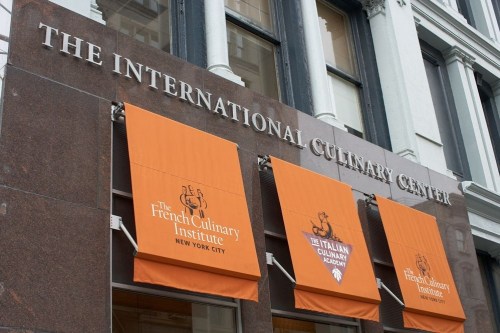

Fundamentals of Wine starts this Wednesday 4/29 and runs 8 weeks from 6:30-8:30 pm. Our goal is to demystify wine and have fun while doing it. We’ll taste 6-8 wines per class, from over 12 different countries. You’ll be swirling and sniffing like a pro (but not a snobby one) in no time. This class is great for industry folks (brush up on those regions, varietals and wine laws) as well as for more serious connoisseurs (feel more comfortable with a wine list, organize your cellar). For more information and to sign up, go here.
Filed under How to


 A Thirsty Spirit