Prior to the horseless carriage

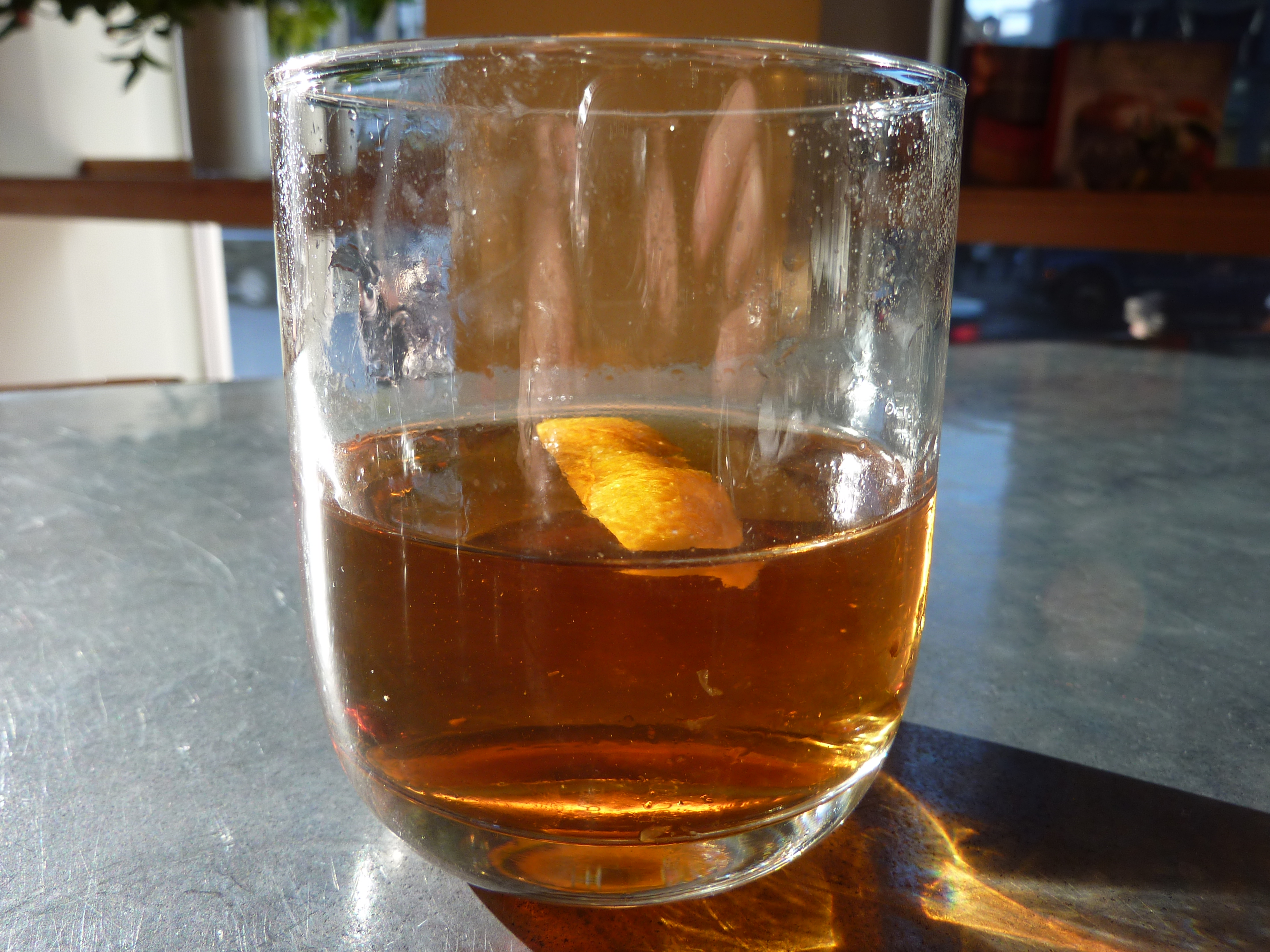
Today I present another oldie-but-goodie from Ted Haigh’s book.  Though it’s called the Ford Cockail, it’s been around since 1895.

1 ounce Old Tom Gin (I used Hayman's), 1 ounce dry vermouth (I used Dolin), 3 dashes Benedictine, 3 dashes orange bitters (I used Regan's). Combine over ice and stir. Strain into cocktail glass and garnish with an orange twist.

It may have been named after Malcom Webster Ford, a famed athlete who in 1885 and 1886 was the winner at the National Championships of the long jump, 100 meter dash and 200 meter dash, otherwise known as a triple.  This feat was not accomplished again until Carl Lewis did it in 1983.  Maybe he was looking forward to consuming this delightfully simple tipple after the event.

1 Comment

Filed under Cocktails

About.com announces whiskies of the year

Lance Mayhew, contributing spirits writer to About.com put out a piece this week on the top whiskies made in the United States.  I particularly like his choices for best rye and best corn whiskey.  Check it out here.

Leave a comment

Filed under Spirits

Go Big Red

The Statler Hotel at Cornell is going to support Finger Lakes Distilling and someone on their team recently inquired about a “Big Red Martini” featuring Vinter’s Wildberry vodka.

I began brainstorming “red” items: muddled berries (out of season), cranberry juice (boring), cinnamon schnapps (yes, Goldschlager is still in production) and then I remembered a drink I had made awhile back featuring gin and ruby red grapefruit juice, called the Ruby Blossom.

I shared my challenge with bartender Gene Jacobs and he quickly whipped up 2 cocktails.

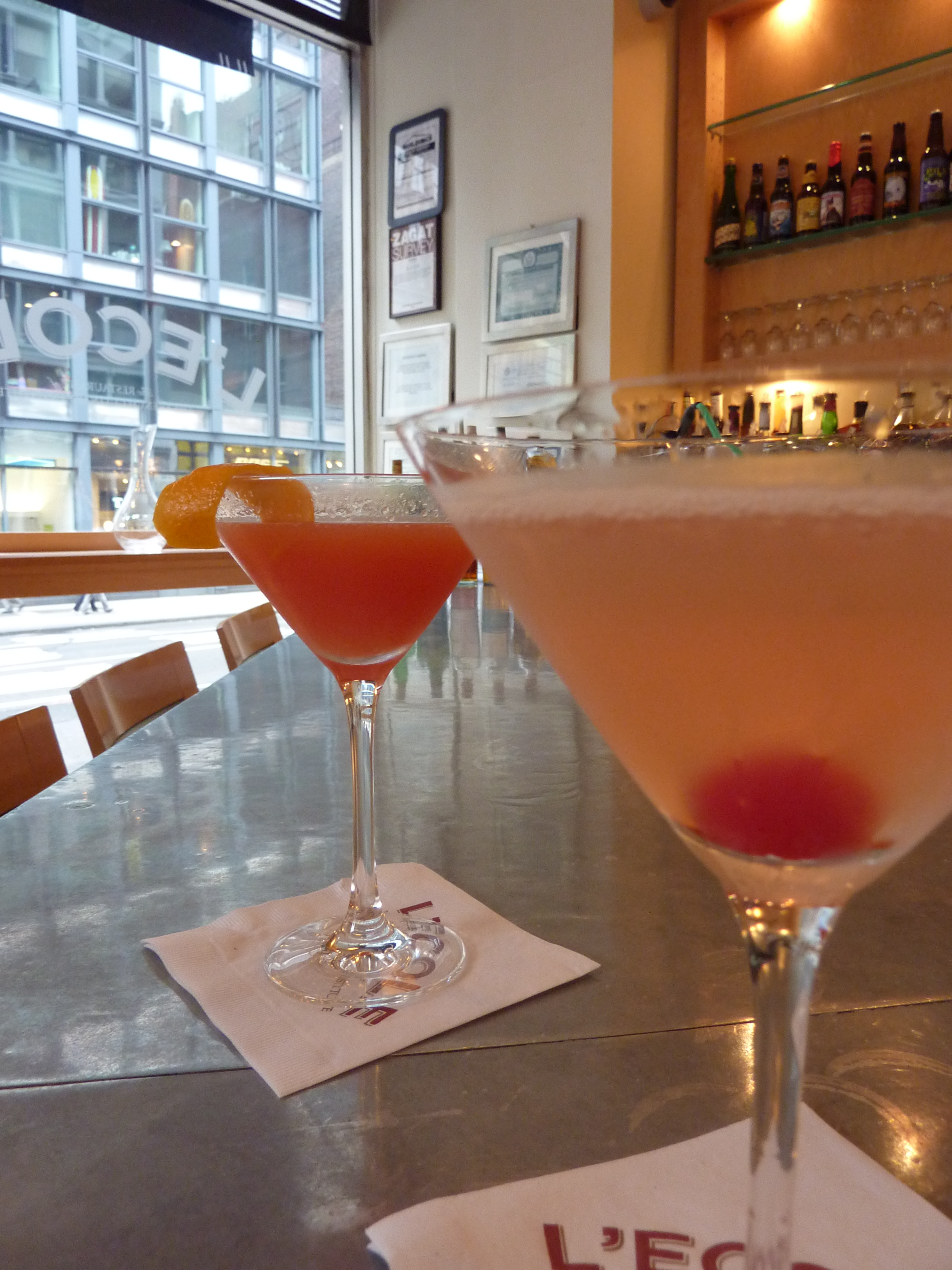
Tuesday afternoon fun at the L'Ecole bar

In the foreground is the Ruby Blossom, all proportions the same, sub Wildberry for gin.  In the background is an as yet unnamed Wildberry special:

2 oz. Wildberry vodka
1 oz. Cointreau
2 oz. blood orange juice
splash simple syrup
splash fresh lemon juice
pinch of salt

Combine all ingredients over ice and shake.  Strain into chilled up glass and garnish with an orange peel. 

Granted, neither of these drinks are red, but they taste good.  Big Red Blossom?  Maybe we’ll leave the naming up to the Statler.

2 Comments

Filed under Cocktails

Brewski

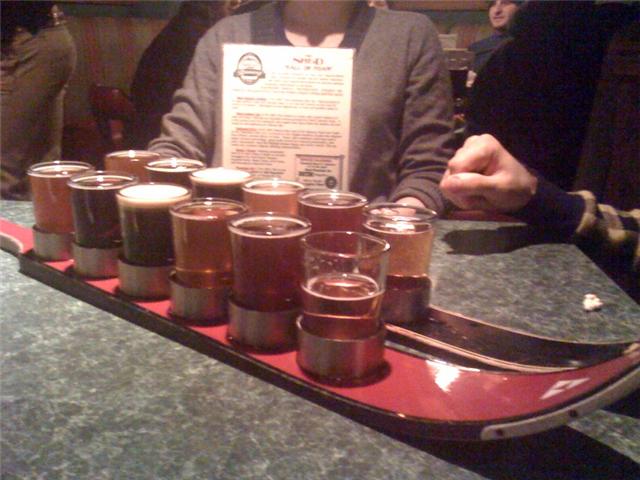
What better way to use old skis? The beer flight at The Shed Restaurant in Stowe, VT.

Leave a comment

Filed under Beer

How to open a bottle of wine without a corkscrew shoe hit wall drunk awesome

This time I can’t take credit for the title of the post.  I found it on YouTube and why mess with perfection?

2 Comments

Filed under How to, Videos

Want one of these?

I created this blog because I took a class we offer at FCI called Food Blogging with Steven Shaw.

I was skeptical at first.  I’m not on Facebook and I don’t tweet, and lord knows there were plenty of people who had already beaten me to the punch. 

You might be thinking that most blog platforms are free and easy to use, which is true.   So why would you need to take a class?    

1. It’s fun.  You’ll meet like-minded folks, who are passionate about food and beverage.
2.  We’ll help you hone your concept and your writing skills.
3. There will be great guest speakers and networking opportunities.
4.  Even if you have a blog already, you’ll learn how to promote it and how to potentially make money from it.
5.  How can you resist this face?

The fearless instructor

My class ended in June and seven months later, I’m still enjoying sharing my passion for all things beverage.  Class starts again February 18.  Come join in the fun.

4 Comments

Filed under Events, How to

Red Riesling

I was tickled to see Eric Asimov’s piece on spätburgunder in the Times today.  German pinot noir is a beautiful thing and deserves more of our attention. 

My favorite spätburgunder of my trip to Germany happened to have been made by a gentleman mentioned in Asimov’s article, Klaus-Peter Keller of Weingut Keller.  When we sat down with him back in September 2009, he mentioned being very excited about an upcoming tasting he had scheduled with Asimov. 

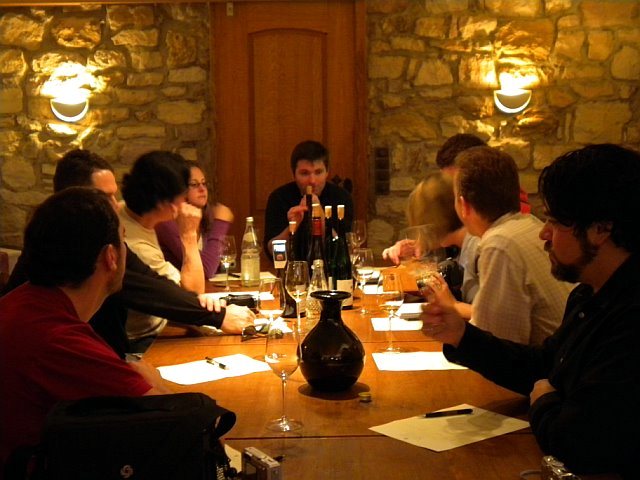
Klaus-Peter at the head of the table. He and his wife took over the winery with the 2001 vintage.

We tried over a dozen wines at this tasting, but luckily I took decent notes.  A few things Klaus-Peter said really struck me.  Good wine “must show its terroir” and it must be “easy to finish the bottle”.  He noted that good pinot is the equivalent of red riesling; “it needs oak only when the wine is missing something”, but that unfortunately when red wine is expensive, “many expect to smell wood.” 
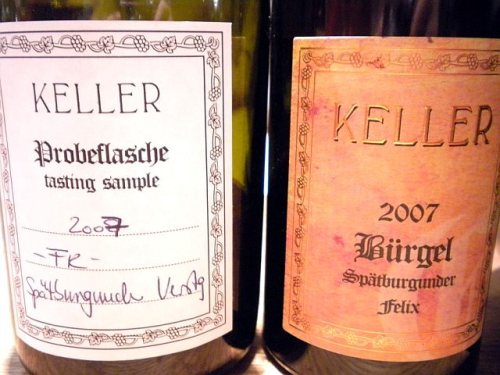
My favorite is on the right. Felix is Klaus-Peter's oldest son. His children will be the 10th generation. On the left is a tasting sample without a proper label; it will be sold at auction. The FR stands for Frauenberg, meaning "women's vineyard" - it was 4 km away from the house, or as far away as the women could work and still be home in time to prepare lunch.

The Felix had rich, concentrated fruit – cherries and figs – with notes of light cedar, anise, tea and rose petals, and a mineral finish. 

The Felix came from 40-45 year old vines, which yield about 2 1/2 tons per hectare.

Only 10-15% new oak was used.  Keller gets his barrels from Domaine de la Romanée-Conti (a Burgundian estate, often shortened to DRC; they make some of the most expensive and sought after wine in the world).  When our mouths collectively gaped open at this comment, Keller shyly smiled, “They like my riesling.”

Some "soil" samples in the tasting room. Keller explain when there was a little clay on top of the rock, it made for fleshier wines.

Klaus-Peter told us they hand de-stem in the vineyard and then let the stems ripen another 10 days or so. About 30% of the grapes will go through the fermentation process with stems.

Next time you order pinot noir, ask for it with an umlaut.

Leave a comment

Filed under Wine

Bon vivant…

…a man about town… a person who frequents the most fashionable Paris locales…and a delectable cocktail…The Boulevardier.

1 1/2 ounces bourbon (I used Maker's), 1 ounce Campari, 1 ounce sweet vermouth (I used Dolin). Stir, strain and garnish with a cherry

Another selection from the aforementioned Ted Haigh book – this one is spicy, sweet and herbaceous.  This drink was first listed in Harry’s 1927 bar guide, Barflies and Cocktails.  The Harry in question is Harry McElhone, who once was the face of the Plaza Hotel bar in New York, before opening his own joint, Harry’s New York Bar, in Paris.  He, like many other thirsty spirits of his time, decided to skip out of town when things dried up thanks to the Volstead Act. 

This was the drink of choice for Erskine Gwynne, writer, socialite and nephew of railroad tycoon, Alfred Vanderbilt.  Gwynne was an expat living in Paris who published a monthly magazine called The Paris Boulevardier.

You may recognize the formula of this cocktail – sub gin for the bourbon and you’ve got yourself a Negroni.  I must say that this beats any Negroni I’ve ever had.

3 Comments

Filed under Cocktails

Everywhere an oink-oink

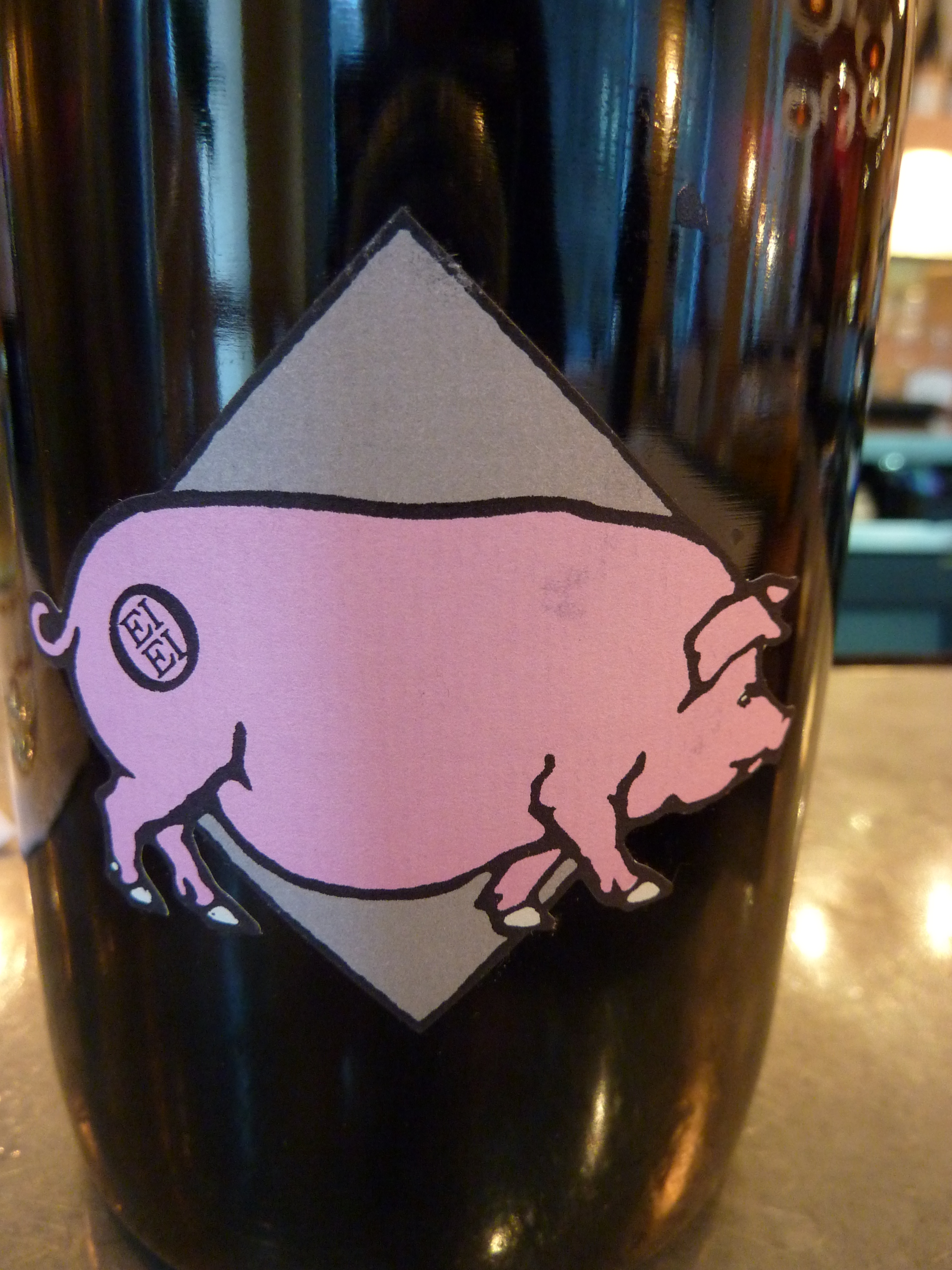
I tried a tasty Pinot Noir last week named Swine Wine.  It’s the most popular bottling of the EIEIO & Company.  The founder’s name is Jay McDonald.  The website is www.onhisfarm.com.  I’m not kidding.

one of the more tasteful "critter" labels I've seen

Finding a delicious, domestic Pinot for $25 or under is not easy to do, but this wine fits the bill.  Elegant and complex, with notes of dark cherries, plums, purple flowers and smoked meats (really!), the wine has great acidity and a lingering finish.  The grapes are sourced from some of the best vineyards in the Willamette Valley, with some of the vines dating back to 1974.  Interestingly, McDonald chose to put it out as a non-vintage wine, though a little birdie told me that most of the grapes are from the 2007 vintage.  You can purchase through their website and the wines are distributed in NYC by Verity (website is under construction).

1 Comment

Filed under Wine

Wouldn’t mind some hanky-panky

At the turn of the 20th century Ada Coleman was the face of the Savoy in London.  This is her drink.

The Hanky Panky: 1 1/2 ounces gin (I used Seneca Drums), 1 1/2 ounces sweet vermouth (I used Dolin), 2 dashes Fernet Branca; stir, strain and garnish with orange peel.

The Savoy sounds like my kind of place – it was ahead of its time in many ways.  The hotel opened in 1889 and launched its American Bar in 1893.  Even back then, according to Ted Haigh, author of the old-time cocktail book I’ve mentioned earlier, you could use one of the speaking tubes in each room to “command everything from a cup of tea to a cocktail.”  And what good sense to have a female bartender in a time when the profession was dominated by males.  The hotel closed for a £100 million restoration in 2007 and is scheduled to reopen in 2010.

Ada created this drink for Sir Charles Hawtrey, a celebrated stage actor.  Haigh learned a few years ago on his visit to the bar that Hawtrey, upon sampling her concoction, exclaimed, “By Jove!  That is the real hanky-panky!”, giving the drink its name.  Oddly, the drink didn’t sell very well.  It may have had something to do with the fact that in prudish Victorian England the term hanky panky was used to describe black magic or a sleight of hand.

I can tell you that folks were missing out.  This cocktail is smokin’ good and could not be simpler.  The orange peel is key.  Give it a nice squeeze over the top of the glass before dropping it in and give a little toast to any hanky panky that might ensue.

1 Comment

Filed under Cocktails