Category Archives: Wine

Styles of madeira

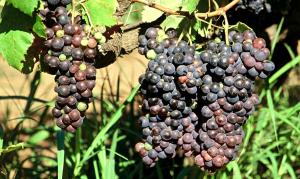
Tinta Negra Mole grapes in Madeira

Tinta Negra Mole grapes in Madeira

Now that you know a little history and winemaking, here are some common styles of madeira:

1. Sercial – made from the grape Sercial, which goes by another,  catchier name on the Portugese mainland, “dog strangler” (Esgana Cão).  These are the driest styles, with residual sugar of 0.5% to 1.5%.  The touch of sweetness is offset by searing acidity and you’ll find plenty of almond aromas.

2. Verdelho – made from the grape Verdelho, which also is planted in Australia.  These are moderately sweet (1.5% to 2.5%) with a pronounced smokiness and a tangy acidity.

3. Bual – made from the grape Bual, or Boal in Portugese.  Ripens more to achieve higher sugar levels than Sercial or Verdelho (2.5% to 3.5%) and is dark in color, with notes of raisins.

4. Malmsey – made from the Malvasia grape.  Malmsey is an English corruption of the word Malvasia.  The sweetest of the lot (3.5% to 6.5%), but rarely cloying because of their high acidity (notice a theme, here?).

These 4 grapes are the principal noble grapes grown on the island of Madeira.  Many of the best vineyards were destroyed by a vine-eating pest called phylloxera at the end of the 19th century causing American hybrids or the less-distinct, local Tinta Negra Mole grape to be planted in place of the noble varieties.

Insufficient quantities of the noble varieties have forced some producers to label their standard blends as follows; dry, medium dry, medium sweet, medium rich, rich or sweet.  So, check the label – if the varietal is listed, it will constitute at least 85% of the wine.

A great thing about madeira is that once it’s opened, it can last for many months.  It’s already been oxidized and cooked, right?  Try some with chocolate and you may be a changed person afterward.

Leave a comment

Filed under Wine

This wine’s got the hots for you

86002052

Volcanic island of Madeira

You may have heard the word maderized (MAD-uh-rized) before and if it came up in reference to a table wine, it probably wasn’t a good thing. It’s a winetasting term that refers to a wine with over-the-hill characteristics – a heavy, stale smell, often of overripe apples – usually caused by oxidation, often combined with overly warm storage. The French would say maderisé and the English might say sherrified.

If we’re talking about a fortified wine called madeira, however, hot controlled oxidation can be a beautiful (and tasty!) thing. It’s named after a Portuguese volcanic island, 400 miles off the coast of north Africa. Its location in the middle of the Atlantic made it an important port of call for ships traveling to Africa, Asia and South America.

In the 18th and 19th centuries, wine was shipped in cask and routinely fortified with brandy or neutral grape spirit to help it survive the voyage. This additional alcohol helped prevent re-fermentation as well as microbial spoilage. The constant rocking of the ships accelerated the aging process and the heat of the tropics slowly cooked the wine into an amber, nutty, caramelized beverage. When the sailors consumed the wine at the end of the journey it was a heck of a lot tastier than when they had first loaded it aboard. Continue reading

2 Comments

Filed under Lessons, Wine

Lyrical liquor

Singing and drinking go hand in hand and that’s probably why there’s a lot of songs out there that mention some form of alcohol; the Eagles’ “pink Champagne on ice”, Billy Joel’s “bottle of red, bottle of white” or more my parents’ speed, Garth Brooks’ “two piña coladas, one for each hand”.  From time to time, I’ll share some of my favorites with you. 

Beastie Boys

Flame on, I’m gone
I’m so sweet like a nice bon bon
Came out rapping when I was born
Mom said rock it ’til the break of dawn
Puttin bodies in motion ’cause I got the notion
Well like Roy Cormier with the coconut lotion
The sound of the music makin’ you insane

You can’t explain to people this type of mind frame
And like a bottle of Chateau Neuf Du Pap
I’m fine like wine when I start to rap
We need body rockin’ not perfection
Let me get some action from the back section
-Beastie Boys
“Body Movin'”
Hello Nasty1998

When the Beastie Boys released their Hello Nasty LP in 1998, I had no clue what Châteauneuf-du-Pape (shat-toe-NOOF-duh-pop, often shortened to CDP) was.  I’m happy to say that’s no longer the case.  Continue reading

3 Comments

Filed under Alcohol in Music, Wine

Thirsty live on camera

Here’s an interview I did with cork savvy about how to taste wine.  It just came out today.

3 Comments

Filed under Lessons, Videos, Wine

5 ways a restaurant can show it’s serious about wine

1. If you have a wine list, hand it out.  Don’t make people ask for it; just give it to ’em along with the menus.

2. While you’re handing out said wine list, don’t automatically give it to the gentleman at the table.  I can tell you that I’m always the one who selects the wine, yet 9 times out of 10 I’m not the one who gets handed the list.  For all of you servers out there, here are a few ways you can avoid making this mistake: make eye contact with all guests in the party and see who seems most eager to get the list, determine who the host of the party is and give the list to him/her, or simply put the list down on the table and leave it up for grabs.

3.  Make people feel good about the wine they order.  There’s no shame in looking for good value wines on a list, especially in this economy.  I rarely order expensive bottles when I go out.  Call me cheap, but I know how much that bottle really costs.  If a guest asks for a recommendation, the server should point out wines at different price points and not just the expensive stuff.  Now, as a diner, it’s always best to have an idea of what you’d like to spend before you ask for help to avoid any awkward moments with the server/sommelier/your guests.

4. Don’t try to trick people by offering a “house wine”, because there’s no such thing.  All wine, whether white, red, sparkling or pink, is made by someone somewhere and unless you’re in a little trattoria in Italy, it’s doubtful that the wine was made on premises.  Sure, some restaurants have wine specially made for them, but the producer/region/vintage should still be noted.

5. Train the people serving the wine so they know what they’re doing.  Now, I don’t expect Court of Master Sommelier steps of service every time I go out to eat, but there’s not much worse than a server at a table who looks like she might drop the bottle or hurt herself in the process of opening it.

Here are a few other niceties to consider: offering a taste of a wine by the glass if someone’s not sure what to order, allowing someone to purchase just a 1/2 glass or letting 2 folks share a glass.

Keep in mind that great wine advice, especially when it comes to food and wine pairing, really makes for a memorable meal.

2 Comments

Filed under Wine

Good things come to those (nerds) who wait

Aging Champagne

Aging sparkling bottles at Schramsberg in CA

I’m pretty skeptical of the virtue of patience and that’s probably why my wine “cellar” has 7 bottles in it.

The ability of fine wine to improve with age sets it apart from most other beverages.  My last post discussed how long to age certain wine,  if at all.  If you choose to let your wines age, make sure you do it right.

If you can muster the patience, you’ll be rewarded by the increased complexity and monetary value of your wine.  Here are some storage tips: Continue reading

Leave a comment

Filed under How to, Wine

Is it ageworthy?

Most wine – white, pink or red – is meant to be consumed within a year or two of bottling, especially if it’s in a box, jug or tetra-pak, has a synthetic closure or says “table wine” on the label.

Assuming you have a fine wine, keep in mind that different wines mature at different rates depending on exactly where they’re from, what the vintage was like and how they were made. For both white and red wines, barrel fermentation and barrel aging can extend the wine’s shelf-life.

Generally, wines with lower pH can evolve for longer periods of time. Lower pH translates into higher acidity, which forms part of the wine’s structural backbone. Most wines clock in around 3-4 on the pH scale. Taking you back to junior high for a moment, neutral is 7; below that is acidic, above that is basic (think baking soda). This is why higher acid whites like Riesling or Chenin Blanc may evolve more slowly than the lower-acid Chardonnay.

With reds, higher levels of tannins will allow for a longer life-cycle; a Cabernet Sauvignon should be aged longer than a Pinot Noir.

Here’s my take on a handy entry I found in Jancis Robinson’s The Oxford Companion to Wine.

Red Wines (varietal on left, suggested number of years in bottle on the right)

Aglianico of Taurasi 4-15
Baga of Bairrada 4-8
Cabernet Sauvignon 4-20
Melnik of Bulgaria 3-7
Merlot 2-12
Nebbiolo 4-20
Pinot Noir 2-8
Raboso of Piave 4-8
Sangiovese 2-8
Saperavi 3-10
Syrah/Shiraz 4-16
Tannat of Madiran 4-12
Tempranillo 2-10
Xinomavro of Greece 4-10
Zinfandel 2-6

White Wines (same format as above)

Chardonnay 1-6
Chenin Blanc of the Loire Valley 4-30
Furmint of Hungary 3-25
Petit Manseng of Jurançon 3-10
Pinot Gris 1-6
Riesling 2-30
Semillon (dry) 2-7
Botrytized wines 5-25

Make note that several of the whites would give the reds a run for their money in terms of aging potential.  Hurry up and wait!

Leave a comment

Filed under Lessons, Wine

The nose knows

85388906

As you start exercising your sniffer, you may be able to distinguish between different types of aromas in wine. 

In an earlier post about decanting, I made a distinction between aroma and bouquet, but I didn’t tell you where the aromas come from.  There’s more!

Leave a comment

Filed under Lessons, Wine

Smelly game

Its official name is Le Nez du Vin or “the nose of wine”, but my staff at L’Ecole has dubbed it the smelly game.

le nez du vin kit

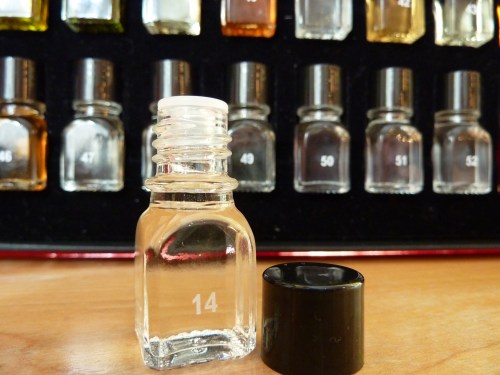
Jean Lenoir, born into a wine-loving family in Burgundy developed Le Nez du Vin over 25 years ago.  Several different kits are available and the one pictured here is the 54 aroma Master Kit.  The vials are presented in families: fruity, floral, vegetal and spicy, animal and roasted notes.  Each vial is accompanied by an information card that tells you a little more about the scent and what wines you can expect to find it in. 

Up close, the vials look like this:

vial close up

Do not ingest them, mix them with water or apply them as perfume – simply unscrew the top and sniff. 

As I mentioned in an earlier post about how to taste, it can be challenging to accurately describe aromas and flavors in wine without developing your tasting vocabulary.  Kits like this are a fun way to practice.  Well, not as fun as actually drinking, but you get the idea.  Continue reading

3 Comments

Filed under How to, Lessons, Wine

The last South American titanosaur

Aeolosaurus

I thought titanosaur was a made-up dinosaur name, but turns out it’s not. 

Titanosaurs are in the sauropod family, known for their “lizard-hips”, small heads but large overall size – some reaching 60 feet in height – and herbivorous ways.  Of particular interest for the purposes of this post is the aeolosaurus.  The last one on record was found during the construction of the Familia Schroeder winery in San Patricio del Chañar, a fairly new winemaking region in the Patagonia area of Argentina.  The fossils are still on exhibit at the winery today.  

Since I’m more interested in enology than paleontology, I’ll get on with it. Click here for the wine I tried

2 Comments

Filed under Wine