Category Archives: Wine

Cryoextract this

Cryo=very low temperatures, similar to the current NYC forecast. 

Cryoextraction is a fascinating and controversial way to make sweet white wine. 

Freshly picked grapes are held overnight in a special cold room, usually around 21°F.  The freezing point of the grapes will depend on their sugar content – only the less ripe grapes will freeze.  This means that when the grapes are pressed, the juice will only be coming from the non-frozen, ripest grapes, whose chemical composition has remained unchanged.  The colder the grapes are kept, less, but richer juice will be obtained (and vice versa).  The producer can manipulate the quantity and quality of the wine.

In essence, this process artificially replicates the conditions necessary to produce icewine.  Some notable producers, including Chateau d’Yquem from Sauternes, practice this method, opting for control and consistency instead of the wrath of mother nature. 

For true icewine production, the grapes are frozen on the vine.  This requires a deep frost with temperatures as low as 18°F.  The harvest is usually done between 5-8 am (sounds fun) and yields grapes with concentrated sugar, acidity and extract.  German producers started making eiswein in the 1960s and by the 1980s the majority of the country’s top producers joined in.  Today, you can also find icewine in Austria, the United States and Canada. 

Last night in Fundametnals of Wine class we did a side by side tasting of these two wines:
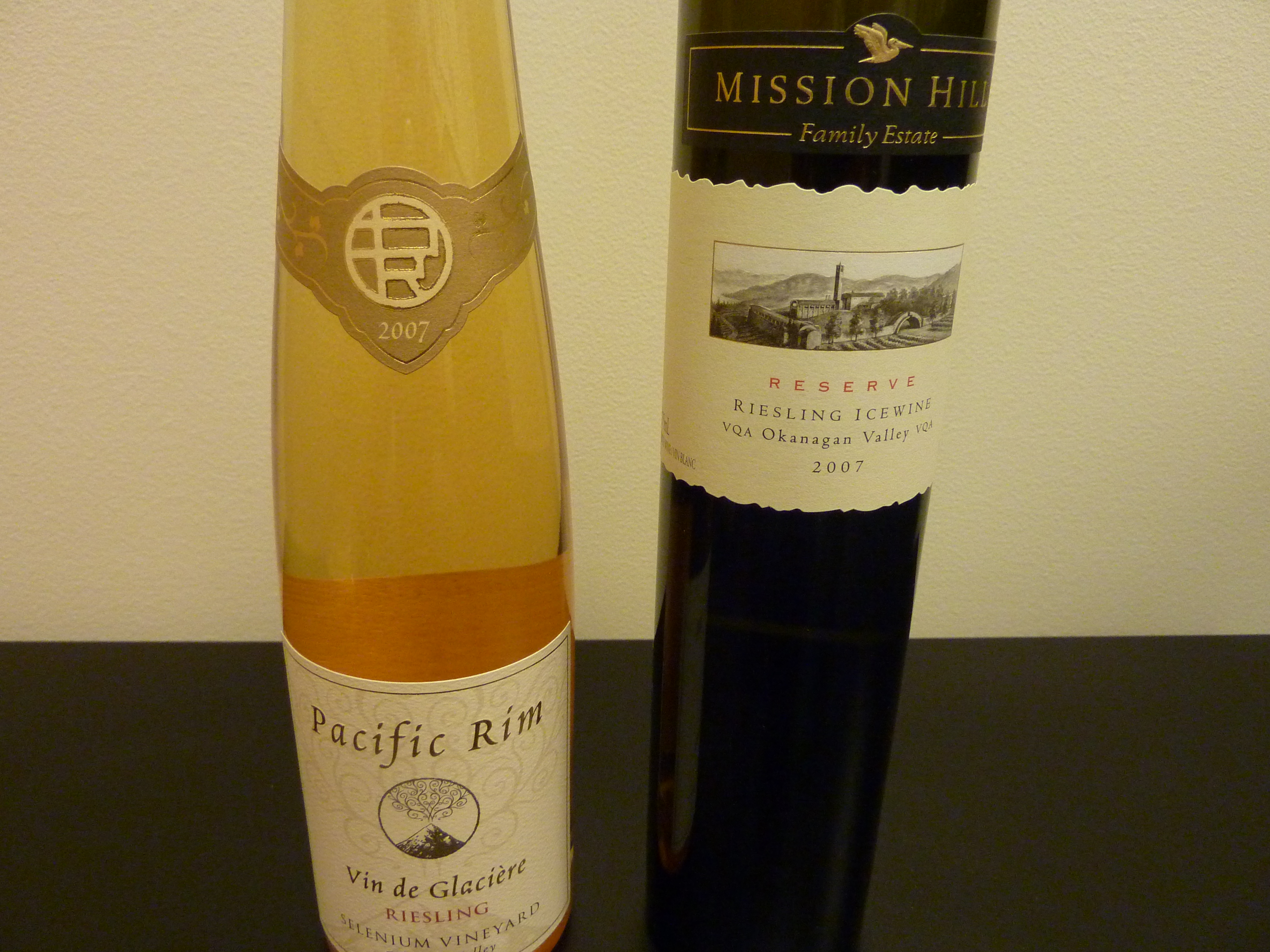
wine showdown: cryoextraction vs. true icewine

On the left is Pacific Rim’s Vin de Glacière, a single vineyard Riesling from Columbia Valley, Washington and on the right is Mission Hill’s Riesling from Okanagan Valley, in British Columbia, Canada. 

Both are 2007 and 100% Riesling, but the Pacific Rim is “of the icebox” as its producers say, while the Mission Hill is a true icewine.  Both were golden in color and luscious in body, but the class overwhelmingly preferred the Mission Hill, favoring its aromas of honeyed pears, its more substantial weight and its complexity. 

To be fair, there is a substantial price difference between the two wines – both bottled in 375 ml, the Pacific Rim goes for $14, while the Mission Hill goes for $59.99.  I could enjoy either with spicy food, a stinky blue cheese or as a substitute for dessert.

Leave a comment

Filed under Wine

Visiting La Grange

I’m not in Saint-Julien this weekend, but Prince William County, Virginia.  Nestled among the highways and strip malls is a manor house dating back to 1790 that now houses La Grange Winery.  If you visit the website, seek out the story explaining why there are two fireplaces in what was the bedroom. 

house

the winery opened to the public in 2006.

 I came across an interesting sign in the front yard.

agritourism warning

this sign should have included a warning about bachelorette parties as well.

Virginia boasts over 140 wineries and La Grange is the closest to Washington, D.C. 

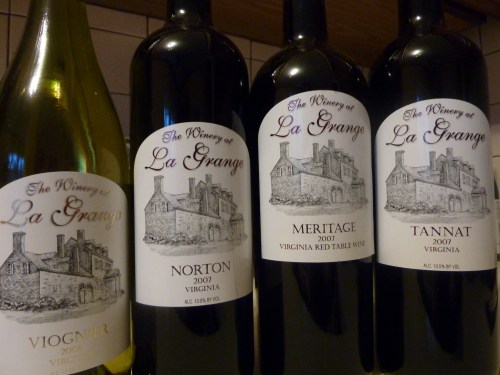
Their line-up includes Chardonnay, Viognier, Rosé of Merlot, Cuvée Blanc (a proprietary blend of Riesling, Traminette and Vidal Blanc), Norton (more on this in a moment), Cabernet Franc, Merlot, Meritage (rhymes with heritage; a blend of Bordeaux varietals: Cabernet Sauvignon, Merlot, Cabernet Franc, Petit Verdot and Malbec), Cabernet Sauvignon, Tannat and a port-style wine dubbed “Snort” and made from Tannat, Touriga Nacional and Tinta Cão. 

The only other wines I’ve had from Virginia have been from Kluge Estate.  Overall, I was impressed with what La Grange is doing.  I’ll touch on a few of my favorites.  You’ll notice a variety of vineyards and regions listed because La Grange is not an estate winery, meaning they buy their grapes from throughout Virginia to make their wines.

2008 Viognier from Hollins Farm vineyard in Paris, VA.  13.5% alc and 6 months in Hungarian oak.  Viognier is one of my favorite varietals.  It hails from Condrieu in the Northern Rhône and when done well, has a distinctive, heady, perfumed aroma.  The tells for me are apricots, peaches and honeysuckle.  It’s also planted in Australia and South America.  The majority of experimentation in North America has been in California, Canada and Virginia.  In a blind tasting, I would have put this wine in the old world and at $21 per bottle, it’s a great value Viognier.

2007 Norton from Honah Lee vineyard in Orange, VA.  13.5% alc and a touch of American oak.  The varietal takes its name from Dr. D. Norton of Richmond, VA, a pioneer grape-grower.  Its origins are debated.  Our pourer at the tasting room said it’s a hybrid originally from France; the Oxford Companion quotes Leon D. Adams as saying Norton is “the best of all native American red-wine grapes”.  It seems to be from the species vitis aestivalis, though there are signs of vitis labrusca parentage.  The wine was light and easy-drinking with red-fruits, currants and sweet spice.  La Grange added 15% Cabernet Sauvignon to give the Norton a little more structure.

2007 Tannat from Honah Lee vineyard in Orange, VA.  13.5% alc with a combination of American and French oak.  The vine’s origins are Basque and it is well-known in Uruguay and Madiran (south west France).  Known for being intense and tannic, I was impressed by the approachable, but still concentrated style this wine exhibited.  Black fruits led to a spicy finish.

purchaed bottles

the purchased goods.

2 Comments

Filed under Wine

Rhône vs. Barossa

Two legendary winemakers behind two world-renowned properties came together for a joint wine dinner last week at Tribeca Grill.

ak with winemakers

David Powell and Daniel Brunier

David Powell is behind Torbreck and Daniel Brunier is behind Vieux Télégraphe and the two men could not be more different – their backgrounds, their demeanor and their wine making style.  Daniel is the 4th generation in a family that’s been making wine for 110 years; David started Torbreck in 1994.  Daniel was quiet and reserved while David was larger than life.  My two favorite quotes from the evening capture their personalities well.

“If you don’t make a wine you like, you’re not a real winemaker.” -Daniel

“Don’t share me a good idea or I’ll try to steal it.” – David

Tasting the wines side by side was like the classic exercise old world vs. new world.  Daniel’s wines were elegant, earthy and restrained while David’s were rich, lush and in-your-face.

Both were delicious and it was incredible to see the range that these two producers could achieve using the same Rhône varietals – Grenache, Syrah, Mourvèdre, Viognier, Marsanne, Roussanne and so on.

My favorites of the night were the 1995 Vieux Télégraphe Châteauneuf-du-Pape (dark cherries, coffee and cloves); it sang with the braised shortribs and the 1999 Torbreck RunRig 1999 (concentrated with black fruits and leather); it stole the show with the artisanal cheese course.

2 Comments

Filed under Wine

Decanting Champagne?

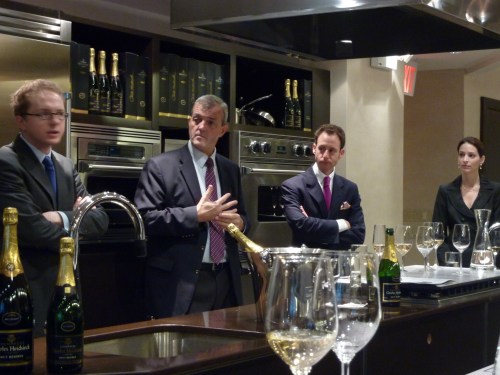
Yesterday I attended a class at the Astor Center that explored decanting Champagne with Régis Camus, winemaker for Champagnes Piper Heidsieck and Charles Heidsieck, Maximilian Riedel, the CEO for Riedel Crystal North America (he’s the 11th generation of the family) and Jennifer Simonetti-Bryan, MW.

P1000717

Before we got to the decanting, we experimented with different glasses, trying the house Brut and Rosé both in Champagne flutes and white wine glasses.

P1000718

The Champagne in the white wine glass won every time.  It was rounder, fuller, smoother and more aromatic.  The glass shape impacts where the wine hits your mouth – with the flute, it hits at the tip of the tongue and with the white wine glass, it hits just behind the tip of the tongue, causing the wine to flow more evenly over your palate, allowing you to get more from it.  It’s also quite a bit easier to fit your nose inside a wine glass than a Champagne flute and smelling is often the best part.  The next time I serve Champagne at my house, my guests will be in for a surprise.

Here’s a video detailing the decanting of the 1995 Blanc des Millénaires.

8 Comments

Filed under Events, Videos, Wine

Malbec, Carmenere, Torrontes, oh my!

The Recreational Division at The International Culinary Center is hosting “Discover the Wines of South America” on Wednesday, October 28 from 7-9:30 pm. 

You’ll learn about terruño (Spanish for terroir), sip some Argentine sparkling wine, dabble in a little blind tasting and impress your friends with your new-found knowledge about “hot” new grapes, regions and producers from South America. 

Best of all, your instructor, Liz Caskey, has lived in Santiago since 2001, so you’ll get the scoop from an insider.  She started her own boutique travel firm and in addition to running her business, she’s worked in many kitchens, vineyards and cellars and is a food/wine/travel writer for international publications as well as her Eat Wine Blog.

Leave a comment

Filed under Events, Wine

Fermentation, take two

You may have heard malolactic fermentation described as a secondary fermentation.  While it never precedes the primary, alcoholic fermentation (sugar+yeast=alcohol+CO2+heat), it’s not a true fermentation.  The process is carried out by bacteria (lactic acid bacteria), not yeast.  It is sometimes shortened to MLF or to the French la malo, and it is the conversion of malic acid to lactic acid. 

Malic comes from malum, Latin for apple and this type of acidity is found in nearly all fruits and berries.  It’s used commercially to acidify food and beverage in industrial processes.  Lactic acid is named after lactis, Latin for milk and is one of the milder acids found in wine. 

Is it a good thing?  Well, that depends.  If you have a wine with excess acidity, like a red wine from a cool climate, then yes.  It can also add additional flavor and complexity to both red and white wines as well as prevent the process from happening later on once these wines are bottled.  If, however, you have a wine from a warmer climate or a hotter vintage and you want to preserve its zip, then no. 

Some grapes, especially Chardonnay, take better to it than others.  Producers of Riesling or Chenin Blanc usually avoid it (through maintaining cooler temperatures and using sulfur dioxide), even though these grapes are naturally high in acidity. 

So, what can you expect if a wine’s undergone the process?  A rounder, fuller mouthfeel – some would say buttery.  The buttery-ness is from diacetyl, which is a by-product of the process.  If the diacetyl is not kept in check, it can be overpowering in the wine, even coming across as rancid butter.  Some winemakers think that if the malolactic fermentation happens while the wine is in the barrel, the fruit and oak flavors will be better integrated.

Leave a comment

Filed under Wine

New sommelier competition announced

Top SommThe Guild of Sommeliers just announced a new U.S. Wine Championship.  Master Sommeliers will be the judges and the competition will follow the service standards outlined by the Court of Master Sommeliers. 
It’s $25 and you have to be 21, an American citizen and some sort of wine professional.  There’s an online testing component as well as regional competitions before the grand finale. 

Here are the dates to know:

10/6/09 registration opens
11/15/09 entry deadline
1/23/10 online testing begins
March-June 2010 regional competitions
August 2010 championship

For more info and to sign up, click here.

Leave a comment

Filed under Events, Wine

Tickled pink

Sounds more exciting than “vinified pink”, don’t you think?  As promised, it’s time to talk about winemaking and I thought rosé would be a fun place to start. 

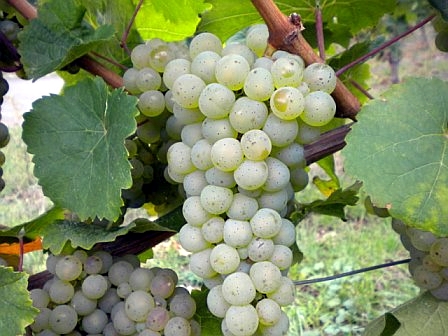
Let’s back up for a moment, though.  Whether you start with grapes that look like this:

Riesling

Riesling

Or like this:

Spatburgunder

Spätburgunder aka Pinot Noir in Germany

The juice and pulp of all grapes are clear, meaning the color in wine comes from the skins of the grapes. 

If this is a new concept to you, it might be helpful to think about Champagne.  The pink stuff aside, most of the Champagne we see on the market is white.  Two of the three permitted grapes for Champagne production, however, are red (Pinot Noir and Pinot Meunier).  The winemakers are careful to quickly separate the liquid from the grape skins, preventing any color from being imparted into the juice.

So, what to do when you want wine whose color falls somewhere between a white and a red?  Here are a few options:

1. A short maceration of the juice with the skins.  For our purposes, you can think of maceration as skin contact.  Technically speaking, it’s the extraction of phenolics (think tannins and flavoring compounds) from the grape skins, seeds and stem fragments into the juice and it’s affected by temperature, agitation and time.  The soak usually lasts 2-3 days, depending on the style the winemaker is going for – the longer the skin contact, the more darkly colored the rosé will be.  The skins are then discarded and fermentation proceeds as for a white wine.

2. The Saignée method – French for bled or bleeding the vats.  In this process the winemaker will collect free-run juice from just-pressed dark-skinned grapes after a short, prefermenation maceration.  Coincidentally, this concentrates the remaining red wine, imparting more tannin and color because the ratio of liquid to grape solids has been reduced through bleeding the vats.

3. Blending.  This is just as it sounds – blending finished red wine into finished white wine.  You’ll get a pink wine, but you won’t get the nuances achieved through maceration.  Believe it or not, Champagne is one of the few controlled appellations where this is allowed.  I guess the thought is that the second fermentation and resulting carbonation will provide enough interesting character to the rosé. 

I’ve also read that pink wines can be made by using charcoal treatments to remove the color from red wine.  This makes me a little suspicious – if the winery doesn’t want to sell it as red wine, why would I want to drink it pink?

3 Comments

Filed under Wine

More vineyard adventures

While the Ürziger Würzgarten vineyard was probably my favorite, I wanted to share two more with you.

DSC00562

The winemaker from Emrich Schönleber walking us through the Goldtröpfchen vineyard

Whenever we were let out into the vineyards, we were like kids at recess.  Here’s a short video of my fellow wine nerds traipsing through the Goldtröpfchen vineyard.  I was hoping to hit the America’s Funniest Home Video jackpot, but no dice.

This was the next stop:

DSC00619

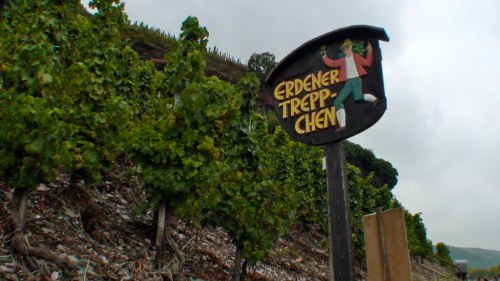
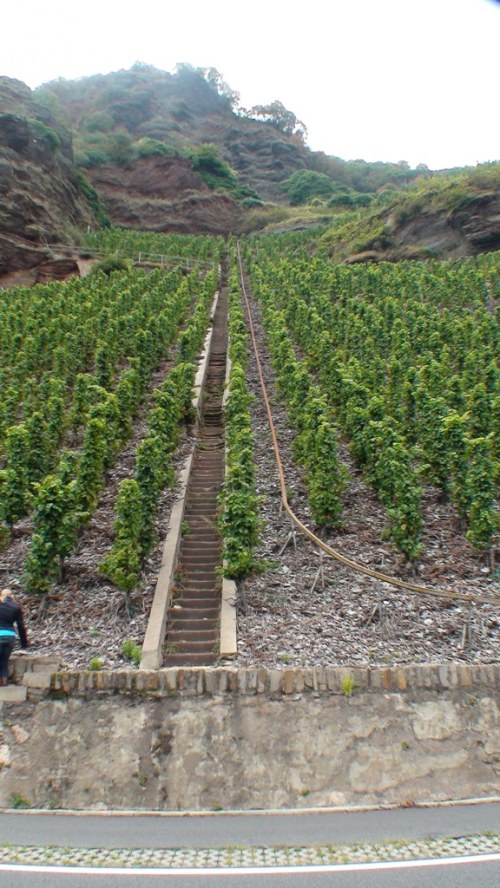
Still in the Mosel, on to the Erdener Treppchen vineyard

you can see me making my way up the stairs at the bottom left - helps give some scale to the shot

you can see me making my way up the stairs at the bottom left - helps give some scale to the shot

I made a quick video of this vineyard because I was impressed by the “soil” (aka big slabs of slate).  I did turn the camera at one point, but it still worth checking out.

1 Comment

Filed under Videos, Wine

My teeth hurt

4 days + over 200 of the world’s most high-acid wine = sensitive teeth

tooth10 days of ProEnamel by Sensodyne and an emergency visit to the dentist have almost restored my teeth to their pre-Germany sensitivity level. 

I doubt I will receive sympathy from any of my dear readers, but take it from me – if you plan to go on a wine trip, don’t forget to pack the enamel building toothpaste!

2 Comments

Filed under Lessons, Wine