Category Archives: Cocktails

Bubbly by the Bathroom

Last night I checked out Table 8, the new Govind Armstrong restaurant that opened three weeks ago in the Cooper Square Hotel.

Table 8 bar

Stepping into the bar transported me to South Beach – glass everywhere, flowing curtains, a little untz-untz music. The place was full – suits, leggy women and a boisterous group of young men pounding Heineken and Corona. We snagged a just-vacated seat at the bar and struck up a conversation with the bartender.

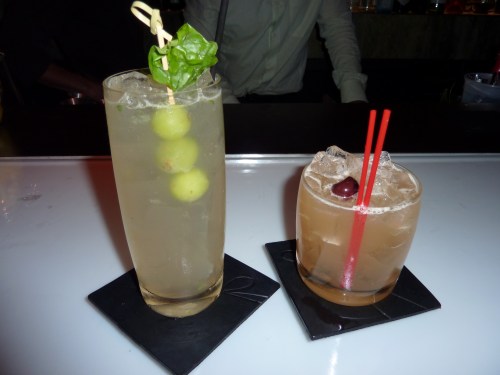
He sheepishly admitted that they didn’t have a cocktail list printed yet (…hey, if you guys need help, let me know!), but he was happy to offer some suggestions. We ended up with these:

Table 8 cocktails

The one on the left is called Basil 8 and is made with vodka, muddled white grapes, basil, simple syrup, lime and ginger ale. The one on the right is CB3, their take on an old-fashioned with rye, honey and orange bitters. Both were well-balanced, fragrant, refreshing and tasty enough to keep us from getting cranky while waiting for a table. Click here for the best part

1 Comment

Filed under Bar Reviews, Cocktails

Go go jasmine ginger

I was introduced to a new beverage this week – sparkling white jasmine tea. 

P1000014

The Golden Star Tea Company takes jasmine silver needle tea, a rare white tea from the Fujian province in China, and puts it through a controlled fermentation with Champagne yeast – controlled to produce only trace amounts of alcohol (less than 0.5% abv) but to still capture the brioche, tropical fruit and floral notes created by the action of the yeast. 

Some of the bubbles are from the fermentation process and some have been supplemented.  There’s a touch of caffeine as well as a touch of sweetness from raw sugarcane juice. 

They recommend serving it well-chilled and straight up, in a Champagne flute. But, as is usually the case when I’m introduced to a new beverage, I decided to make a cocktail out of it.

P1000023

The tea had lots of stone fruit and honeysuckle notes, which I thought would pair nicely with the fiery earthiness of an unaged tequila.  I wanted to add a little spice to the mix, so I chose Domaine de Canton, a ginger-infused Cognac. 

Go Go Ginger Jasmine
1.5 oz. white tequila (I used Sauza Blanco)
.5 oz. Domaine de Canton
1 oz. Golden Star Sparkling Jasmine Tea
splash of simple syrup
juice of 1/2 lime, 1/4 lime to finish
pinch of salt

Combine tequila, Domaine de Canton, simple syrup, lime juice and salt in a shaker with ice, shake vigorously, strain into chilled martini glass, top with sparkling tea and squeeze the juice of an additional 1/4 lime on top.  Candied ginger or an edible flower would make a nice garnish.

5 Comments

Filed under Cocktails, Other Beverage, Spirits

Booze of the nation

Last night was Share our Strength’s Taste of the Nation NYC 2009 event, a walk-around tasting to fight childhood hunger.  It was held in the cavernous Roseland Ballroom and featured over 50 top restaurants as well as plenty of alcohol. 

Lots of heavy hitters from the city bar scene were there hawking specialty cocktails.  My favorite was the Talbott Leaf, which was personally served to me by Jim Meehan of PDT.

The name comes from the Talbott Tavern, an 18th century public house in Bardstown, KY.

2 oz. Woodford Reserve Bourbon
.75 oz. fresh lemon juice
.5 oz. green Chartreuse (French liqueur)
.5 oz. strawberry preserves
.25 oz. Cynar (Italian bitter)
4 mint leaves

Add mint and lemon juice to a mixing glass.  Muddle, then add the rest of the ingredients.  Add ice, shake, strain into chilled serving vessel and garnish with mint.

Granted, I love bourbon, but this cocktail was really well-balanced; a touch of sweetness from the strawberries, nice smokiness from the bourbon and some herbal undertones from the liqueur and the bitters.  I’m also a nerd who reads Jim’s monthly column in the Sommelier Journal, so I was tickled to see him do his thing.

1 Comment

Filed under Cocktails, Spirits

Ruby blossom

Elderflower Cocktail

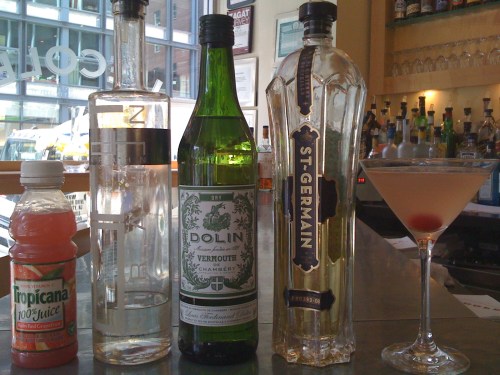
The Dolin Dry has been nagging me, especially since I did the vermouth posting a few days ago.  I knew I wanted to get it in a cocktail and on the list, but I hadn’t come up with anything special to do with it.   The inspiration came in the form of ruby red grapefruit juice, which we had leftover from an event. 

I got behind the bar and unlike every other time I’ve tried to make a cocktail, I got this one on the first try.  I chose DH Krahn gin because a)they’re really nice guys and b) it’s very tasty – sweet citrus, coriander and ginger – just the spicy hint that I thought would balance out the ruby red. 

Next, I wanted a floral component, so I chose St-Germain Elderflower Liqueur.  The elderflower blossoms are handpicked in the foothills of the Alps in a 2-3 week period in the spring and delivered via a specially rigged bicycle to the distillery.  They claim to have a secret method of extracting the essence from these flowers without producing any bitterness. Pretty romantic, huh? 

I use the Dolin Rouge all the time, especially for Manhattans, but I thought the lighter, more crisp Dry would add the perfect amount of herbaceousness to the concoction.  I was on the fence as to whether the cocktail needed a touch of sweetness (I hate sweet cocktails), so I compromised by tossing a cherry into the bottom of the martini glass.

Come by and enjoy this with us starting tonight.

Ruby Blossom
2 oz. DH Krahn Gin
1 oz. Dolin Dry
1 oz. St-Germain
1 oz. ruby red grapefruit juice

Combine all ingredients over ice in a shaker, shake like you mean it, strain into chilled martini glass, garnish with a cherry and fantasize about frolicking in the French countryside in Spring.

2 Comments

Filed under Cocktails, Spirits, Wine

It’s cool enough for 007

James Bond invented a drink in Ian Fleming’s 1953 novel Casino Royale.

“A dry martini,” Bond said. “One. In a deep champagne goblet.”

“Oui, monsieur.”

“Just a moment. Three measures of Gordon’s, one of vodka, half a measure of Kina Lillet. Shake it very well until it’s ice-cold, then add a large thin slice of lemon peel. Got it?”

“Certainly, monsieur.” The barman seemed pleased with the idea.

“Gosh, that’s certainly a drink,” said Leiter.

Bond laughed. “When I’m…er…concentrating,” he explained, “I never have more than one drink before dinner. But I do like that one to be large and very strong and very cold and very well-made. I hate small portions of anything, particularly when they taste bad. This drink’s my own invention. I’m going to patent it when I can think of a good name.” (Ian Fleming, Casino Royale)

What a guy. This later became the Vesper Martini (named for his love-of-the-moment Vesper Lynd). You’ll notice that the recipe calls for Kina Lillet, which has not been available since the early 1980s, so Lillet Blanc or dry vermouth is often substituted.

Vermouth is a an herb-flavored fortified wine. Industry folks call it an “aromatized” wine. Many herbs and spices are used, but the more classic version is the almost dry, bitter drink with the strong aroma of wormwood and other bitter herbs. Yes, I said wormwood (artemisia absinthium), a major ingredient in absinthe and rumored to have caused hallucinations. Turns out that some poisonous chemicals were added to cheaper versions of absinthe in the 19th century to give it a more vivid green color. Also, keep in mind that the people reporting these “visions” were very thirsty bohemian artists.

The wormwood did however inspire the creation of vermouth. In the 16th century, a Piemontese man named d’Alessio began marketing a medicinal concoction after enjoying a wormwood flavored Bavarian wine called wermuth. The “medicine”, used to treat gastric ills, also became popular in French royal circles and was called vermutwein. So what we have today is the Anglicized form of the word, vermouth.

Modern large-scale production dates to the 18th century in Piedmont, close to the alps, which were a source for the necessary botanicals. Brands such as Cinzano, Martini and the French Noilly Prat never claimed any curative powers, especially during the early and mid 20th century, when cocktails containing vermouth were incredibly popular.

There are three styles of vermouth on the market today: extra dry, bianco/white and sweet/red. White vermouths are often referred to as French vermouths and reds as Italian, but it’s not always the case. It’s also not the case that red wine is used as a base in red vermouth; the color comes from the caramelization of the sugar used to sweeten it.

My favorite vermouth producer is Dolin, produced in the only controlled appellation for vermouth, Chambéry. Theirs are lighter, more elegant and just plain prettier than most of the commercial producers.

Here’s how I take my medicine at home:
86010411

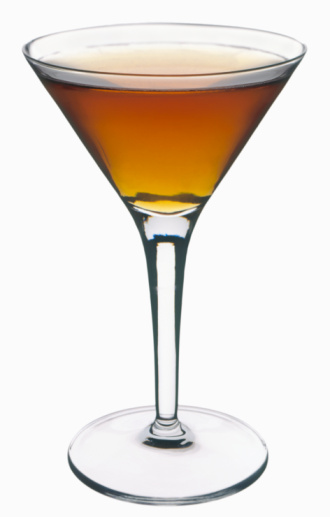
My Manhattan
(if you have a catchier name, please post a comment)

2 oz. rye – I like Rittenhouse 100
2 oz. Dolin rouge
4 dashes orange bitters

combine all ingredients in a shaker with ice, shake vigorously (no stirring, of course) and pour into a chilled martini glass. we don’t usually have our act together to serve it with a garnish, but a cherry or an orange wedge would do the trick.

4 Comments

Filed under Cocktails, Wine

Don’t call it rum

Call it cachaça (ka-SHAH-sa) if you’re talking about the most popular distilled alcoholic beverage in Brazil or the key ingredient in the killer summer cocktail caipirinha (kie-pur-YEEN-yah). Most rums are made with molasses, while cachaça is made with fermented sugarcane juice.

Technically, cachaça is a brandy in the aguardente family – a strong alcoholic beverage between 29-60% alcohol obtained by fermenting and then distilling a sweetened must (vegetables, fruit, grain or cane). Aguardente translates to “firewater” or “burning water”, but fear not, there will be some refreshing cocktails at the end of this post.

The production of cachaça began soon after the introduction of sugarcane into Brazil, around 1550. It’s hard to say whether the fermentation of the sugarcane was by accident or was the work of a thirsty spirit.

It’s similar to rum in the sense that you can find both unaged (white/clear) and aged (gold from the barrel aging) versions. Look for notes of fresh sugarcane, flowers, citrus and perhaps some vegetal notes like cucumber or celery in an unaged cachaça; an aged one might also give you oak, toast, vanilla or sweet baking spices.

Classic Caipirinha
2 oz. cachaça
1 tsp. sugar
1 lime, cut in chunks
ice

muddle lime with sugar in a rocks glass, fill with ice, pour in cachaça and garnish with lime wedge

fdc922012

A fun way to mix up this drink is to add fruit. My favorite is strawberry, but you could also try mango, pineapple or passionfruit. If you wanted to be fancy, you could infuse the cachaça with your fruit/vegetable/herb of choice.

You can also find this version at L’Ecole.

Going Green
2 oz. cachaça
1 oz. simple syrup
1 oz. lemon juice
2 pieces green bell pepper (each about the size of a quarter)
5 basil leaves
1 sugar cube
3 shakes salt

combine pepper, basil, sugar and salt in sturdy glass and muddle. add ice, cachaça, lemon juice and simple syrup and shake vigorously. do not strain. pour into a rocks glass, top with a splash of soda and garnish with a basil leaf.

Saúde!

4 Comments

Filed under Cocktails, Spirits

Get spritzed

img_0216

Even though it’s not looking like a great spring weather weekend, there’s no reason not to enjoy a tasty spring cocktail.

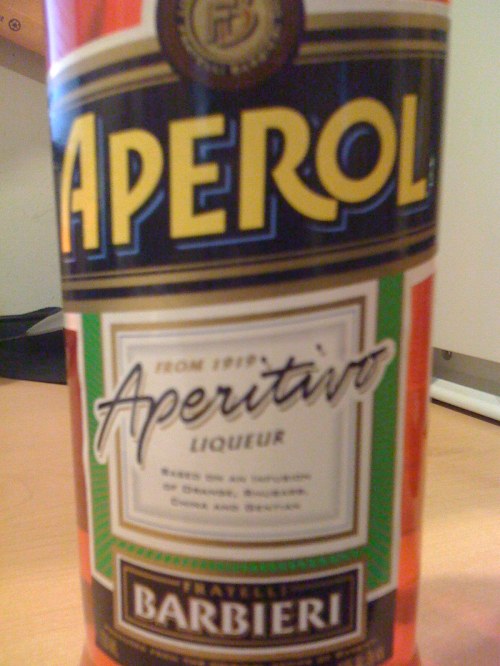
With less than half the alcohol, Aperol might seem like Campari’s teetotaling cousin, but it has a charm all its own. Aperol is in the bitters family, just like Fernet Branca, Cinzano or Dubonnet. It’s sweet with a bite, with notes of bitter orange and rhubarb. Aperol’s secret recipe of fruits, vegetables, herbs and roots dates back to 1919. The original recipe was developed by the Barbieri family in the Veneto region of Italy and it is now produced by the Campari company. You can enjoy it on the rocks, with sparkling water, as part of a wine spritzer or in one of the cocktails below.

Aperol Spritz
2 oz. Aperol
2 oz. Moscato d’Asti (sweet, low alcohol wine from northern Italy)
1 oz. orange juice
combine these ingredients with ice/shake/strain
pour into a rocks glass with ice and top with a splash of soda and garnish with an orange wheel

Spring Spritz
1.5 oz. bourbon
1 oz. Aperol
1 lime wedge
1 orange wedge
combine these ingredients with ice/shake/strain
pour into a rocks glass with ice and top with splash of 7-Up and garnish with an orange wheel

The first cocktail is close to a traditional spritz, but uses a dessert wine instead of a dry white or Prosecco. Moscato d’Asti is easy to find, inexpensive, effervescent and its sweetness plays nicely against the bitter orange character of the Aperol. The second cocktail isn’t technically a spritz since it contains no wine, but it’s still bright, refreshing and well-balanced because of the sweetness of the bourbon. Cheers, or as the Italians might say, cin cin!

59 Comments

Filed under Cocktails, Spirits

Oh, you pretty thing

violetspicture21Creme de Violette

One day it’s 50 degrees and raining and 3 days later it’s 80 and sunny. What’s happening with spring this year?

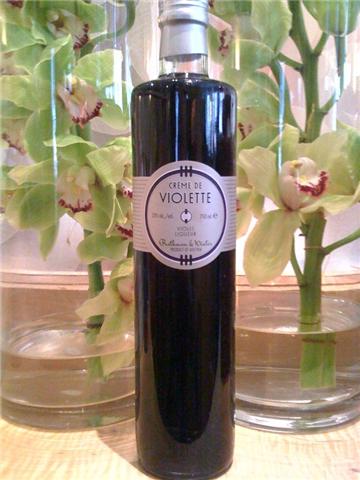
But fear not – let me introduce springtime in a bottle – Rothman & Winter Crème de Violette.

Flowers to drink? Well, you’ve tried pine berries and walnuts, so what do you have to lose?

Violets are fairly common in the culinary world. When newly opened, flowers in the Viola family can be used in stuffings for poultry or fish or to decorate salads. Soufflés, creams, cakes, chocolates and other desserts can be flavored with them, too. Don’t forget about Choward’s violet mints. Another option is to sautée the young leaves and treat them like a leafy vegetable. But, why would you want a vegetable when you could have booze?

Again we travel to Austria, where Queen Charlotte and March violets are carefully macerated with grape brandy and cane sugar. The photo above may not do it justice, but this liqueur is electric purple! It smells like the perfume of a lady (one your mother would approve of).

Historically, this type of liqueur has been used in Champagne cocktails as well as the Aviation (gin, lemon and Maraschino) and the Blue Moon (gin and lemon), but this is what I suggest:

Violette Femme
*2 oz. gin (try Hayman’s Old Tom – round, deep flavor)
*1 oz. Rothman & Winter Crème de Violette
*1/2 oz. Yellow Chartreuse (milder and sweeter than the green)
*1/2 oz. lemon juice
*1/2 oz. agave nectar (fairly easy to find, try Whole Foods – a little more intense than simple syrup, so you need less)
*combine all ingredients and shake with ice, strain, serve up and garnish with candied violets (you can find them at Dean & DeLuca)

You can find the Crème de Violette here or enjoy the cocktail at brunch on Saturdays and Sundays here.

7 Comments

Filed under Cocktails, Spirits

Awww, nuts

Nux Alpina Walnut LiqueurWe’ve moved from floor cleaner to Waldorf salad. Almost edible.

The word walnut stems from an Old English word meaning “foreign nut”. It got this name because it was introduced to us from Gaul (historical name from Roman times to describe Western Europe – now the area of France and Belgium) and Italy. The previous Latin name for the walnut was nux gallica.

So now I introduce to you Nux Alpina Walnut Liqueur. There are some pretty easy recipes to make walnut liqueur at home (often referred to as Nocino), but I can guarantee you this one is tastier. Another family affair, the Purkharts pick fresh green walnuts each summer and let them sit in grape brandy for months. For the last 4 weeks, they add in a top-secret variety of spices and alpine botanicals (no corn syrup or vanilla extract here).

This version is rich, aromatic, well-balanced with a smooth finish, and of course, it’s nutty. Esentially, a tastier way to get your omega-3 fatty acids and for you ladies to reduce your breast cancer risk.

Here’s a cocktail to try:

Mixed Nuts (I gave it this name because sherry has a distinct almond aroma and flavor)
*2 oz. Oloroso Sherry (try Lustau – easy to find, inexpensive)
*1.5 oz. Nux Alpina Walnut Liqueur
*3/4 oz. Aperol (aperitif produced by Campari company with notes of bitter orange and rhubarb)
*1/2 oz. simple syrup (this is easy to make at home -use equal parts sugar and water – i.e. 1 cup sugar dissolved in 1 cup water)
*4 dashes orange bitters (Regan’s)
*juice of 1/2 lemon
*dash of salt (almost always a good idea in any cocktail – makes the flavors pop)
*combine all ingredients in shaker with ice, strain over ice and serve in rocks glass
*garnish with orange wheel

You can find the Nux Alpina here or the cocktail here.

11 Comments

Filed under Cocktails, Spirits

“That’s the power of Pine-Sol, baby!”

Zirbenz Stone Pine Liqueur of the AlpsPine liqueur – really? This one is to drink and not to spruce up the flooring.

Don’t be afraid, be thirsty.

You may be familiar with Retsina, a resinated wine that is extremely common in Greece. It’s made just like any other white wine, except for small pieces of Aleppo pine resin are added to the must (fermenting wine) and left there until the finished wine is removed. Major production areas are in central Greece, close to Athens and the grapes used most often are Savatiano, Rhoditis, Assyrtiko.

Resinated wines can be traced back to the days of the Ancient Greeks and Romans. They used to keep their wines in porous, earthenware vessels and eventually learned to coat the inside with resin so the wine would keep better. This eventually morphed into adding the resin directly to the wine. Many people came to enjoy the taste of resin, so it became not only a preservative, but also a flavoring agent. Even ‘Pliny the Elder’ suggests adding resin to fermenting must (Natural History 14.124).

Today, resins have several uses in wine-making: surfacing the inside of wine vats, surfacing floors in wineries and bottling halls (resin is more resistant than concrete to acids in wine), adding flexibility to bungs for wooden barrels, stabilizing pigments in red wine. For you science nerds, resins (natural or man-made) are long chains of simpler molecules that are capable of polymerizing.

Now for the task at hand – a pine liqueur worth drinking and what to do with it. Pictured here is the Zirbenz Stone Pine Liqueur. Generations of mountaineers have learned from Josef Hofer how to harvest the Arolla stone pine in the Austrian Alps. You may have expected the Zirbenz to be green, but the natural red color comes from the fruit of the pine. Hofer began his family distillery in 1797.

So, how does it taste? Well, yes, it’s piney, but it’s also sweet and floral – like a prettier, more nuanced Fernet Branca. The producers recommend enjoying it apres ski, but this is what I suggest (I call it the Stone Fox):

Stone Fox
*2 oz dark rum (try Goslings)
*1 oz Stone Pine Liqueur
*1/4 oz simple syrup

*1/4 oz lemon juice

*juice from 2 pieces of orange
*4 dashes orange bitters (try Regan’s)

*dash salt
*combine all ingredients in shaker with ice / strain / serve
*serve up and garnish with orange twist

Click here to find the Zirbenz Stone Pine Liqueur. If you don’t feel up to making this at home, come enjoy one at the bar at L’Ecole.

6 Comments

Filed under Cocktails, Spirits