Finger Lakes Bramble

My friend Scott stopped by L’Ecole this week so I could taste him on some Finger Lakes Distilling Products.   He’s got plenty of experience, as he’s behind DH Krahn gin (the website is under construction, but for more info in the meantime, click here).  When we got to the Crème de Cassis, he exclaimed, “This would make a delicious bramble!”

Thanks for the tip, buddy and here goes:

see the cassis trickling down the inside of the glass?

See the cassis trickling down the inside of the glass?

Is your mouth watering yet?

Is your mouth watering yet?

The cassis will have a pretty label soon instead of my post-it note

The cassis will have a pretty label soon instead of my post-it note

Brambles are thorny plants in the rose family and the bramble fruits that come from those plants are raspberries and blackberries.  The bramble cocktail was created by Dick Bradsell in the 1980s at a club in London.  The original calls for blackberry liqueur, but I opted for blackcurrant with FLD’s Cassis. 

With the help of a Chef-Instructor and a robot coupe, I got some crushed ice.  If you don’t have either of those at home, I suggest a blender or a mallet.  The crushed ice really is an important part of the cocktail and you’ll see why in a moment.  Here’s the recipe:

2 oz. Seneca Drums gin
1 oz. fresh squeezed lemon juice
1 oz. simple syrup
dash salt

Combine the above ingredients with ice and shake vigorously.  Strain over crushed ice in a rocks glass.  Top with 1 oz. Crème de Cassis – the crushed ice slows the dissipation of the cassis, making quite a pretty show.  The trickle would have been more obvious in the first photo above, but I was a one-woman cocktail-making, photo-taking show.  Garnish with lemon slice and blackberries. 

This is an easy cocktail that’s got everything you want – a little sweet, a little tart, a little herbaceous and a little bite.

1 Comment

Filed under Cocktails

Nerd Conference

SWE LogoThe Society of Wine Educators is holding this year’s annual conference in Sacramento, CA from July 27 – Aug 1 and yours truly will be in attendance.  I’m calling it a nerd conference because each day is jammed packed with seminar after seminar and also because one of my wine-nerd heroes, Jancis Robinson, is giving the keynote address.  I’ll be taking a spirits exam and attending classes on everything from sustainability in winemaking to “the truth about wine and cheese” to “can absinthe cause insanity?” to a 3 hour class on sake.  Keep reading and I’ll fill you in on all the good stuff I learn out there.

You don’t have to be a member of SWE to attend, but you might have to be a nerd.

1 Comment

Filed under Events, Wine

Ooh la la

My niece is traveling through Europe this summer (I’m not jealous) and has been sending the family amusing updates on her adventures.  Her last email concluded like this:

“One more thing I would like to share with you.  It is absolutely NOT a stereotype, and I am absolutely NOT exaggerating when I tell you that French people really do often use the expression “ooh la la”.  Sometimes they don’t stop at two “la” ‘s – they continue on with four more “la”s, but there is never an odd number of “la”s, as the “la”‘ s are always accompanied in twos.”

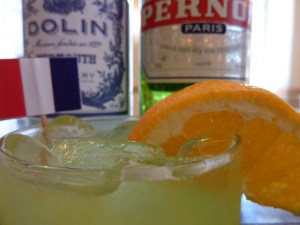
In celebration of Bastille Day, we created a cocktail yesterday and called it Ooh La La.
Ooh la la

Do you like the house made French flag?

2 oz Dolin Blanc
1 oz Pernod
dash salt
juice of 2 orange wedges

Combine all ingredients in mixer and shake with ice. Strain over fresh ice in a rocks glass. Garnish with orange and optional “French flag on a toothpick”.

By definition, ooh la la is an expression of pleasant surprise and that was my reaction upon sampling this seemingly simple cocktail.  The bright citrus, the spicy star anise and the sweet herbaceousness combined seamlessly and sang.

Speaking of singing, turns out that Ooh la la is also a song from the band, Faces.  The catchy refrain goes like this:

I wish that I knew what I know now
when I was younger
I wish that I knew what I know now
when I was stronger

I bet Rod Stewart wishes he knew about this drink.

1 Comment

Filed under Cocktails

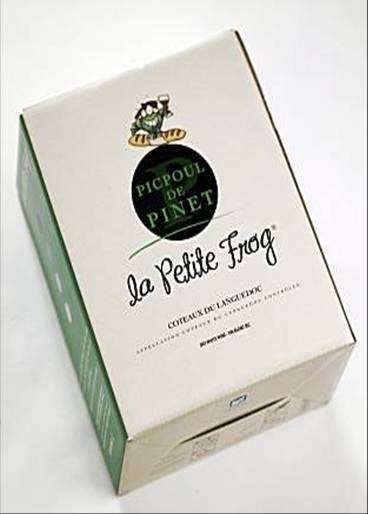
I bought a wine featuring a cartoon animal

PicpoulYes, it’s a frog – a petite one, who seems to be riding a baguette.  I was so excited to see this varietal come in a box, I put my cute-sy label prejudices aside. 
Picpoul (pick-pool) is also known as Folle Blanche (Loire Valley) and is sometimes spelled Piquepoul, which means “lip-stinger”, a reference to the wine’s high acidity.  It comes in Blanc, Noir (one of the varietals allowed in Châteauneuf-du-Pape) and Gris versions, but the most famous is the Blanc from the Languedoc area of southwestern France. 

Picpoul de Pinet is one of the named crus of Coteaux du Languedoc.  Cru in this case refers to a recognized region of superior quality and Picpoul de Pinet is a designation that may be used in the Languedoc if it’s a white wine made exclusively from Picpoul Blanc.  The wines tend to be greenish-gold in color and round, with lemony-citrus notes. 

This particular Picpoul de Pinet (say that three times fast) is the 2008 La Petite Frog by the Cave de Pomerol cooperative.  I found it at Astor Wines and it’s clean, bright and zippy.  Lemon, grapefruit and a pronounced minerality dominate the palate.   It paired beautifully with a pasta dish with fava beans and an herb salad.  It’s an interesting, refreshing wine at a reasonable price – 3 liters for $30.  Add it to your list of wines to drink this summer. 

1 Comment

Filed under Wine

Fun guy? Hardly!

Last but not least in the series on stink – odors in the fungi family. 

First up is moldy-earthy smell (2-ethyl-fenchol and geosmine).  The molecules responsible for making your wine smell like dirty beets are usually produced by microorganisms.  The pungent smell is often caused by the lack of proper hygiene in winemaking equipment, especially vats or barrels.  Empty barrels are tricky to keep clean and free of mold because the temperature and humidity inside are often just what these microorganisms are looking for.  Once the pesky spores make their way into the pores of a wooden vessel, it’s almost impossible to remove them completely.  Sure, some earthy qualities in a wine can be enjoyable, but to prevent a moldy-smelling mess, the winemaking team needs to keep it (those barrels) clean; prewash, clean, rinse, disinfect, re-rinse – you get the idea. 

Speaking of moldy, another fault you’re probably more familiar with is cork taint.  Since the 17th century, oak cork has been the bottle sealer of choice – it’s elastic, compressible and impermeable to liquids and gases.  Its taste, similar to that of wood, also varies a bit depending on how it’s processed – stripping, seasoning, washing, etc.  A slight taste of cork or pieces of cork floating in your wine glass should not be confused with cork taint.  The former is considered pleasant by some and the latter is a problem with wine service.  Here are some scenarios, though, where the wine’s corked:

1.  A foul, putrid smell caused by yellow stains on cork harvested at the base of the trunk.  Don’t worry, though, the chances of this one are about 1 in 100,000.

2.  A taste of stagnant water caused by poor hygiene during the cork production process – the cork strips were not fully dried.

3. The smell of solvent or smoke caused by a narrow cork that created bottle leakage.  Mold or bacteria might be present and visible on the cork when you open the bottle.

4. The smell and taste of mold and must (yum!) caused by 2,4,6, tricholoro-anisole or TCA – this potent compound is responsible for 90% of cork tainted wines.  The formation of TCA  happens when chlorine reacts with organic phenols (highly prevelant compounds in the winery; in grapes, in corks, in barrels, in wooden pallets and in structural wooden beams) to form chlorophenols.  These in turn react with mold in the presence of moisture to form TCA.  Our threshold for detection of TCA is very low (less than 1 billionth of a gram per liter), so a little taint goes a long way to spoiling your glass of wine. 

What are your chances of running into a corked wine?  I’ve seen figures ranging from 2-8% of all bottles on the market – yikes.  We’ll tackle alternative packaging and closures another day.

1 Comment

Filed under Lessons, Wine

Cucumber Coolest

Maybe you’ve tried the cucumber cooler.  If you haven’t had a chance, try this one first.  Similar idea and ingredients, but even tastier:

Seneca Drums Gin

Seneca Drums Gin

This time around, however, I subbed St. Germain for the Dolin Blanc.  The recipe now looks like this:

2 oz. Seneca Drums gin
1 oz. St. Germain
juice of 1/2 lime
2 oz. cucumber chunks
dash salt
splash club soda

Muddle cucumber with lime juice, add gin, St. Germain, dash salt and ice, shake and pour into rocks glass over ice.  Top with club soda and garnish with cucumber wheel.

The flavors were incredibly well integrated.  Was it the greenmarket cucumber (I didn’t skin or de-seed this time)?  Was it the St. Germain?  The sweet, floral quality was a great match with the herbaceous gin.  Regardless, this cocktail did a nice job of extending the weekend.

Cucumber Coolest

Cucumber Coolest

2 Comments

Filed under Cocktails, Spirits

The Rockies strike again

check out those dames

check out those dames

I tried a perfect summer beer today from Avery Brewing Company – their Sixteenth Anniversay Saison Ale.  Those foxy chicks on the front represent the three major ingredients in the brew – jasmine, peach and honey.  These three are combined with Rocky Mountain water, malted barley, Belgian candy sugar, hops and Belgian yeast. 

French for season, the name saison was given to low-alcohol pale ale styles brewed in the French-speaking region of Belgium.  The name came about because the beer was brewed in the fall or winter so that the hardworking farm hands could have some summer refreshment – now they’re brewed year-round.  Historically, they had low alcohol (around 3% abv) and were often a safer choice than water for the farmers (most commerical brews today clock in at 5-8% abv – the Avery in question is 7.69% abv).  Extra hops were added to help preserve the ales through the summer since the low level of alcohol wouldn’t provide too much protection from spoilage.

My all-time favorite is Saison Dupont from Basserie Dupont in Tourpes, Belgium – it’s full-bodied, fruity and spicy with a nice dose of funk.  It’s a little much for summer and that’s where Avery comes in.  The Sixteen Saison has light spice and a touch of sweetness from the peaches, but it’s very clean with a super dry finish. 

Op uw gezondheid or maybe a votre sante!

Leave a comment

Filed under Beer

If you’re in the city this weekend

You should come by and cool off with a L’Ecole brunch cocktail.  Here are just 3 of the libations we’ll be serving up Saturday and Sunday:

Going Green

Going Green

Violette Femme

Violette Femme

Rhubarb Iced tea

Rhubarb Iced Tea

For the Going Green recipe, click here.  For the Violette Femme recipe, click here.  For the Rhubarb, combine 2 oz. gin, 2 oz. rhubarb mix (recipe below) and the juice of 1/2 lime in a shaker, shake, strain and serve over ice in a rocks glass.  For the rhubarb mix, combine 500 g. rhubarb, 200 g. sugar, 50 g. ginger (2-3 fingers), 3 sprigs mint and 2 L water.  Bring to a boil and when rhubarb is soft, turn off the heat and add 4 tea bags (we used Chinese black tea from Harney – each bag yields about 1 gallon of tea).  Wait 15 minutes, remove tea bags, ginger (leave a bit if you want it spicier) and mint, strain (chinoise is best) and blend rhubarb until very smooth and add more tea liquid back in to taste.  So, yes, this is a restaurant-sized recipe, yielding 5 quarts, but you get the idea.  Plus, it’s just one more reason to have one with us.

1 Comment

Filed under Cocktails

Check out the stein on that seal

Good Beer SealThe Good Beer Seal was formed to recognize establishments serving artisan suds and to promote NYC as a beer lover’s destination.  It was started by the proprietors of some incredible beer bars: Gary Gillis (Burp Castle and Standings), Ray Deter (DBA and DBA Brooklyn) and Jimmy Carbone (Jimmy’s No. 43).  In order for the bar to feature this thirsty seal of approval, the list must contain at least 80% craft or special imported beers, a good percentage of the beer served must come from a draft or cask system, the bar must have a strong community presence as well as a good “pub” vibe, and last but not least, serving good beer should be central to the bar’s operating philosophy.

The list of good beer bars includes the usual players – Blind Tiger, Spuyten Duyvil, Against the Grain, etc. – for a full list, click here.  The founders wrote a letter to Mayor Mike Bloomberg describing their efforts and he issued a proclamation that July 2009 is “NYC Good Beer Month”.   Two major events are lined up so far – a grill-off featuring amateur chefs at Water Taxi Beach in Long Island City to benefit Slow Food NYC and “Good Beer at BAM” in collaboration with Edible Brooklyn and Manhattan Magazines (for tickets, click here).  There’s a blog about the project as well and it lists what the good beer bars are serving up in July.

Leave a comment

Filed under Beer, Events

Wines of summer, Part I

I got a request for my recommended wines for summer (honest!).  I’ll introduce some off-the-beaten path varietals that will still appeal to all of you Pinot Grigio drinkers out there.  Summer’s certainly about drinking wines that are light, crisp and refreshing, but that doesn’t mean they have to be boring.  Today, we’ll start with the letter V. 

First up is Verdejo (vehr-DAY-ho); aromatic and herbaceous, it’s Spain’s Sauvignon Blanc.   Rueda is the spot in Spain to find Verdejo.  It’s northwest of Madrid in Castilla y León.  Wine has been made in this region since the Middle Ages, but found its stride in the 1970s, when Bodegas Marqués de Riscal of Rioja recognized the area’s potential for dry, white wines.  They began selling fresh Rueda alongside their Rioja reds and in 1980 Rueda was awarded its DO status (Denominación de Origen; controlled appellation, think France’s AC). 

Verdejo is sometimes blended with Viura (also known as Macabeo), the white grape of the Rioja region or with Sauvignon Blanc – in both cases, Verdejo must account for at least 50% of the blend.  If the label says Rueda Superior, the wine must contain at least 85% Verdejo.  Verdejos are fragrant, often with notes of apple, mint and fresh-cut grass.  In warmer years, they can take on aromas and flavors of tropical fruits.  When they’re well done, they have both juicy citrus as well as an underlying minerality.  Here’s more good news – they’re usually inexpensive – you should have no trouble finding some in the $9-$15 range.  Here are some producers to look for: Cuevas de Castilla “Con Class”, Martínsancho and Bodegas Hermanos del Villar “Oro de Castilla”. 

Next up is Vermentino (ver-mehn-TEE-noh), which is also called Rolle in Provence.  It’s grown primarily in Sardinia, Liguria and Corsica, with increasing amounts in Languedoc and Roussillon and a touch in California and Australia.    Some think the grape has Spanish origins, while others think it’s related to the Malvasia grape and to a grape called Favorita grown in Piedmont (who wouldn’t want to drink that?).  Vermentino produces a lively wine, with lots of citrus and great acidity.  Acidity=refreshment during the heat of the summer.  It’s a great partner with seafood or grilled vegetables.   Styles from Liguria tend to be a bit lighter than those from Sardinia.  Check these out: Cantina Santadi “Villa Solais”, Santa Maria la Palma “Aragosta” and Bibi Graetz “Bianca de Casamatta”. 

Last but not least for your summer sipping I present Vinho Verde DOC (VEE-nyoh VEHR-deh) (Denominação de Origem Controlada; again, controlled appellation).  I’ve switched gears now from varietal to region and I’m taking you to northwest Portugal.  Vinho verde means green wine, but not like green beer for St. Patrick’s Day – the green here refers to the youth and vivacity of the wines from this region.  These wines are slightly effervescent too, and you know how I feel about wines with bubbles.  Whites from this region are crisp, fresh and quite zippy.  They’re made from these grapes: Alvarinho (yup, Spain’s Albariño), Loureiro, Trajadura and Avesso.  Look for these in the store: Sogrape “Gazela” (I’ve seen it for $4.99!) and Auratus – a mix of Alvarinho and Trajadura and a bit more complex than most on the market. 

Leave a comment

Filed under Lessons, Wine