Monthly Archives: January 2010

Red Riesling

I was tickled to see Eric Asimov’s piece on spätburgunder in the Times today.  German pinot noir is a beautiful thing and deserves more of our attention. 

My favorite spätburgunder of my trip to Germany happened to have been made by a gentleman mentioned in Asimov’s article, Klaus-Peter Keller of Weingut Keller.  When we sat down with him back in September 2009, he mentioned being very excited about an upcoming tasting he had scheduled with Asimov. 
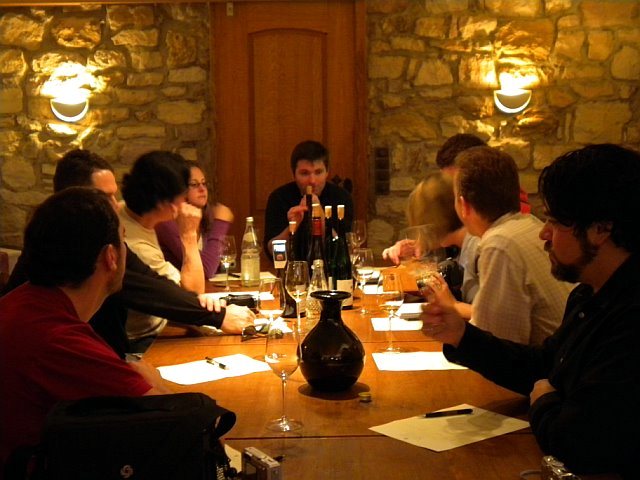
Klaus-Peter at the head of the table. He and his wife took over the winery with the 2001 vintage.

We tried over a dozen wines at this tasting, but luckily I took decent notes.  A few things Klaus-Peter said really struck me.  Good wine “must show its terroir” and it must be “easy to finish the bottle”.  He noted that good pinot is the equivalent of red riesling; “it needs oak only when the wine is missing something”, but that unfortunately when red wine is expensive, “many expect to smell wood.” 

My favorite is on the right. Felix is Klaus-Peter's oldest son. His children will be the 10th generation. On the left is a tasting sample without a proper label; it will be sold at auction. The FR stands for Frauenberg, meaning "women's vineyard" - it was 4 km away from the house, or as far away as the women could work and still be home in time to prepare lunch.

The Felix had rich, concentrated fruit – cherries and figs – with notes of light cedar, anise, tea and rose petals, and a mineral finish. 

The Felix came from 40-45 year old vines, which yield about 2 1/2 tons per hectare.

Only 10-15% new oak was used.  Keller gets his barrels from Domaine de la Romanée-Conti (a Burgundian estate, often shortened to DRC; they make some of the most expensive and sought after wine in the world).  When our mouths collectively gaped open at this comment, Keller shyly smiled, “They like my riesling.”

Some "soil" samples in the tasting room. Keller explain when there was a little clay on top of the rock, it made for fleshier wines.

Klaus-Peter told us they hand de-stem in the vineyard and then let the stems ripen another 10 days or so. About 30% of the grapes will go through the fermentation process with stems.

Next time you order pinot noir, ask for it with an umlaut.

Leave a comment

Filed under Wine

Bon vivant…

…a man about town… a person who frequents the most fashionable Paris locales…and a delectable cocktail…The Boulevardier.

1 1/2 ounces bourbon (I used Maker's), 1 ounce Campari, 1 ounce sweet vermouth (I used Dolin). Stir, strain and garnish with a cherry

Another selection from the aforementioned Ted Haigh book – this one is spicy, sweet and herbaceous.  This drink was first listed in Harry’s 1927 bar guide, Barflies and Cocktails.  The Harry in question is Harry McElhone, who once was the face of the Plaza Hotel bar in New York, before opening his own joint, Harry’s New York Bar, in Paris.  He, like many other thirsty spirits of his time, decided to skip out of town when things dried up thanks to the Volstead Act. 

This was the drink of choice for Erskine Gwynne, writer, socialite and nephew of railroad tycoon, Alfred Vanderbilt.  Gwynne was an expat living in Paris who published a monthly magazine called The Paris Boulevardier.

You may recognize the formula of this cocktail – sub gin for the bourbon and you’ve got yourself a Negroni.  I must say that this beats any Negroni I’ve ever had.

3 Comments

Filed under Cocktails

Everywhere an oink-oink

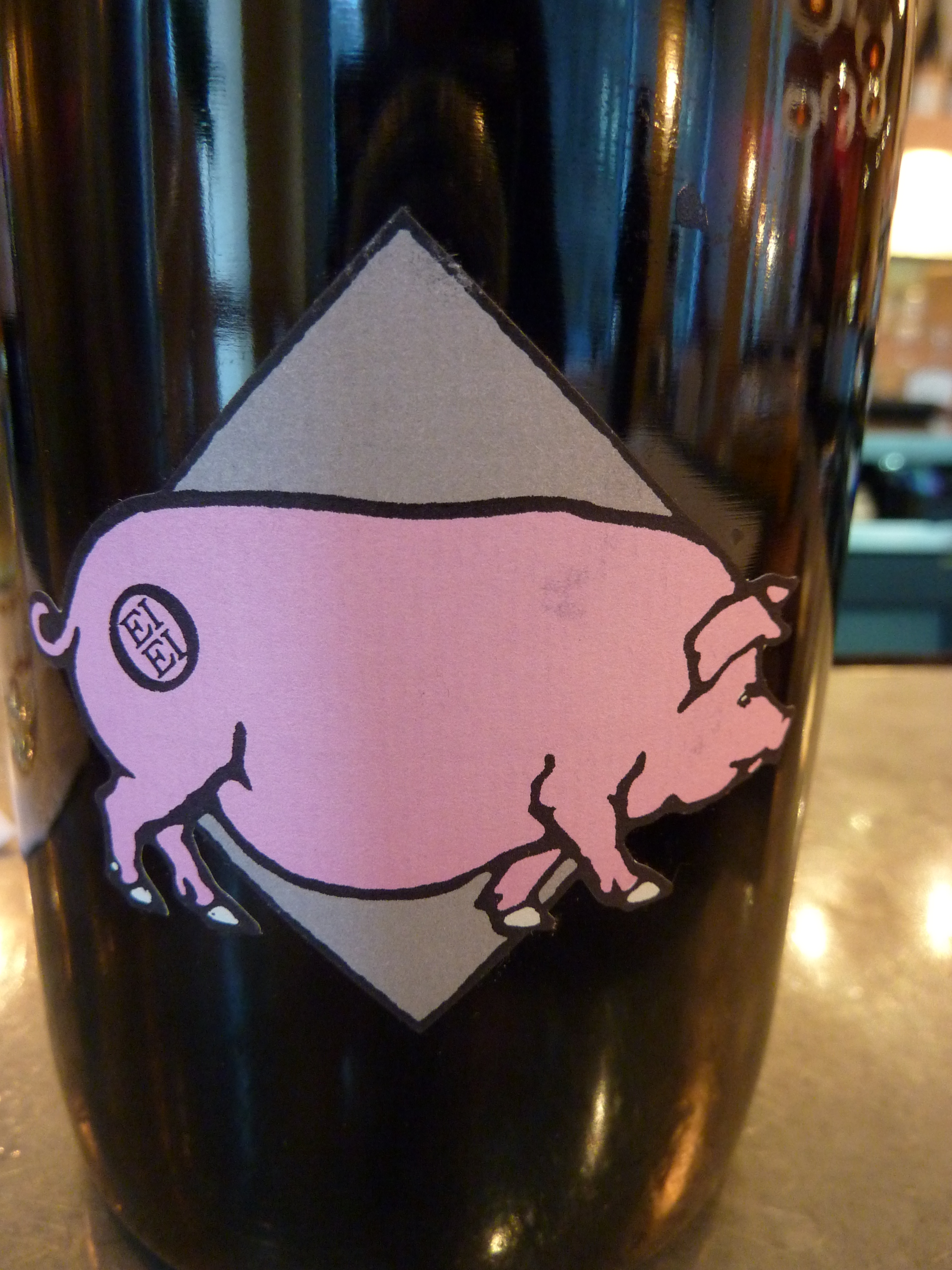
I tried a tasty Pinot Noir last week named Swine Wine.  It’s the most popular bottling of the EIEIO & Company.  The founder’s name is Jay McDonald.  The website is www.onhisfarm.com.  I’m not kidding.

one of the more tasteful "critter" labels I've seen

Finding a delicious, domestic Pinot for $25 or under is not easy to do, but this wine fits the bill.  Elegant and complex, with notes of dark cherries, plums, purple flowers and smoked meats (really!), the wine has great acidity and a lingering finish.  The grapes are sourced from some of the best vineyards in the Willamette Valley, with some of the vines dating back to 1974.  Interestingly, McDonald chose to put it out as a non-vintage wine, though a little birdie told me that most of the grapes are from the 2007 vintage.  You can purchase through their website and the wines are distributed in NYC by Verity (website is under construction).

1 Comment

Filed under Wine

Wouldn’t mind some hanky-panky

At the turn of the 20th century Ada Coleman was the face of the Savoy in London.  This is her drink.

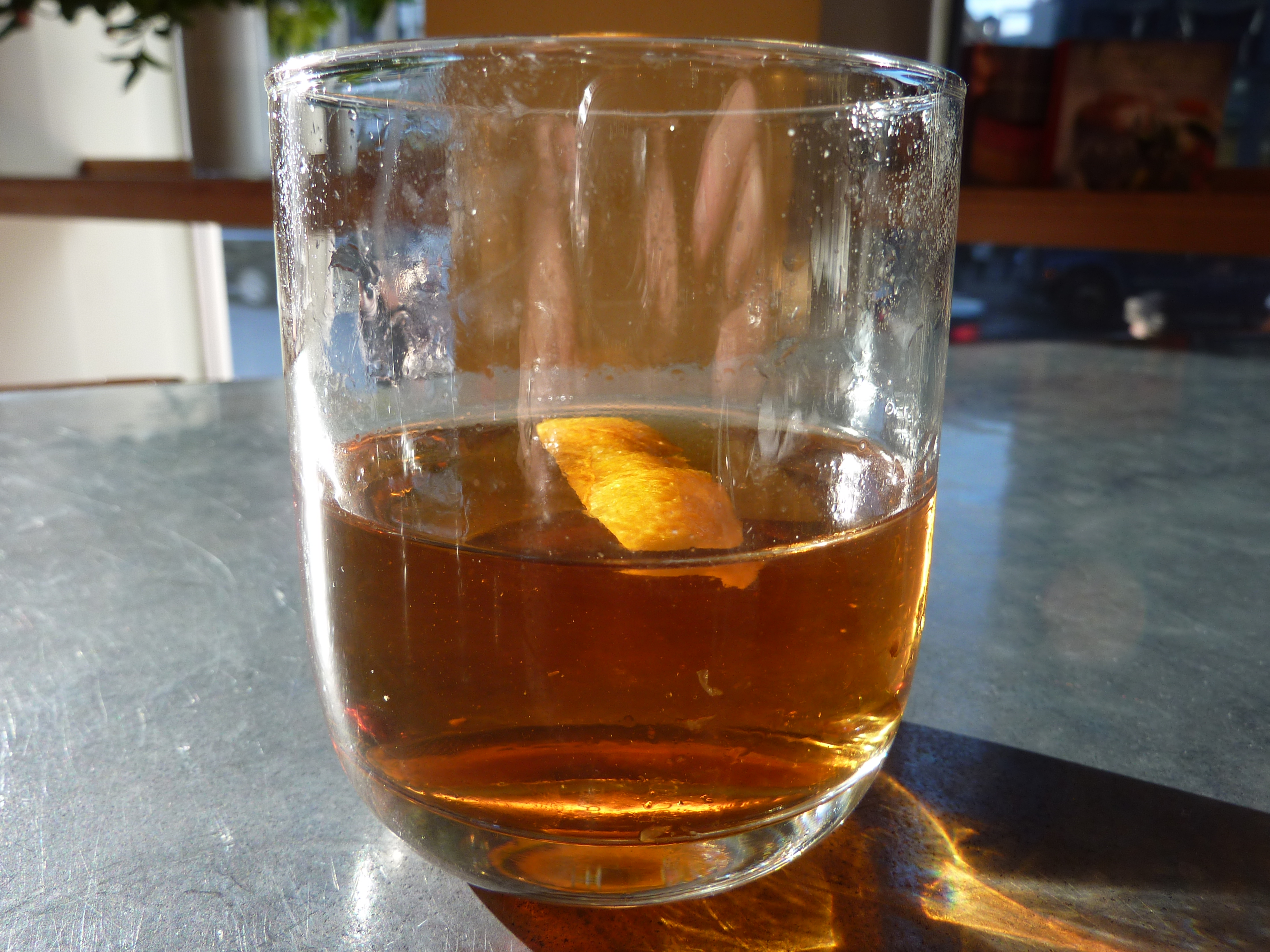
The Hanky Panky: 1 1/2 ounces gin (I used Seneca Drums), 1 1/2 ounces sweet vermouth (I used Dolin), 2 dashes Fernet Branca; stir, strain and garnish with orange peel.

The Savoy sounds like my kind of place – it was ahead of its time in many ways.  The hotel opened in 1889 and launched its American Bar in 1893.  Even back then, according to Ted Haigh, author of the old-time cocktail book I’ve mentioned earlier, you could use one of the speaking tubes in each room to “command everything from a cup of tea to a cocktail.”  And what good sense to have a female bartender in a time when the profession was dominated by males.  The hotel closed for a £100 million restoration in 2007 and is scheduled to reopen in 2010.

Ada created this drink for Sir Charles Hawtrey, a celebrated stage actor.  Haigh learned a few years ago on his visit to the bar that Hawtrey, upon sampling her concoction, exclaimed, “By Jove!  That is the real hanky-panky!”, giving the drink its name.  Oddly, the drink didn’t sell very well.  It may have had something to do with the fact that in prudish Victorian England the term hanky panky was used to describe black magic or a sleight of hand.

I can tell you that folks were missing out.  This cocktail is smokin’ good and could not be simpler.  The orange peel is key.  Give it a nice squeeze over the top of the glass before dropping it in and give a little toast to any hanky panky that might ensue.

1 Comment

Filed under Cocktails

Italian roast

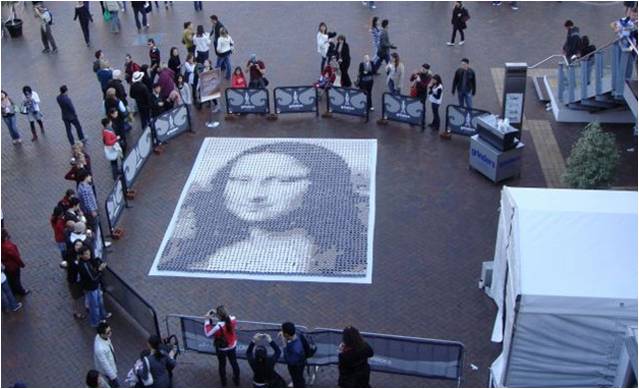
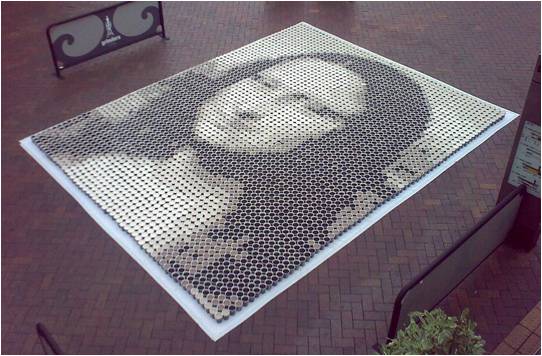
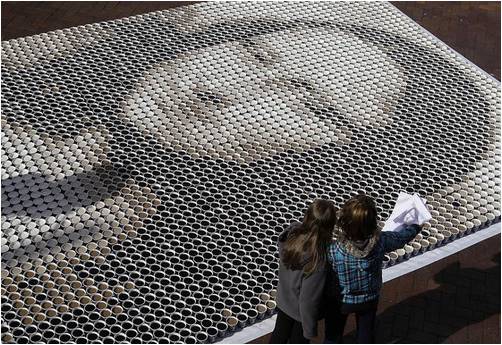
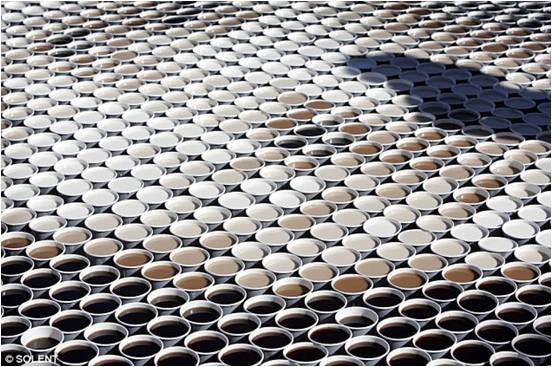
Can you guess what it's made of?

Look at that sly smile. I think she's mocking you.

Artist assistants admiring their work.

This is what happens when you combine 3,604 cups of coffee with varying amounts of milk and Australians with a lot of time on their hands.

1 Comment

Filed under Coffee

Fly me to the (blue) moon

I recently picked up Ted Haigh’s (Dr. Cocktail) book Vintage Spirits and Forgotten Cocktails: From the Alamagoozlum to the Zombie 100 Rediscovered Recipes and the Stories Behind Them.  Get ready over the next few months as I highlight/re-create/possibly update some oldies-but-goodies.
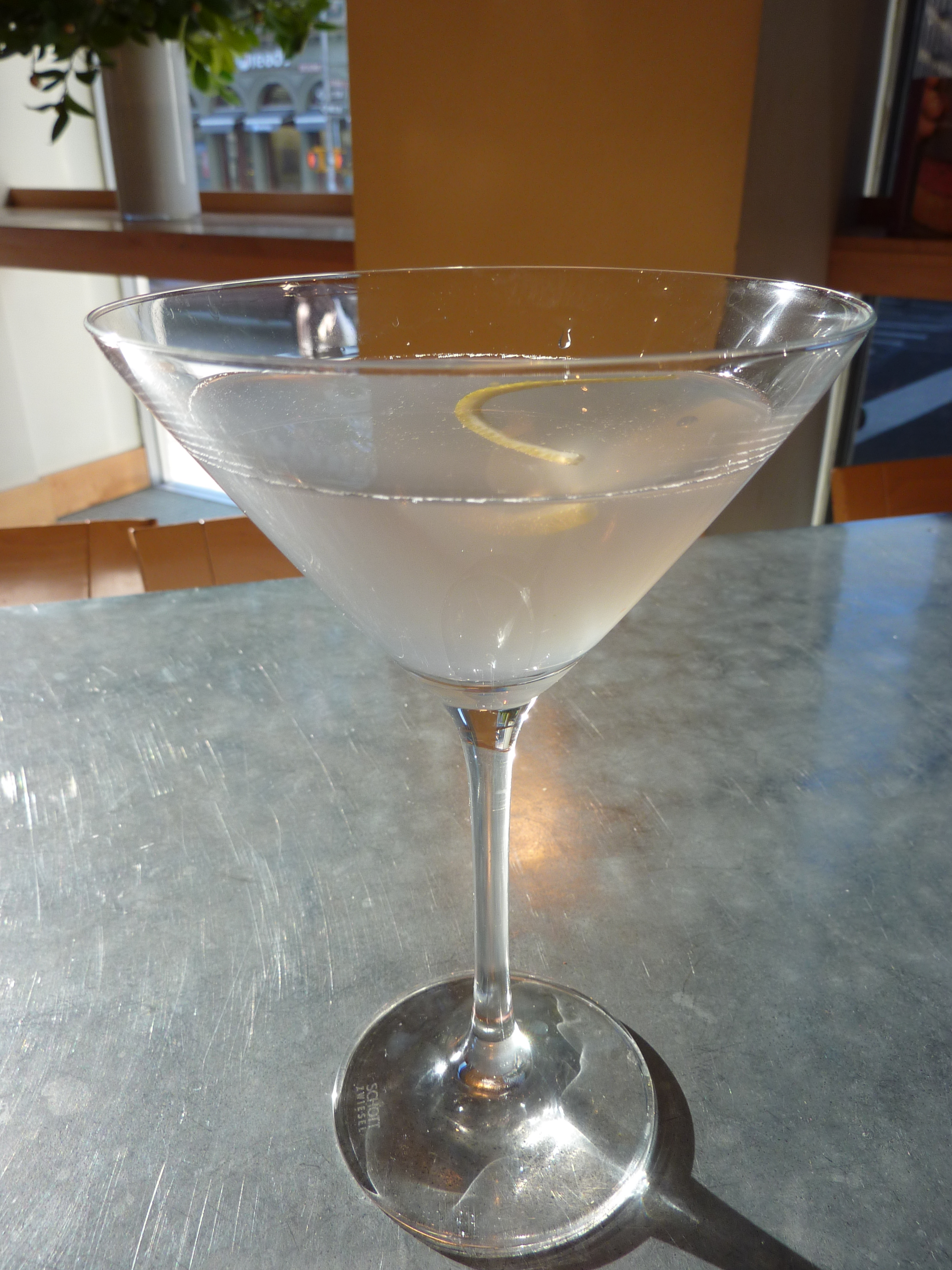
Many of you may have sampled an Aviation – gin, lemon, maraschino liqueur.  The focus of this post, the Blue Moon, is similar, sub crème de violette for the maraschino liqueur.  Haigh didn’t include this cocktail in his first edition of this book because crème de violette was not available to the American public at that time.  Thanks, Haus Alpens!

2 ounces gin (I used Seneca Drums), 1/2 ounce creme de violette, 1/2 ounce lemon juice; shake and strain.

You can also use Crème Yvette, which is compounded from violet petals and other secret ingredients and named after an early 20th century French actress.  Iterations of this cocktail date back to 1917. 

At the outset, it’s light and floral, but it finishes with a bite.  Haigh suggests adding an egg white and a lemon twist.  I added 1/2 ounce ruby red grapefruit juice and 1/4 ounce simple syrup.  I hope someone names a liqueur after me someday.

2 Comments

Filed under Cocktails

Thank you, hot toddy

I managed to lose my voice over the last few days.  My colleagues assumed I was too rowdy over New Year’s.  I should stop correcting them.

Like any good husband with a sick wife, Noah brought home a lemon, assuming I would make a hot toddy. 

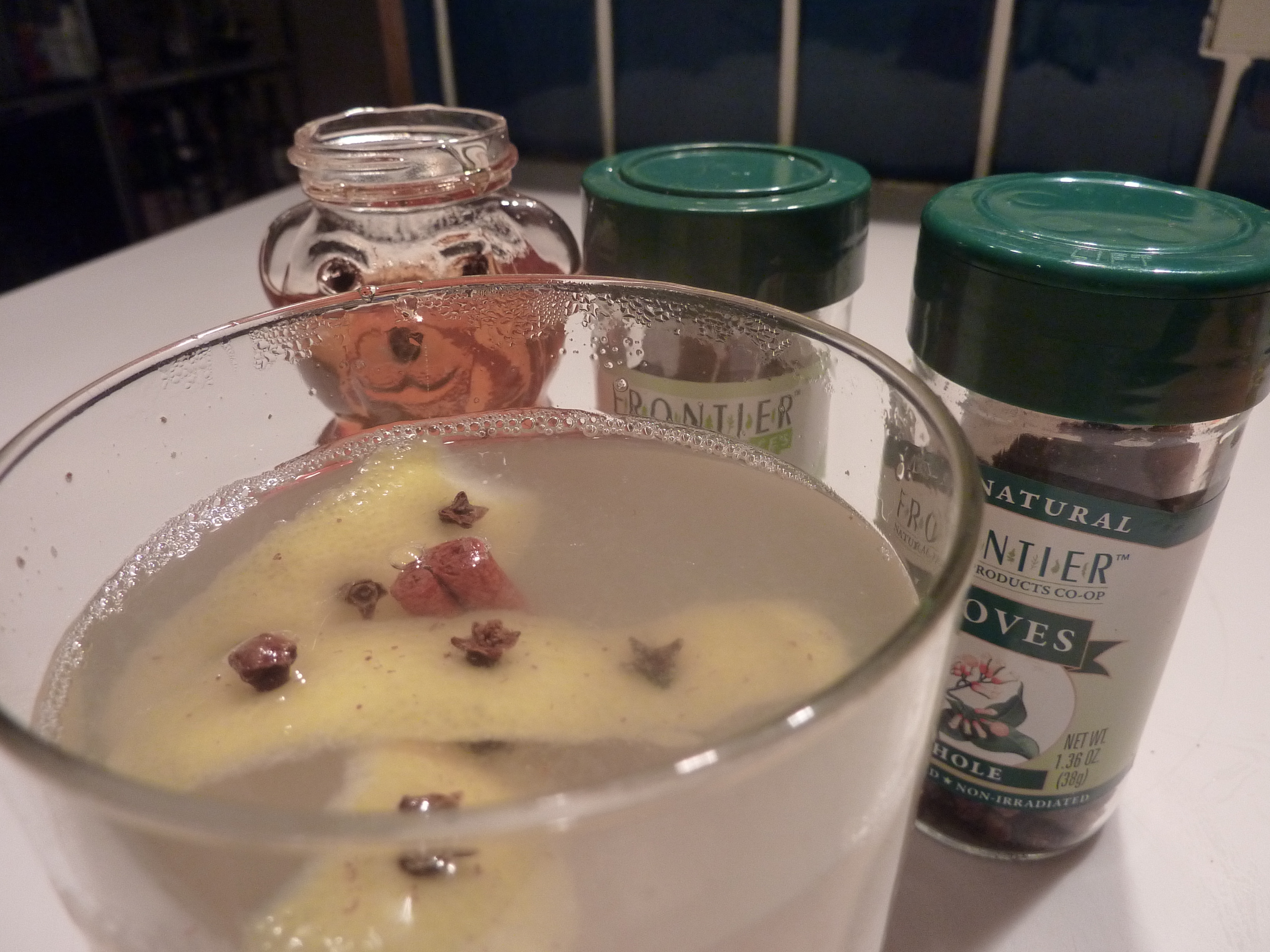
I put water on to boil, sliced 4 pieces of lemon peel and stuck whole cloves in them, dubbing them "clove soldiers".

When the water was ready, I steeped the lemon peel, one cinnamon stick, the juice of one lemon and 3 teaspoons of honey (with the idea of making 2 drinks).

After a few minutes, I put 1 1/2 ounces of McKenzie Rye and 1/2 ounce of Maplejack in each mug and strained the spiced, lemon-honey water over the top.

There’s plenty of hot toddy recipes out there, with the booze ranging from brandy to scotch to Irish whisky, but all modesty aside, this one currently tops my list.

1 Comment

Filed under Cocktails

One hull of a wine

I attended a 7 course tasting menu for a friend’s birthday this past weekend.  This was not your average tasting menu, however.  It was a tour of the seven continents and it was at somebody’s house.  I have talented friends.

Yes, we had kangaroo and no, I won’t divulge (yet) what was served for the Antarctica course until a later post.  What I want to do here is highlight one of my favorite courses of the evening, mostly because of its killer wine pairing. 

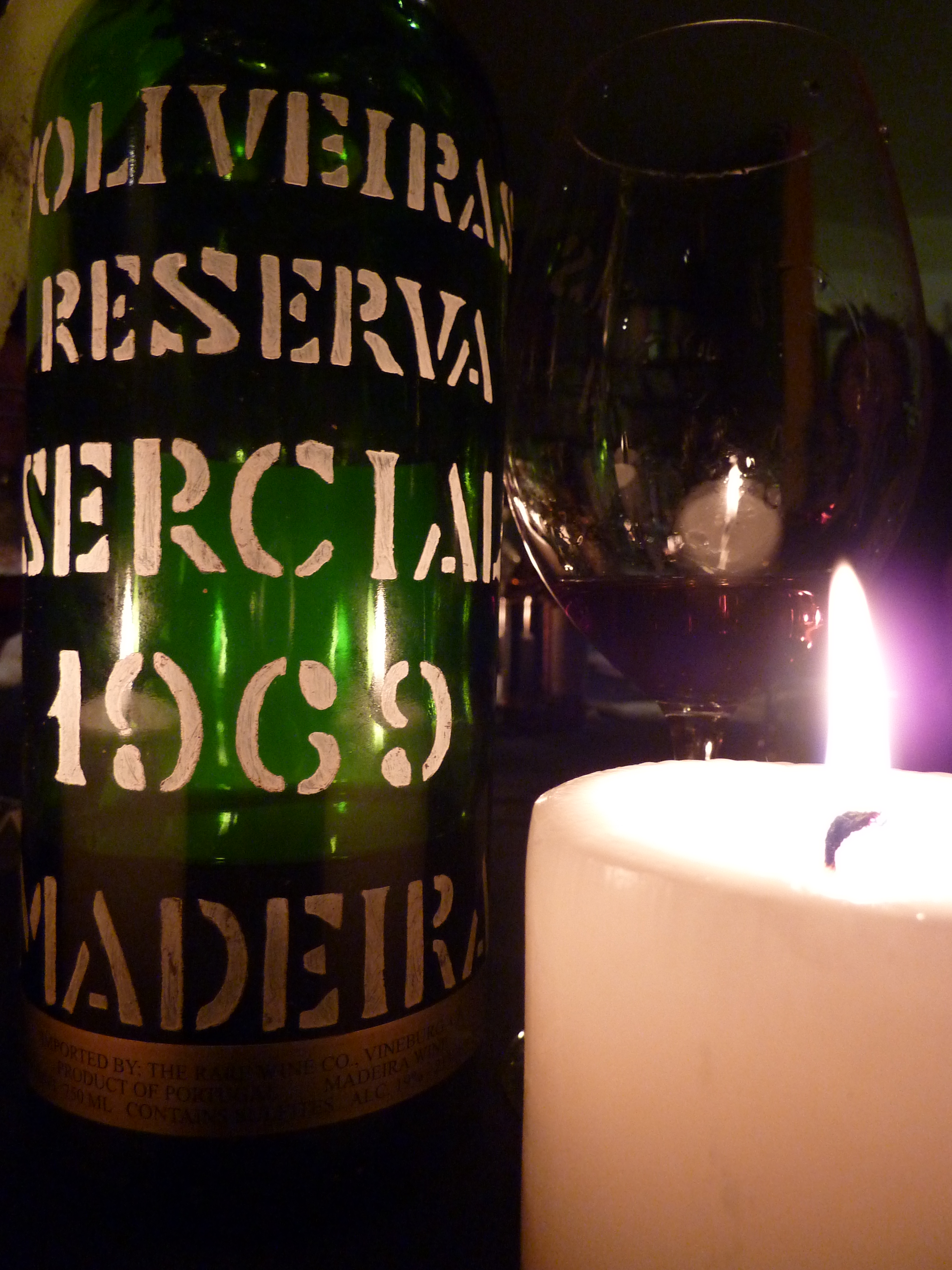
For the 6th or what would traditionally be the cheese course, we traveled to Europe and were served a twice-baked three cheese soufflé with cream alongside a house made quince ravioli in beurre noisette.  It was paired with a 1969 d’Oliveiras Sercial Madeira.  A guest at the party asked if we needed to be concerned about oxidation, given the age of the wine, so while our host (who knew the answer) puttered in the kitchen for the next course, I broke it down for everybody.

The beauty of Madeira is that it has been purposely oxidized, so there’s little you can do to harm it once it’s in your possession.  Like many other beverages, it came about as a happy accident.  Madeira is the name of a Portugese island, 400 miles off the coast of Africa.  The island was important stop for folks traveling to the New World and to the Far East – one last chance to pick up provisions. 

Good sailors wouldn’t travel without wine, but to protect it for the long journey, they would fortify it by adding neutral spirit or brandy.  The extra alcohol made the wine more stable, helping to prevent re-fermentation or microbiological spoilage.  The big casks of wine would sit in the belly of the ship and the constant rocking motion of the boat accelerated the aging process.  The heat of the tropics slowly cooked the wine into an amber, nutty, caramelized beverage.  When the sailors consumed the wine at their destination, it tasted a heck of a lot better than when they had started.

The term “maderized” has come to explain the change in Madeira’s flavor profile as it undergoes a controlled, hot oxidation.  Sending ships back and forth across the Atlantic is not terribly efficient, so now there are 3 ways to achieve a similar end result.

1. The quickest and cheapest way is to put the wine in concrete vats and circulate hot water through it using a submerged coil.  This heats the wine directly and it maderizes in about 3 months.  The wine is sweetened and fortified after it has been heated.

2. Another method is to place the wine casks in a heated warehouse.  The intense heat of the room maderizes the wine in 6-12 months.  The flavors achieved this way are more integrated, as the wine is fortified prior to the start of the aging process.

3.  The most expensive and time consuming method is to put the casks in a non-temperature controlled warehouse and just let them sit.  This process can take a number of years, but yields wines of extraordinary quality. 

Madeira is an incredibly versatile wine to pair with cheeses

For those of you who are interested, there are 4 traditional “noble” grapes of Madeira.

1. Sercial.  This is used to produce the driest Madeiras (0.5 to 1.5% residual sugar).  The sweetness is offset by its searing acidity.  Often tastes of almonds.
2. Verdelho.  Produces moderately sweet Madeiras (1.5 to 2.5% rs).  These often have a pronounced smokiness.  You may recognize the grape name, as it’s also used to make white wine in Portugal and Spain (under the name Verdejo).
3. Bual.  This has a raisiny sweetness and a residual sugar level of 2.5 to 3.5%.
4. Malmsey.  This word is the English corruption of the word Malvasia, a grape used to make tasty white wine in Italy.  This is the sweetest style of Madeira (3.5 to 6.5% rs), with a nutty grapiness, but still with well-balanced acidity.

Look for more posts on this around-the-world-feast soon.

1 Comment

Filed under Wine

Beer of the British Isles

Happy 2010!

Join us to toast again with suds on January 21 from 6:30-9:30 pm while we explore beer from the British Isles as well as some domestic styles inspired by them.  Hobgoblin, Skull Splitter and stout – oh, my!

Click here for more info and to sign up.

Leave a comment

Filed under Beer, Events